
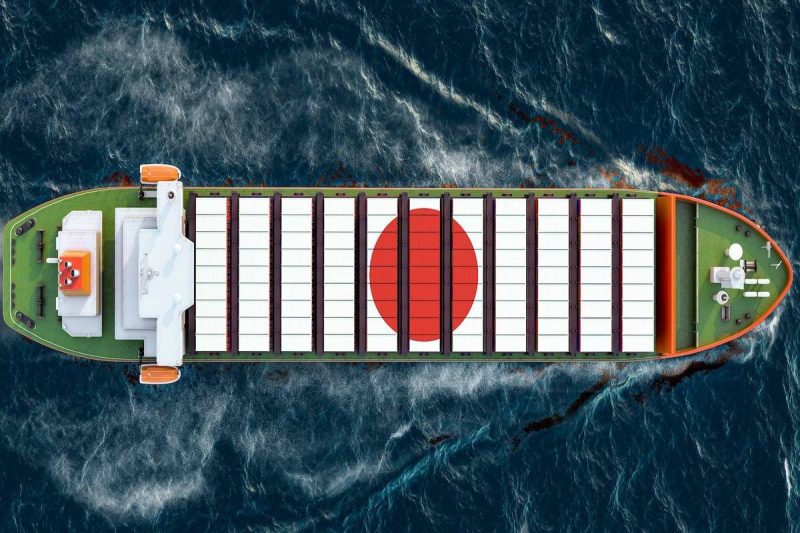

Japan announced that it has successfully retrieved mineral-rich seabed sediment from nearly 6,000 meters below the ocean surface near the remote island of Minamitorishima, a technical milestone officials say could help reduce the country’s dependence on China.
The operation was carried out by the deep-sea drilling vessel Chikyu, which collected the sediment as part of a government-backed test program aimed at assessing the feasibility of mining rare-earth-bearing mud from the deep ocean.
According to Japan’s Agency for Marine-Earth Science and Technology, the Chikyu departed last month for Minamitorishima—about 1,950 kilometers southeast of Tokyo—and arrived at the test site on January 17. The first batch of sediment was recovered on February 1.
“It is a first step toward industrialization of domestically produced rare earth in Japan,” Prime Minister Sanae Takaichi said in a statement posted on X. “We will make efforts toward achieving resilient supply chains for rare earths and other critical minerals to avoid overdependence on a particular country.”
Rare earth elements are essential components in high-performance magnets used in electric vehicles, wind turbines, electronics and defense systems.
China currently dominates global production and processing of heavy rare earths, giving Beijing significant influence over prices and supply, a vulnerability that has increasingly worried world governments.
Japan’s latest test comes amid heightened geopolitical tension in the region. Tokyo has grown more concerned about potential supply disruptions after China recently suspended exports of certain dual-use goods to Japan.
While rare earths were not explicitly named, the move raised fears that Beijing could use its control over critical minerals as leverage.
Japanese researchers first identified rare-earth-rich mud deposits around Minamitorishima in the 2010s. Since then, the government has funded research, development and feasibility studies under its Strategic Innovation Promotion Program, focusing on whether those resources could support a domestic supply chain.
The current trial is designed to test not only the ability to retrieve sediment from extreme depths, but also the logistics of deep-sea mining.
Officials cautioned that the work is still at an early stage. Details such as the concentration of rare earth elements in the retrieved mud and the overall recovery rates are still being analyzed. Moving toward commercial production would require demonstrating the entire process, from seabed extraction to separation and refining.
Japan has said it plans to continue testing through mid-February. If the trials are successful, larger-scale demonstrations could follow, potentially including the construction of a dedicated processing facility on Minamitorishima later this decade.
US targets rare earth security with Project Vault
While Japan pushes deeper into rare earth supply diversification, developments in the United States underscore how deeply critical mineral policy is shaping markets on both sides of the Pacific.
On Monday (February 2), the Trump administration rolled out what officials are calling “Project Vault” a roughly US$12 billion strategic critical minerals reserve aimed at reducing US dependence on Chinese supply chains for rare earths and other essential metals.
The initiative, anchored by a US$10 billion loan from the US Export‑Import Bank and about US$2 billion in private capital, is designed to stockpile strategic materials like rare earths, cobalt and lithium used across defense, EV, technology and energy sectors.
The program’s backers say the reserve will function much like America’s Strategic Petroleum Reserve, offering a buffer against global supply disruptions and insulating manufacturers from price shocks that have plagued markets during recent US–China trade tensions.
Analysts say the effort signals an ongoing shift toward industrial policy that treats critical minerals as strategic assets, even as completion details and long‑term execution remain uncertain.
The financial markets responded quickly. Australian rare earth producer Lynas Rare Earths (ASX:LYC,OTCQX:LYSDY) saw shares rally more than 3 percent (February 3), closing at AU$15.25, reflecting renewed investor interest tied to the policy news and the broader rare earth narrative.
Lynas’s recent movements come against a backdrop of broader gains in non‑Chinese mineral producers, as investors reposition around supply chain security and government policy support. Rare earth stocks more generally saw upticks in the US market after Trump’s strategic plan came into focus, with producers like MP Materials (NYSE:MP) and USA Rare Earth (NASDAQ:USAR) gaining on reports of increased government engagement in critical mineral sourcing.
Securities Disclosure: I, Giann Liguid, hold no direct investment interest in any company mentioned in this article.
