Author

admin

Browsing

We also break down next week’s catalysts to watch to help you prepare for the week ahead.

In this article:

    This week’s tech sector performance

    The US market kicked off the holiday‑shortened week with many tech stocks opening lower after Alibaba (NYSE:BABA) unveiled its new AI model, Qwen 3.5, on Monday (February 16), amplifying concerns about risks from the Chinese market. Major indices closed little changed after a day of subdued trading.

    This caution, she added, is compounded by uncertainty in the broader macro backdrop, driving down stocks in AI‑exposed sectors. She concluded that this process reflects a maturing market, predicting that in 2026, capital will concentrate around firms with clear, monetizable AI strategies.

    Futures gained ground on Wednesday morning (February 17) ahead of the release of the FOMC minutes from its latest meeting, which highlighted a divide: some participants favored another rate hike if inflation remains above target, directly contradicting market expectations of additional cuts amid forecasts of economic weakness.

    Also on Wednesday, Federal Reserve Governor Michael Barr outlined three potential scenarios for how AI could impact the labor market during a speech at the New York Association for Business Economics.

    The first, and currently favored, scenario is gradual adoption, where slow AI integration minimizes job loss and any brief skill mismatch is addressed through training. The second scenario is rapid advancement, where AI outpaces the labor market, potentially rendering many people “unemployable.” In this case, fast‑moving AI startups could displace older firms, triggering mass unemployment and requiring a complete overhaul of the social safety net to share productivity gains.

    The third possibility suggests that electricity or capital shortages will limit AI’s full potential, making it an indispensable tool but not a truly revolutionary force. Barr concluded that the degree of disruption will ultimately depend on societal investment in creating new jobs, training workers, and implementing mitigation strategies.

    Stocks rallied midday but pulled back in a late‑session softening tied in part to the release of the FOMC minutes. A volatile session in tech saw the Nasdaq Composite (INDEXNASDAQ:.IXIC) pare earlier strength, finishing up 0.8 percent.

    On Thursday (February 19), the market retraced the mid‑week bounce, with the Nasdaq closing down 0.3 percent.

    Friday’s PCE report suggested inflation could be reigniting, keeping rate‑sensitive equities range‑bound in early trading, but the Supreme Court’s decision to strike down US President Trump’s global tariffs caused a rally in Wall Street’s heavyweights in the afternoon.

    3 tech stocks moving markets this week

    1. Shopify (NYSE:SHOP)

    Shopify led NDXT gainers, advancing 14.73 percent. Phillip Securities upgraded the stock to “Strong‑Buy”.

    2. AppLovin (NASDAQ:APP)

    AppLovin saw a 14.68 percent gain, extending its post‑earnings rally.

    2. DoorDash (NASDAQ:DASH)

    DoorDash advanced by 9.36 percent after Bank of America (NYSE:BAC) raised its price target to U$272, citing AI and chatbot efficiencies as well as grocery expansion, while Citizens analyst Andrew Boone reiterated “market outperform” on strong order growth and unchanged 2026 EBITDA outlook.

    Shopify, DoorDash and AppLovin performance, February 16 to 20, 2026.

    Shopify, DoorDash and AppLovin performance, February 16 to 20, 2026.

    Chart via Google Finance.

    Top tech news of the week

                                  Tech ETF performance

                                  Tech exchange-traded funds (ETFs) track baskets of major tech stocks, meaning their performance helps investors gauge the overall performance of the niches they cover.

                                  This week, the iShares Semiconductor ETF (NASDAQ:SOXX) advanced by 1.83 percent, while the Invesco PHLX Semiconductor ETF (NASDAQ:SOXQ) advanced by 1.77 percent.

                                  The VanEck Semiconductor ETF (NASDAQ:SMH) also increased by 1.76 percent.

                                  Tech news to watch next week

                                  Next week, tech‑focused investors will be watching NVIDIA’s Q4 print on February 25 as the key driver of sentiment across semiconductor and other AI‑related names.

                                  Securities Disclosure: I, Meagen Seatter, hold no direct investment interest in any company mentioned in this article.


                                  This post appeared first on investingnews.com

                                  Final Short Form Prospectus Accessible on SEDAR+

                                  western copper and gold corporation. (TSX: WRN) (NYSE American: WRN) (the ‘Company’) is pleased to announce that, further to its news releases dated February 11, 2026 and February 12, 2026, it has filed a final short form prospectus dated February 20, 2026 (the ‘Final Prospectus’) with the securities commissions in each of the provinces of Canada, except Quebec, in connection with its bought deal public offering of common shares of the Company (the ‘Common Shares’) at a price of C$4.15 per Common Share for gross proceeds to the Company of approximately C$80,001,625 (the ‘Offering’).

                                  The Offering is being conducted through a syndicate of underwriters including Stifel Canada, as lead underwriter and sole bookrunner, along with ATB Capital Markets Corp., National Bank Financial Inc., Agentis Capital Markets, BMO Capital Markets, Canaccord Genuity Corp., CIBC World Markets Inc. and H.C. Wainwright & Co., LLC (collectively, the ‘Underwriters‘). The Company has granted the Underwriters an option (the ‘Over-Allotment Option‘), exercisable, in whole or in part, at any time until and including 30 days following the closing of the Offering, to purchase up to an additional 2,891,625 Common Shares of the Offering. If this option is exercised in full, an additional C$12,000,243.75 in gross proceeds will be raised pursuant to the Offering and the aggregate gross proceeds of the Offering will be approximately C$92,001,869.

                                  Access to the Final Prospectus and any amendment to the documents is provided in accordance with securities legislation relating to procedures for providing access to a prospectus. The Final Prospectus is accessible on SEDAR+ at www.sedarplus.ca. An electronic or paper copy of the Final Prospectus and any amendment may be obtained, without charge, from Stifel Canada by 161 Bay Street, Suite 3800, Toronto, Ontario, Canada M5J 2S1 or by email at syndprospectus@stifel.com by providing the contact with an email address or address, as applicable. The Final Prospectus contains important detailed information about the Company and the Offering. Prospective investors should read the Final Prospectus and the other documents the Company has filed on SEDAR+ before making an investment decision.

                                  The Common Shares will also be offered in the United States pursuant to a prospectus filed as part of a registration statement on Form F-10 (together with any amendments thereto, the ‘Registration Statement‘) under the Canada/U.S. multi-jurisdictional disclosure system. The Registration Statement relating to the Common Shares has been filed with the United States Securities and Exchange Commission. The Registration Statement is available on EDGAR at www.sec.gov. Alternatively, the Registration Statement and the prospectus included therein may be obtained, for free upon request, from Stifel Canada at 161 Bay Street, Suite 3800, Toronto, Ontario, Canada M5J 2S1 or by email at syndprospectus@stifel.com. The Registration Statement and prospectus included therein contains important detailed information about the Company and the Offering. Prospective investors should read the Registration Statement and such prospectus and the other documents the Company has filed on EDGAR before making an investment decision.

                                  The Offering is scheduled to close on or about February 26, 2026, and is subject to certain conditions including, but not limited to, the receipt of all necessary approvals including the approval of the Toronto Stock Exchange and the NYSE American and the applicable securities regulatory authorities.

                                  About western copper and gold corporation

                                  western copper and gold corporation is advancing the Casino Project, Canada’s premier copper-gold mine in the Yukon and one of the most economic greenfield copper-gold mining projects in the world.

                                  The Company is committed to working collaboratively with First Nations and local communities to progress the Casino Project, using internationally recognized responsible mining technologies and practices.

                                  On behalf of the board,

                                  ‘Sandeep Singh’

                                  Sandeep Singh
                                  Chief Executive Officer
                                  western copper and gold corporation

                                  For more information, please contact:

                                  Cameron Magee
                                  Director, Investor Relations & Corporate Development
                                  western copper and gold corporation
                                  437-219-5576 or cmagee@westerncopperandgold.com

                                  Cautionary Note Regarding Forward-Looking Statements

                                  This news release contains certain forward-looking statements concerning the timing and completion of the Offering, the gross proceeds of the Offering and the use of proceeds from the Offering, the over-allotment option to be granted to the Underwriters, the necessary regulatory approvals required for the Offering being received and the expected closing date of the Offering. Statements that are not historical fact are ‘forward-looking statements’ as that term is defined in the United States Private Securities Litigation Reform Act of 1995 and other U.S. securities law and ‘forward-looking information’ as that term is defined in National Instrument 51-102 (‘NI 51-102’) of the Canadian Securities Administrators (collectively, ‘forward-looking statements’).

                                  Forward-looking statements are frequently, but not always, identified by words such as ‘expects’, ‘anticipates’, ‘believes’, ‘intends’, ‘estimates’, ‘potential’, ‘possible’ and similar expressions, or statements that events, conditions or results ‘will’, ‘may’, ‘could’ or ‘should’ occur or be achieved. The material factors or assumptions used to develop forward-looking statements include, but are not limited to, the assumptions that all regulatory approvals of the Offering will be obtained in a timely manner; all conditions precedent to completion of the Offering will be satisfied in a timely manner; and that market or business conditions will not change in a materially adverse manner. Forward-looking statements are statements about the future and are inherently uncertain, and actual results, performance or achievements of the Company and its subsidiaries may differ materially from any future results, performance or achievements expressed or implied by the forward-looking statements due to a variety of risks, uncertainties and other factors. Such risks and other factors include, among others, risks involved in fluctuations in gold, copper and other commodity prices and currency exchange rates; uncertainties related to raising sufficient capital in a timely manner and on acceptable terms; and other risks and uncertainties disclosed in the Company’s AIF and Form 40-F, including those under the heading ‘Risk Factors’ and other information released by the Company and filed with the applicable regulatory agencies.

                                  The Company’s forward-looking statements are based on the beliefs, expectations and opinions of management on the date the statements are made, and the Company does not assume, and expressly disclaims, any intention or obligation to update or revise any forward-looking statements whether as a result of new information, future events or otherwise, except as otherwise required by applicable securities legislation. For the reasons set forth above, investors should not place undue reliance on forward-looking statements.

                                  Corporate Logo

                                  To view the source version of this press release, please visit https://www.newsfilecorp.com/release/284767

                                  News Provided by TMX Newsfile via QuoteMedia

                                  This post appeared first on investingnews.com

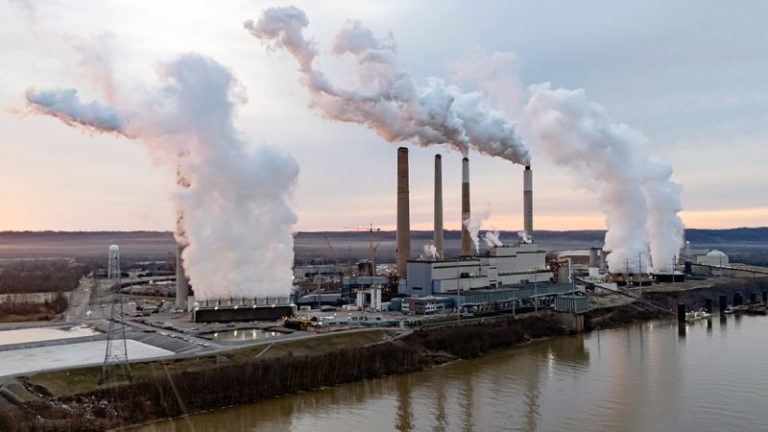
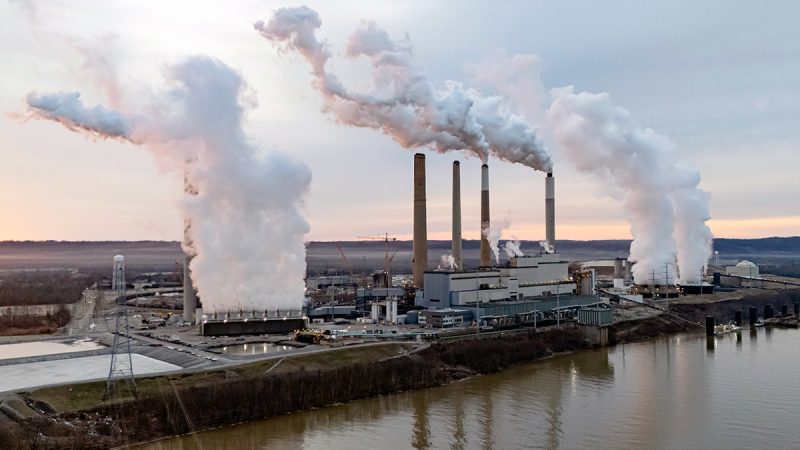
                                  A leading domestic energy advocacy group praised EPA Administrator Lee Zeldin’s announcement that his agency would undo recent additions to the federal ‘mercury and air-toxics standards’ (MATS) for coal-fired power plants.

                                  Zeldin said removing the restrictions allows the already ‘robust’ MATS standards to remain in effect, ensuring both public health and the health of America’s coal industry amid a push for U.S. energy dominance.

                                  ‘The Biden-Harris Administration’s anti-coal regulations sought to regulate out of existence this vital sector of our energy economy. If implemented, these actions would have destroyed reliable American energy,’ Zeldin said at the Mills Creek Power Plant in Kentucky, adding that protecting the environment and supporting industry and baseload power is not a ‘binary choice.’

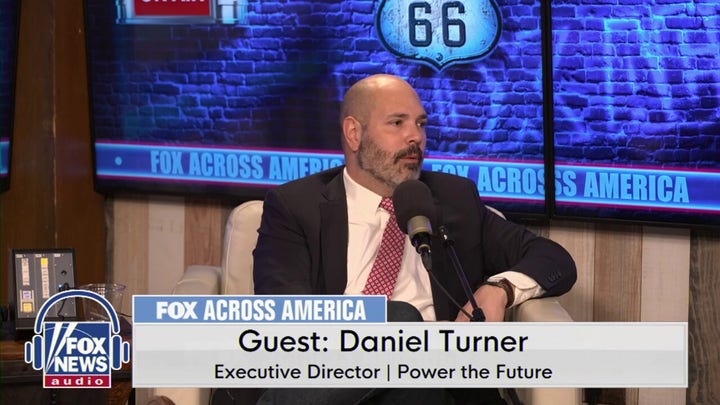
                                  In response, Power the Future founder Daniel Turner told Fox News Digital the move is a significant step toward revitalizing the American coal industry and, in turn, fueling economies in economically depressed industrial communities throughout Appalachia and beyond.

                                  Turner: The Left Tried & Failed To Shame Americans Into Embracing EVs

                                  ‘Since the war on coal, we have weakened our grid, driven electricity prices through the roof, outsourced major industries to Mexico and China, but most of all driven tens of thousands of Americans into ruin because of a globalist agenda,’ Turner said Friday, adding that the costs of a crippled coal industry went far beyond shuttered infrastructure:

                                  ‘The cruel Obama-led war on coal ruined numerous towns across rural America, drove families into poverty, caused alcoholism, opioid addiction, domestic violence, and suicide to skyrocket.’

                                  ‘Power The Future started because of coal miners, the acceptable casualties in the globalist climate change agenda,’ said Turner, whose group is based in coal-heavy Virginia.

                                  ‘Restoring America’s coal dominance is good for our national security and economy, and it restores the dignity of small-town coal workers whose labor is vital to America’s survival.’

                                  Many of America’s poorest counties are in what were once very wealthy coal communities — including McDowell and Mingo counties in West Virginia and Bell, Letcher, McCreary, and Breathitt counties in Kentucky, where Vice President JD Vance’s family is from.

                                  Trump admin repeals Obama-era greenhouse gas regs; Virginia redistricting under fire

                                  During much of the 20th century, McDowell County — and its seat, Welch — was the No. 1 coal-producing county in the U.S. and home to 100,000 people — a population boom some credit with spurring construction of what became the nation’s first parking deck, which is still standing today in Welch.

                                  Now, about one-quarter of McDowell residents live in poverty while the median income is around $30,000.

                                  Turner alluded to those conditions in comments to Fox News Digital, saying people must ‘never forget or forgive the drivers of the war on coal for their cruel attacks on a vital industry found only in rural America.’

                                  West Virginia governor: ‘We can’t do without coal and gas today’

                                  ‘[Anti-coal politicians] fly private jets to attend global climate summits while they orchestrated an evil attack on the coal miner making America weaker and China richer.’

                                  Turner quipped that any ‘anti-coal activist’ is invited to join him in visiting coal-producing communities but may be unhappy to get dirt on their clothing and find lodging not up to ‘Four Seasons’ standards.

                                  ‘We need coal. There is not one product around you right now that was not touched by coal, and to lower prices, bring market stability and ensure economic growth, we need to dominate the coal industry,’ Turner said.

                                  ‘Sadly, the liberal elite who launched the war on coal are too ignorant or too indifferent to know this. The ignorant can be educated, and that’s what I try to do at Power The Future. But the indifferent must be defeated, as they are a threat to our liberty, property and prosperity. I will never stop until I defeat them all,’ he said, calling President Donald Trump the ‘greatest coal president in history.’

                                  Former EPA Administrator Gina McCarthy fired back at the policy change, telling the AP that ‘by weakening pollution limits and monitoring for brain-damaging mercury and other pollutants, they are actively undermining any attempt to make America — and our children — healthy.’

                                  This post appeared first on FOX NEWS

                                  A team of researchers at Penn State have developed a plant-based nanomaterial capable of selectively extracting dysprosium from rare earth mixtures, according to a recent report.

                                  The findings published in the study detail how the team engineered a modified form of cellulose capable of isolating dysprosium, a heavy rare earth element used in semiconductors, electric motors, and generators.

                                  Rare earths tend to occur together in nature and share nearly identical chemical properties, making separation complex and costly. Commercial processes typically rely on large-scale solvent extraction systems that require extensive chemical inputs and multiple repetitive stages to achieve high purity.

                                  “As technology advances, manufacturers will need more and more dysprosium — some forecasts estimate the demand for this material may surge over 2,500 percent in the next 25 years,” said Amir Sheikhi, associate professor of chemical engineering at Penn State.

                                  The research builds on earlier work by the team, which previously used cellulose-based compounds to recover neodymium from electronic waste.

                                  In the latest study, the focus shifted to dysprosium and the challenge of separating heavier rare earth elements from lighter ones more efficiently.

                                  To achieve this, the researchers modified cellulose at the molecular level, creating nanoscale crystalline particles roughly 100 nanometers long. When introduced into a water-based mixture containing both neodymium and dysprosium, the nanocellulose selectively captured dysprosium through adsorption.

                                  The team observed that the modified cellulose chains behaved differently in the presence of dysprosium, effectively isolating it from the mixture.

                                  “Separating rare earth elements from one another has been extremely difficult, due to the metals’ very similar chemical structures,” Sheikhi explained. “We have been looking for a reliable way to separate heavy elements like dysprosium from lighter elements like neodymium, while avoiding the negative environmental side effects that come from current separation approaches.”

                                  The simplicity of the approach contrasts sharply with traditional rare earth separation facilities, which often require sprawling industrial plants and dozens of equilibrium stages to achieve magnet-grade purity.

                                  Industry studies have shown that separating similar rare earth elements can require upward of 60 repetitive extraction stages, underscoring the technical barrier that has helped concentrate processing capacity in countries such as China.

                                  China currently accounts for the majority of global rare earth processing, particularly for heavy rare earth elements like dysprosium that are critical for high-temperature magnets and defense applications.

                                  The Penn State team argues that a cellulose-based system could reduce chemical usage and lower the environmental footprint of rare earth recovery if successfully scaled.

                                  Future work will focus on refining the material and testing its ability to isolate additional rare earth elements.

                                  Securities Disclosure: I, Giann Liguid, hold no direct investment interest in any company mentioned in this article.

                                  This post appeared first on investingnews.com

                                  Anglo American (LSE:AAL,OTCQX:NGLOY) has slashed the value of its De Beers diamond business by US$2.3 billion, cutting the unit’s carrying value in half and pushing the FTSE 100 miner to a US$3.7 billion annual loss as a prolonged slump in the global diamond market deepens.

                                  After previous charges of US$2.6 billion in 2023 and US$2.9 billion in 2024, De Beers is now valued at US$2.3 billion—a fraction of what it was worth just a few years ago.

                                  The impairment drove Anglo to a net loss of US$3.7 billion for the year, compared with a US$3 billion loss previously. Losses at De Beers also widened sharply to US$511 million from just $25 million the year before, as the business recorded a third straight annual drop in production and trimmed its 2026 output forecast.

                                  “There is at the moment a plentiful supply of rough diamonds in the market,” CEO Duncan Wanblad told reporters.

                                  The diamond sector has been squeezed by several forces at once. US tariffs on India, where most rough diamonds are polished, have disrupted trade flows. Competition from lab-grown stones has also intensified, leading to the erosion of pricing power held by market players.

                                  Anglo has been trying to exit diamonds as part of a sweeping restructuring announced after it fended off a £39 billion takeover approach from BHP (ASX:BHP,NYSE:BHP,LSE:BHP) in 2024. The plan includes divesting its diamond, coal, and platinum units and refocusing on copper and iron ore.

                                  Wanblad said the sale of Anglo’s 85 percent stake in De Beers is at an advanced stage, with several credible bidders in the process alongside discussions with Botswana. The country currently owns 15 percent of the business and supplies about 70 percent of its annual rough diamond output.

                                  Wanblad said he is “optimistic” that the company would “see a deal signed” this year.

                                  Despite the hit from De Beers, Anglo’s underlying earnings before interest, tax, depreciation and amortisation rose 2 percent to US$6.4 billion, buoyed by strong copper prices. The company declared a dividend of US$0.23 per share, down from US$0.64 a year earlier, while net debt fell to US$8.6 billion.

                                  Copper and iron ore remain the miner’s core profit drivers and are expected to anchor earnings once the restructuring is complete.

                                  Anglo’s proposed combination with Canada’s Teck Resources (TSX:TECK.A,TECK.B,NYSE:TECK,OTCPL:TCKRF), which would expand its copper portfolio with assets including the Quebrada Blanca mine in Chile, has been approved by shareholders and is awaiting regulatory clearance.

                                  Still, diamonds remain a drag at a time when the broader industry is facing structural change. Producers are currently grappling with falling prices, lab-grown competition, and shifting consumer trends.

                                  Securities Disclosure: I, Giann Liguid, hold no direct investment interest in any company mentioned in this article.

                                  This post appeared first on investingnews.com

                                  Here’s a quick recap of the crypto landscape for Friday (February 20) as of 9:00 p.m. UTC.

                                  Get the latest insights on Bitcoin, Ether and altcoins, along with a round-up of key cryptocurrency market news.

                                  Bitcoin (BTC) was priced at US$67,697.37, up by 0.9 percent over the last 24 hours.

                                  Bitcoin price performance, February 20, 2026.

                                  Bitcoin price performance, February 20, 2026.

                                  Chart via TradingView.

                                  Antonio Di Giacomo, a senior market analyst at XS.com, noted that BTC deepened its corrective phase after the US Federal Reserve’s January meeting minutes revealed a division over the future path of interest rates, increasing volatility and weakening appetite for speculative assets.

                                  A combination of macroeconomic caution, persistent price pressures, and geopolitical tensions has kept the Fed on a cautious stance, thus keeping BTC volatile and trading between technical resistance and intermediate support.

                                  Its future direction will largely depend on the evolution of US data, interest rates and regulatory developments.

                                  Ether (ETH) was priced at US$1,968.25, up by one percent over the last 24 hours.

                                  Altcoin price update

                                  • XRP (XRP) was priced at US$1.42, up by 0.6 over 24 hours.
                                  • Solana (SOL) was trading at US$84.56, up by 3.1 percent over 24 hours.

                                  Today’s crypto news to know

                                  White House stablecoin talks advance amid yield/rewards debate

                                  The White House hosted its third meeting with its Crypto Policy Council, led by Executive Director Patrick Witt, Senate Banking Committee staff, crypto representatives and banking executives on Thursday (February 19), focusing on the yield v reward debate for stablecoins as part of negotiations for the CLARITY Act and GENIUS Act updates.

                                  The first meeting, a broad introductory discussion that ended without a resolution, was held on February 2. The second meeting, held on February 10, was reportedly more focused, with banks presenting yield and interest prohibition principles, prohibiting rewards tied to holding stablecoins. The closed-door meetings, with no public records, were described by anonymous sources, attendees and journalists as productive but inconclusive.

                                  During the latest meeting, the White House reportedly pushed for a compromise, allowing rewards tied to transaction activity, but not to idle holdings that resemble bank deposits; however, no final deal was reached.

                                  Banking representatives from Goldman Sachs (NYSE:GS), JPMorgan (NYSE:JPM), Bank of America (NYSE:BAC) Wells Fargo (NYSE:WFC), Citigroup (NYSE:C), PNC Financial (NYSE:PNC) and US Bancorp (NYSE:USB), as well as trade groups like Bank Policy Institute, American Bankers Association and Independent Community Bankers of America, were said to actively work on language to that end, though a final draft will still have to be circulated and weighed by the banks.

                                  CME moves crypto derivatives to 24/7 schedule

                                  CME Group will begin offering round-the-clock trading for its cryptocurrency futures and options on CME Globex starting May 29, 2026, pending regulatory approval.

                                  The decision follows a record US$3 trillion in notional crypto derivatives volume in 2025. Year-to-date in 2026, crypto derivatives average daily volume has climbed 46 percent year over year to 407,200 contracts, while futures ADV is up 47 percent. Average daily open interest currently stands at 335,400 contracts.

                                  By eliminating weekend closures, CME allows traders to hedge in real time as crypto markets move, reducing the price gap risk that builds when traditional markets are shut.

                                  Bitcoin ETFs extend five week outflow streak

                                  Spot Bitcoin exchange-traded funds logged another US$165.8 million in net redemptions on February 19, stretching a five-week outflow streak to nearly US$4 billion.

                                  Weekly withdrawals since mid-January have ranged from US$318 million to US$1.49 billion, raising questions about whether institutional demand is cooling.

                                  Despite the steady redemptions, Bitcoin edged up 1.4 percent over the past day to roughly US$67,800, lifting the broader crypto market cap to around US$2.4 trillion.

                                  Solana meme coin PUNCH surges after exchange listing

                                  A Solana-based meme coin known as PUNCH has surged sharply after securing a listing on a major exchange, briefly jumping more than 80 percent in a single session and posting eye-catching weekly gains.

                                  The token’s market capitalization climbed past US$30 million as it ranked among CoinGecko’s top gainers.

                                  The coin draws branding from a viral story about a rescued baby long-tailed macaque named Punch, which gained traction across social media.

                                  Securities Disclosure: I, Meagen Seatter, hold no direct investment interest in any company mentioned in this article.

                                  Securities Disclosure: I, Giann Liguid, hold no direct investment interest in any company mentioned in this article.

                                  This post appeared first on investingnews.com

                                  Health and Human Services (HHS) Secretary Robert F. Kennedy Jr. recently defended a move by President Donald Trump to protect and boost the production of a precursor chemical for pesticides, which just two years ago RFK Jr. said was a major contributor to ‘America’s chronic disease epidemic,’ and if elected he would ‘ban’ it. 

                                  Citing national defense imperatives, Trump passed an executive order earlier this week to protect a precursor element used in the production of an herbicide known as glyphosate. Trump’s executive order described glyphosate-based herbicides as ‘a cornerstone’ of the United States’ agricultural productivity. 

                                  The directive created a furor among proponents of the Make America Healthy Again (MAHA) agenda. Just two years ago, in June 2024, when Kennedy was still running for president, he posted on X, formerly Twitter, that ‘glyphosate is one of the likely culprits in America’s chronic disease epidemic.’

                                  ‘The herbicide Glyphosate is one of the likely culprits in America’s chronic disease epidemic. Much more widely used here than in Europe. Shockingly, much of our exposure comes from its use as a desiccant on wheat, not as an herbicide. From there it goes straight into our bodies,’ RFK Jr. said in 2024 while running for president. ‘MY USDA will ban that practice.’

                                  A MAHA Commission report released in May 2025 highlighted the concerns surrounding glyphosate as well. 

                                  ‘Some studies have raised concerns about possible links between some of these products and adverse health outcomes, especially in children, but human studies are limited,’ the report said. ‘For example, a selection of research studies on a herbicide (glyphosate) have noted a range of possible health effects, ranging from reproductive and developmental disorders as well as cancers, liver inflammation and metabolic disturbances.’

                                  Trump’s executive order was immediately praised by agriculture industry leaders, but MAHA loyalists were sharply critical. 

                                  ‘This move betrays the very MAHA voters who put this administration in power,’ Kelly Ryerson, co-executive director of American Regeneration and a leading grassroots voice within MAHA, said in a statement. ‘It stands in direct opposition to the President’s original promise to address the contribution of pesticides to chronic disease.’

                                  ‘The right is captured by Big Glyphosate,’ added Alex Clark, a podcast host affiliated with Turning Point USA, founded by the late-Charlie Kirk. 

                                  ‘It feels like MAHA is going through a breakup, or just found out our husband was having an affair,’ she told the Wall Street Journal.

                                  When reached for comment, RFK Jr. said Trump’s directive on glyphosate ‘puts America first where it matters most,’ citing the nation’s defense readiness and food supply.

                                  ‘We must safeguard America’s national security first, because all of our priorities depend on it,’ he said in a statement to Fox News Digital. ‘When hostile actors control critical inputs, they weaken our security. By expanding domestic production, we close that gap and protect American families.’

                                  This post appeared first on FOX NEWS

                                  : The State Department has finalized a new privacy-preserving app intended to give users worldwide access to what officials describe as the same uncensored internet available to Americans, even in countries with strict online repression such as China and Iran and as Europe enacts tighter content oversight. 

                                  The platform, Freedom.gov, will roll out ‘in the coming weeks,’ Fox News Digital has learned. 

                                  It will operate as a one-click desktop and mobile application compatible with iOS and Android devices.

                                  The app is open-source and includes built-in anonymity protections. 

                                  ‘In the interest of total transparency, we made Freedom.gov completely open-source. But we also made it completely anonymous,’ a State Department official said. ‘Anyone can see how it works. No one, including us, can track or identify you.’

                                  According to the official, the application does not log IP addresses, session data, browsing activity, DNS queries or device identifiers that could be used to personally identify users.

                                  Specific details about the app’s underlying technical structure were not disclosed.

                                  Governments with sophisticated censorship systems historically have moved quickly to block or criminalize circumvention tools. Authorities can restrict app downloads, block domains, throttle traffic or impose penalties on users.

                                  Whether Freedom.gov maintains accessibility in heavily restricted environments may depend on its technical architecture and its ability to adapt to countermeasures.

                                  The initiative is being led by Under Secretary for Public Diplomacy Sarah Rogers, who oversees the State Department’s Digital Freedom office.

                                  ‘Freedom.gov is the latest in a long line of efforts by the State Department to protect and promote fundamental freedoms, both online and offline,’ Rogers said. ‘The project will be global in its scope, but distinctly American in its mission: commemorating our commitment to free expression as we approach our 250th birthday.’

                                  Reuters previously reported that the State Department was developing the Freedom.gov platform.

                                  The rollout comes amid intensifying global battles over internet governance, as governments across Europe and beyond move to assert greater control over online content.

                                  In Europe, regulators have tightened oversight under new laws aimed at policing digital platforms. The European Union’s Digital Services Act expands government authority over major platforms and requires removal of illegal content, including hate speech and extremist material, with regulators empowered to impose steep fines for violations.

                                  In the United Kingdom, the Online Safety Act imposes new obligations on platforms to address harmful and illegal content and includes age-verification requirements for certain services. Critics warn the measures risk incentivizing aggressive content removal and expanding government influence over lawful speech online.

                                  Elsewhere, restrictions have been more direct. Russia recently moved to ban WhatsApp, further consolidating state control over digital communications.

                                  China maintains the world’s most sophisticated online censorship system, widely known as the ‘Great Firewall,’ blocking foreign news outlets and social media platforms while promoting a state-controlled digital ecosystem.

                                  Iran repeatedly has imposed sweeping internet shutdowns during periods of unrest. During protests, government blackouts have cut citizens off from global communications.

                                  The Wall Street Journal previously reported that thousands of Starlink satellite internet terminals were covertly brought into the country following a blackout, in an effort backed by the United States to help dissidents bypass censorship. 

                                  Iranian authorities have attempted to jam satellite signals and criminalized possession of such equipment. Satellite connectivity — which does not rely on domestic telecommunications infrastructure — has emerged as one of the few viable lifelines during shutdowns.

                                  This post appeared first on FOX NEWS

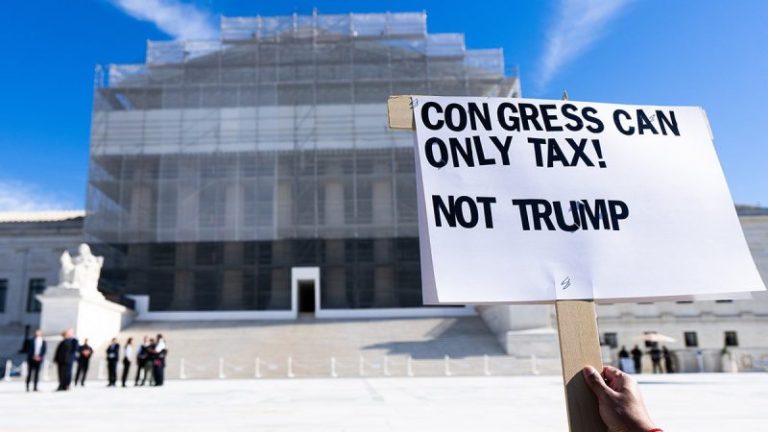
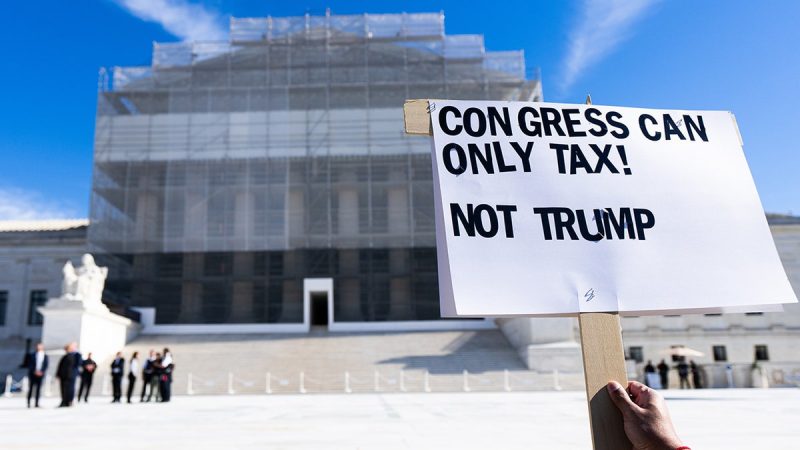
                                  The Supreme Court rebuked President Trump’s use of the International Emergency Economic Powers Act to impose sweeping ‘Liberation Day’ tariffs, ruling that the Constitution gives Congress — not the president — authority over tariffs.

                                  But the decision may not be the final word. From the Trade Expansion Act to the Trade Act of 1974 and even Depression-era statutes, multiple legal avenues remain that could allow Trump to reassert aggressive trade powers.

                                  In a 6-3 decision led by George W. Bush-appointed Chief Justice John Roberts, the court ruled that the ‘framers gave [tariff] power to Congress alone, notwithstanding the obvious foreign affairs implications of tariffs.’

                                  George H.W. Bush-appointed Justice Clarence Thomas, Trump-appointed Justice Brett Kavanaugh and George W. Bush-appointed Justice Samuel Alito dissented.

                                  On ‘Liberation Day’ in 2025, Trump cited the International Emergency Economic Powers Act (IEEPA), drafted by former Rep. Jonathan Brewster-Bingham, D-N.Y., to declare an emergency situation in which foreign countries were ‘ripping off’ the U.S.

                                  With that avenue now closed by Roberts, Trump could try to use the same national security rationale to invoke the Trade Expansion Act of 1962, which in part allows the Commerce Department to impose tariffs on ‘article[s]… imported… in such quantities or under such circumstances as to threaten or impair the national security.’

                                  Unlike the IEEPA, the JFK-era law has been tested in the courts, and Commerce Secretary Howard Lutnick has since built on his predecessor Wilbur Ross’ 2018 steel and aluminum tariffs imposed under the act, adding 407 more imports to the tariff list on the grounds that they are ‘derivative’ of the two approved metals.

                                  During his 2025 confirmation hearing, Lutnick voiced support for a ‘country by country, macro’ approach to tariffs and agreed with the president that the U.S. is ‘treated horribly by the global trading environment.’

                                  While tariffs imposed under Section 232 of the Trade Expansion Act are not immediate and require the Commerce Department to conduct a formal investigation, the law provides a court-tested avenue for the president.

                                  In the wake of Friday’s ruling, Sen. Rand Paul, R-Ky., and others celebrated the court’s affirmation that Trump cannot use ’emergency powers to enact taxes,’ but Congress has previously approved another avenue to impose tariffs.

                                  Then-Rep. Albert Ullman, D-Ore., crafted a bill signed by President Gerald Ford that expressly gave presidents broader authority to impose tariffs: the Trade Act of 1974.

                                  A federal appeals court in September ruled against thousands of companies that challenged tariffs on China imposed under Section 301 of the Trade Act.

                                  Rep. Haridopolos details importance of

                                  In this case, U.S. Trade Representative Jamieson Greer, a Trump appointee, could seek retaliatory tariffs against countries with unfair trade barriers, according to Global Policy Watch.

                                  An investigation, including negotiations with the targeted countries, would then ensue, and Greer could ultimately be cleared to impose trade restrictions if the probe finds that the U.S. is being denied trade agreement benefits or that such a deal is unjustifiable.

                                  However, in most cases, imposed tariffs sunset after four years, according to reports.

                                  In Trump’s favor, it could be argued that the same reasoning Roberts used to strike down the IEEPA authority could backfire on tariff opponents because the 1974 law explicitly gives the executive branch trade-restriction authority.

                                  Another section of the Ford-signed law could also be used to unilaterally impose tariffs.

                                  Section 122, the ‘Balance of Payments’ portion of the law, allows Trump to temporarily enforce tariffs or import quotas in certain situations.

                                  A president may impose tariff duties of up to 15% for 150 days against all or certain countries if they are found to be ‘maintain[ing] unjustifiable or unreasonable restrictions on U.S. commerce,’ according to the Retail Industry Leaders Association.

                                  ‘This authority is intended to give the executive branch flexibility to respond quickly to trade practices that may harm U.S. economic interests or to correct significant balance-of-payments deficits,’ the trade group said in a June report.

                                  However, reports show Section 122 has not been tested in court as extensively, which could lead to lawsuits and legal uncertainty.

                                  Another potential policy option for Trump is one that drew sharp criticism when President Herbert Hoover signed it against the advice of economists early in the Great Depression.

                                  The Smoot-Hawley Tariff Act of 1930, named for Republican Sen. Reed Smoot of Utah and Rep. Willis Hawley of Oregon, imposed tariffs on tens of thousands of imports in hopes of protecting American producers facing dire economic conditions.

                                  Hawley’s great-granddaughter, Carey Cezar of Baltimore, told NBC News in 2025 that she voted for Kamala Harris and opposed Trump’s tariffs after her ancestor’s name resurfaced in public discourse.

                                  Other critics of Smoot-Hawley say it is a key reason the Depression was so dire and expansive.

                                  However, the law still provides a mechanism for the Commerce Department to determine when a good is being ‘dumped’ on U.S. consumers or whether a foreign country is unfairly subsidizing an export to the U.S., and to respond with tariffs.

                                  Additionally, while Trump has imposed tariffs largely on a country-by-country basis, Smoot-Hawley requires that levies be applied on a product-by-product basis.

                                  A fifth avenue that is largely unreachable by Trump is the Fordney-McCumber Tariff Act of 1922.

                                  Sen. Porter McCumber, R-N.D., and Rep. Joseph Fordney, R-Mich., passed a bill allowing Republican President Warren Harding to impose much higher tariffs than were standard at the time, in hopes of protecting U.S. farmers from a sharp decline in revenue following World War I.

                                  In one of the first contemporary rebukes of protectionism, Fordney-McCumber was criticized for permitting tariffs as high as 50% on countries, including allies, which opponents said had the unintended consequence of hurting America’s ability to service its war debts.

                                  Fordney-McCumber was eventually superseded by Smoot-Hawley, and any remaining provisions are considered obsolete following the Reciprocal Trade Agreements Act, signed by President Franklin Roosevelt to undo some of Congress’ trade restrictions.

                                  The RTAA shifted tariff authority from Congress to the president, granting authority for bilateral negotiations aimed at lowering tariffs at the time.

                                  That dynamic, often called ‘reciprocity,’ is being used in the Trump era not to lower tariffs but to raise them.

                                  This post appeared first on FOX NEWS

                                  President Donald Trump slammed the Supreme Court’s 6-3 decision that ruled he does not have the authority to levy sweeping tariffs under a specific emergency powers law, noting he will pursue ‘alternatives’ to tariffs under emergency law.

                                  ‘Other alternatives will now be used to replace the ones that the court incorrectly rejected,’ Trump said during a White House press briefing Friday afternoon. ‘We have alternatives. Great alternatives. Could be more money. We’ll take in more money, and we’ll be a lot stronger for it. We’re taking in hundreds of billions of dollars. We’ll continue to do so.’

                                  The president also announced he is imposing a 10% ‘global tariff’ following the court’s decision.

                                  ‘Today I will sign an order to impose a 10% global tariff under section 122 over and above our normal tariffs already being charged,’ Trump said. ‘And we’re also initiating several section 301 and other investigations to protect our country from unfair trading practices of other countries and companies.’

                                  The high court blocked Trump’s tariffs levied under the International Emergency Economic Powers Act in what amounts to a major test of executive branch authority. 

                                  Trump called the ruling ‘deeply disappointing,’ saying he was ‘ashamed’ of certain members of the court.

                                  ‘I’m ashamed of certain members of the court, absolutely ashamed, for not having the courage to do what’s right for our country,’ the president said. ‘In actuality, I was very modest in my ask of other countries and businesses because… I wanted to be very well-behaved.

                                  ‘I didn’t want to do anything that would affect the decision of the court, because I understand the court. I understand how they are very easily swayed. I want to be a good boy. I have very effectively utilized tariffs over the past year to make America great again,’ he said.

                                  A source outside the Trump administration told Fox News that an aide came into the closed-door White House breakfast with governors earlier Friday and handed Trump a note about the Supreme Court ruling.

                                  The source said Trump ‘called it a disgrace, and then he went on with the remarks.’

                                  Some of the Supreme Court’s nine justices will likely be sitting in the audience when the president delivers the State of the Union address on Tuesday.

                                  ‘The Democrats on the court are thrilled, but they will automatically vote no,’ Trump said during the news conference. ‘They also are a, frankly, disgrace to our nation… They’re very unpatriotic and disloyal to our Constitution. It’s my opinion that the court has been swayed by foreign interests and a political movement that is far smaller than people would ever think.’

                                  In the opinion, the high court declared, ‘Our task today is to decide only whether the power to ‘regulate… importation,’ as granted to the President in IEEPA, embraces the power to impose tariffs. It does not.’

                                  Trump has made tariffs a key plank of his economic agenda since retaking the Oval Office last year, but his policies have not come without controversy.

                                  Republican reaction to the ruling has been mixed.

                                  Rep. Buddy Carter, R-Ga., slammed the high court’s decision.

                                  ‘The Supreme Court just undercut the President’s ability to defend American workers. President Donald Trump was elected to fight unfair trade and stop the United States from being ripped off. I’m outraged by this decision; it’s clearly judicial overreach,’ Carter asserted in a post on X.

                                  But Sen. Rand Paul, R-Ky., welcomed the ruling.

                                  ‘In defense of our Republic, the Supreme Court struck down using emergency powers to enact taxes. This ruling will also prevent a future President such as AOC from using emergency powers to enact socialism,’ Paul noted in a post on X.

                                  Rep. Don Bacon, R-Neb., also hailed the decision.

                                  ‘The Constitution’s checks and balances still work. Article One gives tariff authority to Congress. This was a common-sense and straightforward ruling by the Supreme Court. I feel vindicated as I’ve been saying this for the last 12 months. In the future, Congress should defend its own authorities and not rely on the Supreme Court. Besides the Constitutional concerns I had on the Administration’s broad-based tariffs, I also do not think tariffs are smart economic policy. Broad-based tariffs are bad economics,’ Bacon wrote in a post on X.

                                  House Speaker Mike Johnson, R-La., said Congress and the administration will determine the ‘best path forward’ in the coming weeks.

                                  ‘No one can deny that the President’s use of tariffs has brought in billions of dollars and created immense leverage for America’s trade strategy and for securing strong, reciprocal America-first trade agreements with countries that had been taking advantage of American workers for decades,’ Johnson wrote in an X post.

                                  This is a developing story. Please check back for updates.

                                  This post appeared first on FOX NEWS