Author

admin

Browsing

: The State Department has finalized a new privacy-preserving app intended to give users worldwide access to what officials describe as the same uncensored internet available to Americans, even in countries with strict online repression such as China and Iran and as Europe enacts tighter content oversight. 

The platform, Freedom.gov, will roll out ‘in the coming weeks,’ Fox News Digital has learned. 

It will operate as a one-click desktop and mobile application compatible with iOS and Android devices.

The app is open-source and includes built-in anonymity protections. 

‘In the interest of total transparency, we made Freedom.gov completely open-source. But we also made it completely anonymous,’ a State Department official said. ‘Anyone can see how it works. No one, including us, can track or identify you.’

According to the official, the application does not log IP addresses, session data, browsing activity, DNS queries or device identifiers that could be used to personally identify users.

Specific details about the app’s underlying technical structure were not disclosed.

Governments with sophisticated censorship systems historically have moved quickly to block or criminalize circumvention tools. Authorities can restrict app downloads, block domains, throttle traffic or impose penalties on users.

Whether Freedom.gov maintains accessibility in heavily restricted environments may depend on its technical architecture and its ability to adapt to countermeasures.

The initiative is being led by Under Secretary for Public Diplomacy Sarah Rogers, who oversees the State Department’s Digital Freedom office.

‘Freedom.gov is the latest in a long line of efforts by the State Department to protect and promote fundamental freedoms, both online and offline,’ Rogers said. ‘The project will be global in its scope, but distinctly American in its mission: commemorating our commitment to free expression as we approach our 250th birthday.’

Reuters previously reported that the State Department was developing the Freedom.gov platform.

The rollout comes amid intensifying global battles over internet governance, as governments across Europe and beyond move to assert greater control over online content.

In Europe, regulators have tightened oversight under new laws aimed at policing digital platforms. The European Union’s Digital Services Act expands government authority over major platforms and requires removal of illegal content, including hate speech and extremist material, with regulators empowered to impose steep fines for violations.

In the United Kingdom, the Online Safety Act imposes new obligations on platforms to address harmful and illegal content and includes age-verification requirements for certain services. Critics warn the measures risk incentivizing aggressive content removal and expanding government influence over lawful speech online.

Elsewhere, restrictions have been more direct. Russia recently moved to ban WhatsApp, further consolidating state control over digital communications.

China maintains the world’s most sophisticated online censorship system, widely known as the ‘Great Firewall,’ blocking foreign news outlets and social media platforms while promoting a state-controlled digital ecosystem.

Iran repeatedly has imposed sweeping internet shutdowns during periods of unrest. During protests, government blackouts have cut citizens off from global communications.

The Wall Street Journal previously reported that thousands of Starlink satellite internet terminals were covertly brought into the country following a blackout, in an effort backed by the United States to help dissidents bypass censorship. 

Iranian authorities have attempted to jam satellite signals and criminalized possession of such equipment. Satellite connectivity — which does not rely on domestic telecommunications infrastructure — has emerged as one of the few viable lifelines during shutdowns.

This post appeared first on FOX NEWS

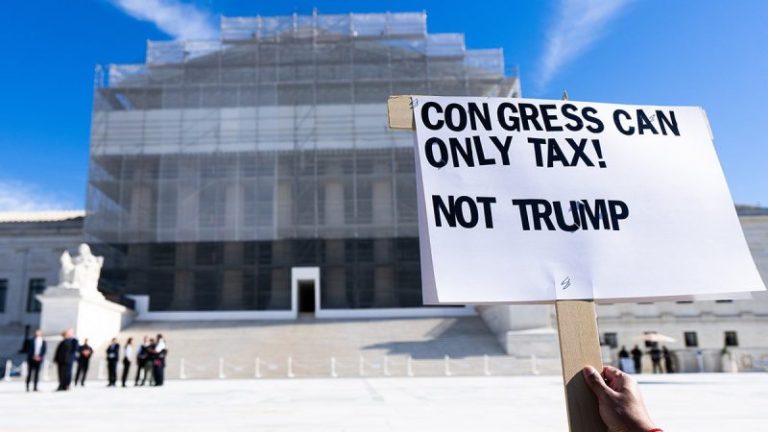
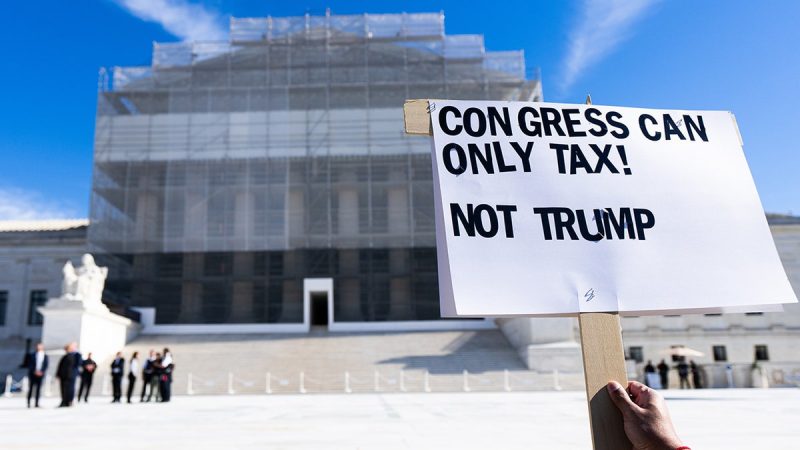
The Supreme Court rebuked President Trump’s use of the International Emergency Economic Powers Act to impose sweeping ‘Liberation Day’ tariffs, ruling that the Constitution gives Congress — not the president — authority over tariffs.

But the decision may not be the final word. From the Trade Expansion Act to the Trade Act of 1974 and even Depression-era statutes, multiple legal avenues remain that could allow Trump to reassert aggressive trade powers.

In a 6-3 decision led by George W. Bush-appointed Chief Justice John Roberts, the court ruled that the ‘framers gave [tariff] power to Congress alone, notwithstanding the obvious foreign affairs implications of tariffs.’

George H.W. Bush-appointed Justice Clarence Thomas, Trump-appointed Justice Brett Kavanaugh and George W. Bush-appointed Justice Samuel Alito dissented.

On ‘Liberation Day’ in 2025, Trump cited the International Emergency Economic Powers Act (IEEPA), drafted by former Rep. Jonathan Brewster-Bingham, D-N.Y., to declare an emergency situation in which foreign countries were ‘ripping off’ the U.S.

With that avenue now closed by Roberts, Trump could try to use the same national security rationale to invoke the Trade Expansion Act of 1962, which in part allows the Commerce Department to impose tariffs on ‘article[s]… imported… in such quantities or under such circumstances as to threaten or impair the national security.’

Unlike the IEEPA, the JFK-era law has been tested in the courts, and Commerce Secretary Howard Lutnick has since built on his predecessor Wilbur Ross’ 2018 steel and aluminum tariffs imposed under the act, adding 407 more imports to the tariff list on the grounds that they are ‘derivative’ of the two approved metals.

During his 2025 confirmation hearing, Lutnick voiced support for a ‘country by country, macro’ approach to tariffs and agreed with the president that the U.S. is ‘treated horribly by the global trading environment.’

While tariffs imposed under Section 232 of the Trade Expansion Act are not immediate and require the Commerce Department to conduct a formal investigation, the law provides a court-tested avenue for the president.

In the wake of Friday’s ruling, Sen. Rand Paul, R-Ky., and others celebrated the court’s affirmation that Trump cannot use ’emergency powers to enact taxes,’ but Congress has previously approved another avenue to impose tariffs.

Then-Rep. Albert Ullman, D-Ore., crafted a bill signed by President Gerald Ford that expressly gave presidents broader authority to impose tariffs: the Trade Act of 1974.

A federal appeals court in September ruled against thousands of companies that challenged tariffs on China imposed under Section 301 of the Trade Act.

Rep. Haridopolos details importance of

In this case, U.S. Trade Representative Jamieson Greer, a Trump appointee, could seek retaliatory tariffs against countries with unfair trade barriers, according to Global Policy Watch.

An investigation, including negotiations with the targeted countries, would then ensue, and Greer could ultimately be cleared to impose trade restrictions if the probe finds that the U.S. is being denied trade agreement benefits or that such a deal is unjustifiable.

However, in most cases, imposed tariffs sunset after four years, according to reports.

In Trump’s favor, it could be argued that the same reasoning Roberts used to strike down the IEEPA authority could backfire on tariff opponents because the 1974 law explicitly gives the executive branch trade-restriction authority.

Another section of the Ford-signed law could also be used to unilaterally impose tariffs.

Section 122, the ‘Balance of Payments’ portion of the law, allows Trump to temporarily enforce tariffs or import quotas in certain situations.

A president may impose tariff duties of up to 15% for 150 days against all or certain countries if they are found to be ‘maintain[ing] unjustifiable or unreasonable restrictions on U.S. commerce,’ according to the Retail Industry Leaders Association.

‘This authority is intended to give the executive branch flexibility to respond quickly to trade practices that may harm U.S. economic interests or to correct significant balance-of-payments deficits,’ the trade group said in a June report.

However, reports show Section 122 has not been tested in court as extensively, which could lead to lawsuits and legal uncertainty.

Another potential policy option for Trump is one that drew sharp criticism when President Herbert Hoover signed it against the advice of economists early in the Great Depression.

The Smoot-Hawley Tariff Act of 1930, named for Republican Sen. Reed Smoot of Utah and Rep. Willis Hawley of Oregon, imposed tariffs on tens of thousands of imports in hopes of protecting American producers facing dire economic conditions.

Hawley’s great-granddaughter, Carey Cezar of Baltimore, told NBC News in 2025 that she voted for Kamala Harris and opposed Trump’s tariffs after her ancestor’s name resurfaced in public discourse.

Other critics of Smoot-Hawley say it is a key reason the Depression was so dire and expansive.

However, the law still provides a mechanism for the Commerce Department to determine when a good is being ‘dumped’ on U.S. consumers or whether a foreign country is unfairly subsidizing an export to the U.S., and to respond with tariffs.

Additionally, while Trump has imposed tariffs largely on a country-by-country basis, Smoot-Hawley requires that levies be applied on a product-by-product basis.

A fifth avenue that is largely unreachable by Trump is the Fordney-McCumber Tariff Act of 1922.

Sen. Porter McCumber, R-N.D., and Rep. Joseph Fordney, R-Mich., passed a bill allowing Republican President Warren Harding to impose much higher tariffs than were standard at the time, in hopes of protecting U.S. farmers from a sharp decline in revenue following World War I.

In one of the first contemporary rebukes of protectionism, Fordney-McCumber was criticized for permitting tariffs as high as 50% on countries, including allies, which opponents said had the unintended consequence of hurting America’s ability to service its war debts.

Fordney-McCumber was eventually superseded by Smoot-Hawley, and any remaining provisions are considered obsolete following the Reciprocal Trade Agreements Act, signed by President Franklin Roosevelt to undo some of Congress’ trade restrictions.

The RTAA shifted tariff authority from Congress to the president, granting authority for bilateral negotiations aimed at lowering tariffs at the time.

That dynamic, often called ‘reciprocity,’ is being used in the Trump era not to lower tariffs but to raise them.

This post appeared first on FOX NEWS

President Donald Trump slammed the Supreme Court’s 6-3 decision that ruled he does not have the authority to levy sweeping tariffs under a specific emergency powers law, noting he will pursue ‘alternatives’ to tariffs under emergency law.

‘Other alternatives will now be used to replace the ones that the court incorrectly rejected,’ Trump said during a White House press briefing Friday afternoon. ‘We have alternatives. Great alternatives. Could be more money. We’ll take in more money, and we’ll be a lot stronger for it. We’re taking in hundreds of billions of dollars. We’ll continue to do so.’

The president also announced he is imposing a 10% ‘global tariff’ following the court’s decision.

‘Today I will sign an order to impose a 10% global tariff under section 122 over and above our normal tariffs already being charged,’ Trump said. ‘And we’re also initiating several section 301 and other investigations to protect our country from unfair trading practices of other countries and companies.’

The high court blocked Trump’s tariffs levied under the International Emergency Economic Powers Act in what amounts to a major test of executive branch authority. 

Trump called the ruling ‘deeply disappointing,’ saying he was ‘ashamed’ of certain members of the court.

‘I’m ashamed of certain members of the court, absolutely ashamed, for not having the courage to do what’s right for our country,’ the president said. ‘In actuality, I was very modest in my ask of other countries and businesses because… I wanted to be very well-behaved.

‘I didn’t want to do anything that would affect the decision of the court, because I understand the court. I understand how they are very easily swayed. I want to be a good boy. I have very effectively utilized tariffs over the past year to make America great again,’ he said.

A source outside the Trump administration told Fox News that an aide came into the closed-door White House breakfast with governors earlier Friday and handed Trump a note about the Supreme Court ruling.

The source said Trump ‘called it a disgrace, and then he went on with the remarks.’

Some of the Supreme Court’s nine justices will likely be sitting in the audience when the president delivers the State of the Union address on Tuesday.

‘The Democrats on the court are thrilled, but they will automatically vote no,’ Trump said during the news conference. ‘They also are a, frankly, disgrace to our nation… They’re very unpatriotic and disloyal to our Constitution. It’s my opinion that the court has been swayed by foreign interests and a political movement that is far smaller than people would ever think.’

In the opinion, the high court declared, ‘Our task today is to decide only whether the power to ‘regulate… importation,’ as granted to the President in IEEPA, embraces the power to impose tariffs. It does not.’

Trump has made tariffs a key plank of his economic agenda since retaking the Oval Office last year, but his policies have not come without controversy.

Republican reaction to the ruling has been mixed.

Rep. Buddy Carter, R-Ga., slammed the high court’s decision.

‘The Supreme Court just undercut the President’s ability to defend American workers. President Donald Trump was elected to fight unfair trade and stop the United States from being ripped off. I’m outraged by this decision; it’s clearly judicial overreach,’ Carter asserted in a post on X.

But Sen. Rand Paul, R-Ky., welcomed the ruling.

‘In defense of our Republic, the Supreme Court struck down using emergency powers to enact taxes. This ruling will also prevent a future President such as AOC from using emergency powers to enact socialism,’ Paul noted in a post on X.

Rep. Don Bacon, R-Neb., also hailed the decision.

‘The Constitution’s checks and balances still work. Article One gives tariff authority to Congress. This was a common-sense and straightforward ruling by the Supreme Court. I feel vindicated as I’ve been saying this for the last 12 months. In the future, Congress should defend its own authorities and not rely on the Supreme Court. Besides the Constitutional concerns I had on the Administration’s broad-based tariffs, I also do not think tariffs are smart economic policy. Broad-based tariffs are bad economics,’ Bacon wrote in a post on X.

House Speaker Mike Johnson, R-La., said Congress and the administration will determine the ‘best path forward’ in the coming weeks.

‘No one can deny that the President’s use of tariffs has brought in billions of dollars and created immense leverage for America’s trade strategy and for securing strong, reciprocal America-first trade agreements with countries that had been taking advantage of American workers for decades,’ Johnson wrote in an X post.

This is a developing story. Please check back for updates.

This post appeared first on FOX NEWS

The tech rally that powered markets through 2025 is being tested in 2026.

In early February, a broad tech selloff hit markets, fueled by various elements, including aggressive artificial intelligence (AI) capital spending guidance from hyperscalers, as well as the rapid release of new AI models, which sparked disruption concerns within the software sector. This powerful combination forced investors to separate durable AI leaders from stocks whose gains were driven mainly by sentiment and stretched valuations.

Technology benchmarks saw significant losses. From December 31, 2025, to its February 5 year‑to‑date low, the S&P Technology Index (INDEXSP:SP500-45) dropped by nearly 7 percent. Software-focused measures were hit especially hard; the iShares Expanded Tech-Software Sector ETF (BATS:IGV) declined by almost 25 percent.

Meanwhile, semiconductor‑focused peers like the iShares Semiconductor ETF (NASDAQ:SOXX) remained up more than 5 percent over the same stretch. The divergence underscored how quickly a broad AI theme can split into clear winners and laggards depending on where revenues and profits are actually showing up.

Indexes have since returned some of their losses, but investors with a multi‑year horizon need portfolio construction that can withstand the volatile nature of a sentiment-sensitive sector like tech. In this kind of environment, the challenge becomes building exposure to long‑term AI growth without drifting into a concentrated valuation risk trade.

James Learmonth serves as co-chief investment officer at Harvest ETFs and oversees strategies including the Harvest Tech Achievers Growth & Income ETF (TSX:HTA). Over the same period, it declined only by about 7 percent, underscoring the difference between a diversified, income‑oriented structure and a pure software basket.

Why did tech stocks sell off in early February?

After piling into AI‑linked software and services names on strong cloud and AI‑related revenue growth, the technology sector underwent a steep correction from its October 2025 high. The decline followed earnings reports that included guidance pointing to sustained, capital‑intensive buildouts and longer payback periods.

After hyperscalers signaled aggressive 2026 infrastructure spending, market participants began to question return‑on‑investment timelines, even as fundamentals largely held up.

Companies with less certain paths to monetization saw their share prices decrease rapidly, while those showing profitable AI‑driven growth and measurable returns on invested capital were hit less hard. Disruption‑driven headlines, such as the launch of Anthropic’s Claude Cowork tools and new AI assistants aimed at legal and accounting workflows, added to the perception that many software business models are at risk, even if long‑term AI adoption remains intact.

The move exposed the limits of a purely thematic AI basket approach; in this environment, a passive, set‑and‑forget AI allocation can quickly morph from a growth‑oriented bet into a concentrated valuation risk trade, which is where active managers like Learmonth are trying to draw a sharper line between structural growth and speculation.

For Harvest ETFs, that line starts with business quality rather than a story about AI.

“Obviously it’s a rapidly evolving landscape across AI right now,” he said. “I think having competitive moats in place is paramount for companies maintaining their leadership position over time. From a valuation perspective, we like to look at P/E with that growth multiplier peg applied to us, so you have that growth lens applied to the valuation.”

Several lenses help distinguish structural winners from speculative names.

Learmonth pointed to growing margins, return on equity and return on invested capital as key markers that AI‑driven capex is actually creating value, rather than just inflating a headline growth story.

“You want to make sure companies are actually growing profitably, and not just generating revenue for the sake of generating revenue, but not able to pass that through in terms of bottom‑line growth as well. I think return on equity and return on invested capital, along those same lines, are key metrics to look at too,’ he noted.

Companies with clear, recurring AI‑related revenue streams, such as infrastructure or enabling hardware, tend to fare better than those whose AI exposure is largely driven by narrative.

“We have for a long time argued that the hardware and semiconductor side of the business is where we want to be (more heavily focused) right now, because it is seeing the revenue and profit generation directly from the infrastructure investment. That being said, particularly with the severity of the declines that we’ve seen in the software side over the past few weeks, I think (some opportunities) might be starting to spring up there,’ said Learmonth.

“We have reduced our software exposure a little bit over the past few quarters, but we are still maintaining some software exposure in those companies where we think they have competitive moats, whether that’s specialized areas like tax preparation and accounting, things like that,’ the expert elaborated.

Following the earlier correction, which Wedbush Securities analyst Dan Ives says may have been an overreaction, AI‑sensitive stocks are now trading at more reasonable multiples than at their October 2025 peak.

For the S&P 500 Software & Services group, the average forward P/E multiple has fallen from about 32.6 times to 22.7 times expected profits, even though analysts still forecast double‑digit revenue and earnings growth, plus net margins close to 30 percent. That average hides a wide gap between names that still trade on premium “AI story” multiples and others that have rerated much more sharply, which is where stock picking becomes critical.

In a recent note, Morgan Stanley (NYSE:MS) spotlighted Atlassian (NASDAQ:TEAM), Shopify (NYSE:SHOP) and Palo Alto Networks (NASDAQ:PANW) as some of the most compelling software opportunities for investors looking to buy the dip.

Investor takeaway

Against this backdrop, the focus is shifting from “how much AI” to “how AI is structured.’

For investors who want to stay exposed to AI‑driven tech, but are wary of sharp, headline‑driven swings, vehicles like the Harvest Tech Achievers Growth & Income ETF could offer a middle ground by combining active stock selection in structural winners with a covered‑call overlay.

“That’s how we generate enhanced yields — by selling calls on our long equity positions to generate option premiums, which we then pay as distributions on a fixed monthly basis,” explained Learmonth.

“That sale of options can help to mitigate some of the month‑to‑month volatility across the fund, with the tradeoff being some foregone upside in a strong bull market.”

As the AI trend evolves, success will likely favor those who view AI as a long-term, multi-year structural shift rather than a short-term theme. Winners will employ active management, prioritize income and utilize a disciplined structure to separate signal from noise.

Securities Disclosure: I, Meagen Seatter, hold no direct investment interest in any company mentioned in this article.

This post appeared first on investingnews.com

Congressional Republicans are pushing back against Democratic claims that their marquee voter ID legislation would wreak havoc on elections in the country.

Congressional Democrats have panned the Safeguarding American Voter Eligibility (SAVE) America Act as a tool of voter suppression — saying it’s a bill that allows the Department of Homeland Security (DHS) to monitor Americans’ voter information and create barriers for married women to vote, among several other claims.

Along with requiring photo ID to vote, the bill would require proof of citizenship to register to vote in federal elections, mandate states to actively verify and remove noncitizens from voter rolls, expand information sharing with federal agencies, including DHS, to verify citizenship, and create new criminal penalties for registering noncitizens to vote.

Trump has time and again pushed voter ID, calling the election reforms in the bill a ‘CAN’T MISS FOR RE-ELECTION IN THE MIDTERMS, AND BEYOND.’ 

Some of the bill’s strongest proponents fact-checked those claims in interviews with Fox News Digital.

‘If you look at what it actually says, rather than what Democrats aggressively and, I believe, disingenuously are arguing right now — they’re overlooking the requirements of the SAVE America Act — those requirements are actually really generous,’ Sen. Mike Lee, R-Utah, told Fox News Digital. ‘They’re really flexible.’

Here’s a closer look at some of the most common claims Democrats have made about the SAVE America Act — and how Republican supporters of the bill are responding.

Claim: ‘Federalizing voter suppression’

Senate Minority Leader Chuck Schumer, D-N.Y., routinely has bashed the SAVE America Act as ‘Jim Crow 2.0’ — the segregationist laws of the Deep South largely done away with by the Civil Rights Act.

‘It has nothing to do with protecting our elections and everything to do with federalizing voter suppression,’ Schumer said earlier in February on the Senate floor.

But Republicans argued that Democrats were being ‘hypocritical’ in their voter suppression charge, particularly when it comes to voter ID.

Sen. Rick Scott, R-Fla., whose home state is one of 36 that either requests or requires a form of photo identification before voting, argued that voter ID laws across the country had no effect on turnout.

‘This idea that they’re saying that it’s going to suppress any vote — it’s never done that anywhere,’ Scott told Fox News Digital. ‘They said that when Georgia passed it, and they had record turnout. So it’s not true at all. I mean, how many people do you know who don’t have an ID?’

Claim: DHS will have access to legal voters’ data

House Minority Leader Hakeem Jeffries, D-N.Y., argued during a press conference that this iteration of the SAVE Act — with its new name — is ‘worse’ than the version that passed the House in April because it gave DHS access to Americans’ voter data.

He appeared to be referring to a provision that would allow DHS to begin potential deportation proceedings against a noncitizen found on a state’s voter rolls.

‘This version, as I understand it, would actually give DHS the power to get voting records from states across the country,’ Jeffries said earlier in February. ‘Why would these extremists think that’s a good idea? That we as Democrats are going to accept at this moment in time? We’d want DHS and ICE, who have been brutally, viciously and violently targeting everyday Americans, to have more data about the American people? It’s outrageous.’

Rep. Chip Roy, R-Texas, who led both the SAVE Act and SAVE America Act in the House, argued Democrats were ‘really reaching’ for criticism.

‘This actually allows and empowers states to be able to — as many of them want to do — check their voter rolls against the citizenship database that they’re currently prohibited from doing under a judicial interpretation of federal law,’ Roy said.

‘So, long-winded way of saying, no — the SAVE system exists, we have citizenship data, and we’re simply going to allow the checking of voter rolls against citizenship data.’

Claim: Suppresses married women’s right to vote

Another oft-repeated argument by Democrats is that the legislation would make it harder for American women to vote — specifically married women whose last names are now different from those on their birth certificates.

That’s because the bill would require proof of citizenship, like a birth certificate or a Real ID, to register to vote.

‘Republicans aren’t truly afraid of noncitizens voting, which we all know is already illegal, already grounds for deportation,’ House Minority Whip Katherine Clark, D-Mass., said earlier this month. ‘They’re afraid of women voting.’

Rep. Emilia Sykes, D-Ohio, said during the same press conference, ‘If your current name does not exactly fit and match the name on your birth certificate or citizenship papers, you could be blocked from registering to vote, even if you are a lifelong naturalized or American-born citizen.’

But Roy again said this was untrue.

‘This is absolute nonsense, and we specifically allow for a provision to make sure that no one can possibly be left behind,’ he said.

‘If a woman tried to register to vote with different names on her birth certificate and driver’s license,’ Roy said. ‘We literally put in the statute that all you have to do is sign an affidavit under penalty of perjury that, ‘I am that person. This is my birth certificate … and this is my driver’s license that is reflecting my married name.’’

This post appeared first on FOX NEWS

President Donald Trump has reportedly reacted to the Supreme Court’s 6-3 decision that ruled he does not have the authority to levy sweeping tariffs under a specific emergency powers law.

A source outside the Trump administration told Fox News that an aide came into the closed-door White House breakfast with governors and handed Trump a note about the Supreme Court ruling.

The source said Trump ‘called it a disgrace, and then he went on with the remarks.’

The high court blocked Trump’s tariffs levied under the International Emergency Economic Powers Act in what amounts to a major test of executive branch authority. 

Some of the Supreme Court’s nine justices will likely be sitting in the audience when the president delivers the State of the Union address on Tuesday.

In the opinion, the high court declared, ‘Our task today is to decide only whether the power to ‘regulate… importation,’ as granted to the President in IEEPA, embraces the power to impose tariffs. It does not.’

Trump has made tariffs a key plank of his economic agenda since retaking the Oval Office last year, but his policies have not come without controversy.

Republican reaction to the ruling has been mixed.

Rep. Buddy Carter, R-Ga., slammed the high court’s decision.

‘The Supreme Court just undercut the President’s ability to defend American workers. President Donald Trump was elected to fight unfair trade and stop the United States from being ripped off. I’m outraged by this decision; it’s clearly judicial overreach,’ Carter asserted in a post on X.

But Sen. Rand Paul, R-Ky., welcomed the ruling.

‘In defense of our Republic, the Supreme Court struck down using emergency powers to enact taxes. This ruling will also prevent a future President such as AOC from using emergency powers to enact socialism,’ Paul noted in a post on X.

Rep. Don Bacon, R-Neb., also hailed the decision.

‘The Constitution’s checks and balances still work. Article One gives tariff authority to Congress. This was a common-sense and straightforward ruling by the Supreme Court. I feel vindicated as I’ve been saying this for the last 12 months. In the future, Congress should defend its own authorities and not rely on the Supreme Court. Besides the Constitutional concerns I had on the Administration’s broad-based tariffs, I also do not think tariffs are smart economic policy. Broad-based tariffs are bad economics,’ Bacon wrote in a post on X.

This is a developing story. Please check back for updates.

This post appeared first on FOX NEWS

Some Republicans are quietly cheering the Supreme Court’s decision blocking most of President Donald Trump’s tariffs on Friday, even as it deals a blow to a cornerstone of the commander-in-chief’s foreign policy and economic strategy.

One conservative House GOP lawmaker granted anonymity to speak freely, for example, said they were ‘relieved.’

‘It’s the right result,’ they said. ‘I am already seeing messages of relief and approval from other members of the Republican conference, as well. I expect that even more will express that relief. This helps to ensure Congress keeps its power over tariffs and preserves separation of power.’

Another Trump-aligned House Republican told Fox News Digital, ‘I think the Supreme Court rightfully decided that this was an Article I authority.’

‘Conservatives don’t like tariffs as a long-term strategy,’ the second House Republican said. ‘The president was right to use them as a tool, and he was right to use them to get outcomes on certain things. But in a long-term way…it’s a tax on consumers.’

The conservative-majority high court ruled on Friday that Trump did not have the authority to impose tariffs under the International Emergency Economic Powers Act (IEEPA). The White House’s interpretation of the 1977 law was used as the basis for sweeping ‘Liberation Day’ tariffs that Trump first unveiled last year.

But Chief Justice John Roberts argued that the law would have more expressly mentioned tariff authority if that is what it was meant for.

Roberts said ‘the president must ‘point to clear congressional authorization’ to justify his extraordinary assertion of the power to impose tariffs,’ which ‘he cannot.’

The ruling, and subsequent wave of relief, isn’t the first time Republicans have bucked Trump and his tariffs. The Senate on several occasions has voted against specific parts of the strategy, and the House voted last week to end Trump’s emergency declaration on Canada aimed at ending tariffs there.

‘Article One gives tariff authority to Congress. This was a common sense and straightforward ruling by the Supreme Court. I feel vindicated as I’ve been saying this for the last 12 months,’ Rep. Don Bacon, R-Neb., one of six House Republicans who voted against the Canada tariffs last week, told Fox News Digital. ‘Besides the Constitutional concerns I had on the Administration’s broad-based tariffs, I also do not think tariffs are smart economic policy. Broad-based tariffs are bad economics.’

One House GOP aide bluntly told Fox News Digital after the ruling, ‘Tariffs suck and are useless.’  

Sen. Rand Paul, R-Ky., one of the most vocal opponents of tariffs in the Senate, contended in a post on X shortly after the ruling that the Supreme Court ‘struck down using emergency powers to enact taxes.’

‘No future administration, including a socialist one, can use ‘emergency’ powers to get around Congress and tax by decree,’ Paul said in a statement to Fox News Digital.

But not every Republican was thrilled by the result, nor their colleagues’ attitude toward the hefty blow dealt to Trump’s agenda and the ripple effect it could have on his economic policies. One Republican source described the outpouring of relief or opposition as ’50/50.’

A GOP Senate source told Fox News Digital, ‘If this is a relief to any Republican, then they clearly don’t care about their president’s agenda.’ 

‘The administration will find a way around this, and should, but anyone who’s celebrating right now is probably missing a part of their brain,’ the source said. ‘I don’t understand how someone can see President Trump and the American people lose trillions of dollars and smile.’

Sen. Roger Marshall, R-Kan., told Fox News Digital that he was disappointed by the decision, but not surprised, and noted that the court was divided on the issue.

‘President Trump’s tariffs were delivering results — bringing our trading partners to the table, securing ten trade agreements, and driving supply chains and manufacturing back to the United States,’ Marshall said. ‘These tools were also advancing our national security interests, including pressuring countries like India to stop purchasing Russian oil.’ 

A third House Republican granted anonymity to speak candidly told Fox News Digital the Supreme Court decision was ‘a severe blow’ because the tariffs ‘were making progress that we finally have on fair trade.’

This post appeared first on FOX NEWS

Here’s a quick recap of the crypto landscape for Friday (February 20) as of 9:00 a.m. UTC.

Get the latest insights on Bitcoin, Ether and altcoins, along with a round-up of key cryptocurrency market news.

Bitcoin (BTC) was priced at US$67,850.72, up by 1.2 percent over the last 24 hours.

Bitcoin price performance, February 20, 2026.

Bitcoin price performance, February 20, 2026.

Chart via TradingView

Ether (ETH) was priced at US$1,959.77, up by 0.6 percent over the last 24 hours.

Altcoin price update

  • XRP (XRP) was priced at US$1.42, trading flat over 24 hours.
  • Solana (SOL) was trading at US$83.59, down by 3.1 percent over 24 hours.

Today’s crypto news to know

CME moves crypto derivatives to 24/7 schedule

CME Group will begin offering round-the-clock trading for its cryptocurrency futures and options on CME Globex starting May 29, 2026, pending regulatory approval.

The decision follows a record US$3 trillion in notional crypto derivatives volume in 2025. Year-to-date in 2026, crypto derivatives average daily volume has climbed 46 percent year over year to 407,200 contracts, while futures ADV is up 47 percent. Average daily open interest currently stands at 335,400 contracts.

By eliminating weekend closures, CME allows traders to hedge in real time as crypto markets move, reducing the price gap risk that builds when traditional markets are shut.

Bitcoin ETFs extend five-week outflow streak

Spot Bitcoin exchange-traded funds logged another US$165.8 million in net redemptions on February 19, stretching a five-week outflow streak to nearly US$4 billion.

Weekly withdrawals since mid-January have ranged from US$318 million to US$1.49 billion, raising questions about whether institutional demand is cooling.

Despite the steady redemptions, Bitcoin edged up 1.4 percent over the past day to roughly US$67,800, lifting the broader crypto market cap to around US$2.4 trillion.

Solana meme coin PUNCH surges after exchange listing

A Solana-based meme coin known as PUNCH has surged sharply after securing a listing on a major exchange, briefly jumping more than 80 percent in a single session and posting eye-catching weekly gains.

The token’s market capitalization climbed past US$30 million as it ranked among CoinGecko’s top gainers.

The coin draws branding from a viral story about a rescued baby long-tailed macaque named Punch, which gained traction across social media.

Securities Disclosure: I, Meagen Seatter, hold no direct investment interest in any company mentioned in this article.

Securities Disclosure: I, Giann Liguid, hold no direct investment interest in any company mentioned in this article.

This post appeared first on investingnews.com

/NOT FOR DISTRIBUTION TO UNITED STATES NEWS WIRE SERVICES OR FOR DISSEMINATION IN THE UNITED STATES/

1911 Gold Corporation (‘1911 Gold’ or the ‘Company’) (TSXV: AUMB,OTC:AUMBF) (OTCQX: AUMBF) (FRA: 2KY) is pleased to announce that the Company has entered into a loan agreement (the ‘Loan Agreement’) with Auramet International, Inc. (‘Auramet’), providing for a US$30 million secured credit facility (the ‘Credit Facility’). It is anticipated that the proceeds from the Credit Facility will be used to advance critical operational milestones at the True North Gold Project, specifically providing the capital required to purchase essential mining equipment, underground development at the True North mine, and the installation of the new crushing circuit at the mill.

1911 Gold Corporation - TSXV: AUMB, OTCQB: AUMBF, FRA: 2KY (CNW Group/1911 Gold Corporation)

Shaun Heinrichs, President and Chief Executive Officer of the Company, stated ‘We are very pleased to secure this credit facility with Auramet, a group that has a long and successful history with the True North Gold Project and a deep understanding of its potential. This US$30 million facility provides the necessary funding to advance the restart plan outlined in our recently released PEA, which showcased a high-return, low-capital-intensity path back to production. By securing this financing, we remain well-capitalized to achieve our key operational milestones at Rice Lake as we position 1911 Gold for a restart in 2027.’

Pursuant to the Loan Agreement, US$15 million of the Credit Facility (the ‘Tranche 1 Amount‘) will be made available on the Closing Date (as defined below) and, subject to the satisfaction of certain conditions precedent, the remaining US$15 million of the Credit Facility (the ‘Tranche 2 Amount‘) will be made available during the period commencing on the date that is 90 days following the Closing Date and ending on the date that is 180 days following the Closing Date. The outstanding principal amount under the Credit Facility will accrue interest at a rate of 12% per annum calculated and payable monthly in arrears on the last business day of each calendar month; provided, however, that no interest shall accrue on the Tranche 1 Amount for a period of six months following the Closing Date. The Tranche 1 Amount shall be amortized and repaid to Auramet in 12 equal monthly instalments of US$1.25 million commencing on the date that is 13 months following the Closing Date and ending on the date that is 24 months following the Closing Date (the ‘Maturity Date‘). The Tranche 2 Amount shall be repaid to Auramet on the Maturity Date.

The obligations under the Loan Agreement and the Offtake Agreement (as defined below) are secured by a first-ranking security interest on all personal property of the Company and a continuing collateral mortgage against the Company’s True North Gold Project and Rice Lake exploration properties. The Loan Agreement includes terms and conditions customary for a transaction of this nature, including certain specified positive and negative covenants and mandatory prepayment terms.

The closing of the advance of the Tranche 1 Amount is anticipated to occur prior to the end of February (the ‘Closing Date‘) and is subject to customary conditions, including the acceptance of the TSX Venture Exchange (the ‘TSXV‘).

In consideration for the arrangement of the Credit Facility, on the Closing Date, the Company will pay Auramet an arrangement fee of US$1,050,000, representing 3.5% of the aggregate principal amount of the Credit Facility, which fee is payable, at the option of the Company, in cash or by the issuance of 1,369,600 common shares in the capital of the Company (‘Common Shares‘) at a deemed price of C$1.05 per Common Share.

In consideration for the lending of the Tranche 1 Amount, on the Closing Date, the Company will pay Auramet a drawdown fee of US$375,000, representing 2.5% of the Tranche 1 Amount, which fee is payable, at the option of the Company, in cash or by the issuance of 489,142 Common Shares at a deemed price of C$1.05 per Common Share, and will issue to Auramet 4,500,000 common share purchase warrants of the Company (the ‘Tranche 1 Warrants‘), with each Tranche 1 Warrant exercisable to purchase one Common Share at an exercise price equal to C$1.07 per Common Share, representing a 10% premium to the 5-day volume-weighted average price of the Common Shares on the TSXV for the five consecutive trading days ending on (and including) the date of the Loan Agreement, with such Tranche 1 Warrants expiring on the Maturity Date, subject to acceleration.

In consideration for the lending of the Tranche 2 Amount, on the date of drawdown of the Tranche 2 Amount, the Company will pay Auramet a further drawdown fee of US$375,000, representing 2.5% of the Tranche 2 Amount, which fee is payable, at the option of the Company, in either cash or in Common Shares by issuing such number of Common Shares equal to the quotient obtained by dividing (i) the amount of the drawdown fee converted to Canadian dollars based on the Bank of Canada daily exchange rate on the business day prior to the date of drawdown of the Tranche 2 Amount, by (ii) the greater of (A) the closing price of the Common Shares on the TSXV on the trading day immediately prior to the date of drawdown of the Tranche 2 Amount, and (B) the lowest price permitted by the TSXV, and will issue to Auramet an additional 4,500,000 common share purchase warrants of the Company (the ‘Tranche 2 Warrants‘ and, together with the Tranche 1 Warrants, the ‘Warrants‘), with each Tranche 2 Warrant exercisable to purchase one Common Share at an exercise price equal to the greater of (i) a 10% premium to the 5-day volume-weighted average price of the Common Shares on the TSXV for the five consecutive trading days ending on (and including) the trading day immediately prior to the date of drawdown of the Tranche 2 Amount, and (ii) the lowest price permitted by the TSXV.

The Common Shares and the Warrants issuable pursuant to the Loan Agreement and the Common Shares underlying the Warrants will be subject to a four-month statutory hold period under applicable Canadian securities laws.

The Common Shares and the Warrants issuable pursuant to the Loan Agreement and the Common Shares underlying the Warrants have not been, and will not be, registered under the United States Securities Act of 1933, as amended (the ‘U.S. Securities Act‘), or any U.S. state securities laws, and may not be offered or sold in the United States or to, or for the account or benefit of, U.S. persons absent registration under the U.S. Securities Act and all applicable state securities laws or compliance with the requirements of an applicable exemption therefrom. This news release shall not constitute an offer to sell or the solicitation of an offer to buy in the United States, nor shall there be any sale of the securities in any state in which such offer, solicitation or sale would be unlawful.

In connection with the Credit Facility, the Company also entered into an offtake agreement (the ‘Offtake Agreement‘) with Auramet, pursuant to which the Company will sell to Auramet 100% of gold produced from its True North Gold Project and its Rice Lake exploration properties until the date that is the later of (i) the date which is 36 months following the Closing Date, and (ii) the date on which full repayment of the Credit Facility has been made.

About Auramet

Auramet is a private company established in 2004 by seasoned professionals who have assembled a global team of industry specialists with over 400 years combined industry experience. It is one of the largest physical precious metals merchants in the world and has provided over $1.5 billion in term financing facilities to date. Auramet offers a full range of services including physical metals trading, metals merchant banking (including direct lending), and project finance advisory services to all participants in the precious metals supply chain.

About 1911 Gold Corporation

1911 Gold is an advanced gold explorer and developer focused on its 100%-owned True North Gold Project in the Archean Rice Lake Greenstone Belt in Manitoba, Canada. The Company controls a large, highly prospective ~62,000-hectare land package with numerous past-producing gold operations within trucking distance of the fully built and permitted True North mine and mill complex. 1911 Gold is positioning itself to restart operations in 2027 and offers a unique, near-term production story with significant exploration upside. The strategy is to build a district-scale gold mining operation around a centralized, and readily expandable infrastructure to support a socially and environmentally responsible, long-term mining operation with little development risk and a growing mineral resource base.

1911 Gold’s True North complex and the exploration land package are located within and among the First Nation communities of the Hollow Water First Nation and the Black River First Nation. 1911 Gold looks forward to maintaining open, cooperative, and respectful communications with all of our local communities and stakeholders to foster mutually beneficial working relationships.

ON BEHALF OF THE BOARD OF DIRECTORS

Shaun Heinrichs
President and CEO

CAUTIONARY STATEMENT REGARDING FORWARD-LOOKING INFORMATION

This news release contains forward-looking information or forward-looking statements within the meaning of applicable securities laws (collectively, ‘forward-looking statements‘). Often, but not always, forward-looking statements can be identified by the use of words and phrases such as ‘plans’, ‘expects’ or ‘does not expect’, ‘is expected’, ‘budget’, ‘scheduled’, ‘estimates’, ‘forecasts’, ‘intends’, ‘anticipates’ or ‘does not anticipate’, or ‘believes’, or that describe a ‘goal’, or variations of such words and phrases, or statements that certain actions, events or results ‘may’, ‘could’, ‘would’, ‘might’ or ‘will’ be taken, occur or be achieved.

All statements that address expectations or projections about the future, including, but not limited to, statements about the structure and terms of the Credit Facility, the Loan Agreement and the Offtake Agreement, the use of proceeds of the Credit Facility, the timing and ability of the Company to close the advance of the Tranche 1 Amount on the terms announced or at all, the timing and ability of the Company to satisfy the conditions precedent in respect of the Credit Facility, including the receipt of necessary regulatory approvals, and the Company’s objectives, goals and future plans and strategies, are forward-looking statements. 

All forward-looking statements reflect the Company’s beliefs and assumptions based on information available at the time the statements were made. Actual results or events may differ from those predicted in these forward-looking statements. All of the Company’s forward-looking statements are qualified by the assumptions that are stated or inherent in such forward-looking statements, including the assumptions listed below. Although the Company believes that these assumptions are reasonable, this list is not exhaustive of factors that may affect any of the forward-looking statements.

Forward-looking statements involve known and unknown risks, future events, conditions, uncertainties and other factors which may cause the actual results, performance or achievements to be materially different from any future results, predictions, projections, forecasts, performance or achievements expressed or implied by the forward-looking statements, including, but not limited to, the Company’s inability to close the Credit Facility, including the advance of the Tranche 1 Amount, on the terms described in this news release or on other terms acceptable to the Company, the Company’s inability to satisfy the conditions precedent in respect of the Credit Facility, the Company’s inability to receive necessary regulatory approvals in respect of the Credit Facility, and the Company’s inability to repay the Credit Facility or comply with the covenants set out in the Loan Agreement.

Although 1911 Gold has attempted to identify important factors that could cause actual actions, events or results to differ materially from those described in forward-looking statements, there may be other factors that cause actions, events or results not to be as anticipated, estimated or intended. There can be no assurance that forward-looking statements will prove to be accurate, as actual results and future events could differ materially from those anticipated in such statements. Accordingly, readers should not place undue reliance on forward-looking statements.

All forward-looking statements contained in this news release are given as of the date hereof. The Company disclaims any intention or obligation to update or revise any forward-looking statements whether as a result of new information, future events or otherwise, except in accordance with applicable securities laws.

Neither TSX Venture Exchange nor its Regulation Services Provider (as that term is defined in policies of the TSX Venture Exchange) accepts responsibility for the adequacy or accuracy of this release.

SOURCE 1911 Gold Corporation

Cision View original content to download multimedia: http://www.newswire.ca/en/releases/archive/February2026/20/c6523.html

News Provided by Canada Newswire via QuoteMedia

This post appeared first on investingnews.com

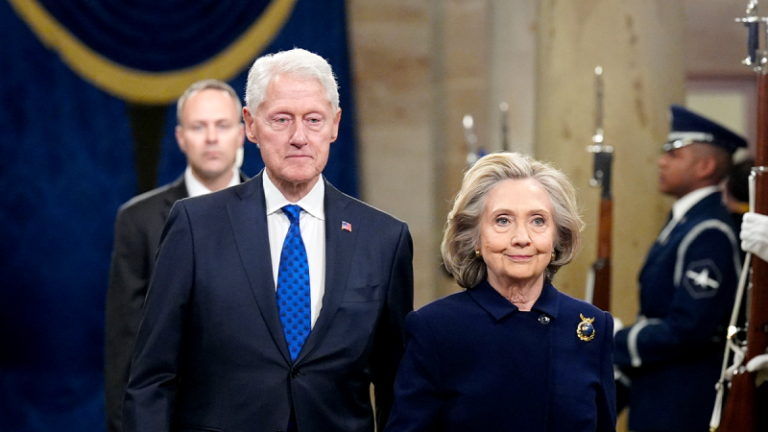
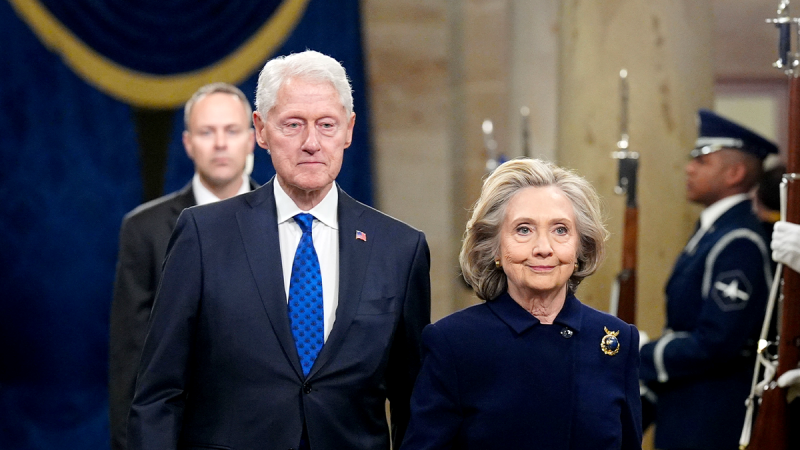
Former President Bill Clinton and former Secretary of State Hillary Clinton will be deposed by the House Oversight Committee in their hometown instead of in Washington, D.C. next week, Fox News Digital has learned.

The Clintons are testifying under oath for the committee’s probe into Jeffrey Epstein. Hillary Clinton’s deposition is scheduled for Feb. 26 while Bill Clinton will sit down with congressional staff and lawmakers on Feb. 27.

‘The Clintons’ depositions will be held in Chappaqua, New York on February 26 and 27 as an accommodation for their schedules. The depositions are in accordance with House and Committee rules,’ a spokeswoman for the House Oversight Committee told Fox News Digital.

The former first couple purchased their home in Chappaqua, just north of New York City, in 1999, and it has been their main residence since leaving the White House.

Their depositions will come after months of back-and-forth with committee Republicans about various terms for the closed-door meetings.

‘The Clintons’ testimony is critical to understanding Epstein and [Ghislaine Maxwell’s] sex trafficking network and the ways they sought to curry favor and influence to shield themselves from scrutiny,’ House Oversight Committee Chairman James Comer, R-Ky., told Fox News Digital on Thursday evening. ‘Their testimony may also inform how Congress can strengthen laws to better combat human trafficking. Our goal for this investigation is straightforward: we seek to deliver transparency and accountability for the American people and for survivors.’

House Republicans nearly moved forward with a vote on holding them both in contempt of Congress last month after the Clintons’ lawyers ripped Comer’s subpoenas as legally invalid and a breach of separation of powers.

While some Democrats agreed with the move, the majority of them accused Comer of persecuting the Clintons on political grounds.

If the votes were successful, they would both have been referred to the Department of Justice (DOJ) for prosecution. A guilty verdict for contempt of Congress carries up to one year in jail and a maximum fine of $100,000.

But days before the expected vote, the Clintons’ counsel told Comer they would agree to testify.

In the days since, however, both Clintons have waged a public pressure campaign demanding they get public hearings instead of a closed-door transcribed and taped interview. 

‘I have called for the full release of the Epstein files. I have provided a sworn statement of what I know. And just this week, I’ve agreed to appear in person before the committee. But it’s still not enough for Republicans on the House Oversight Committee,’ Bill Clinton posted on X this month.

‘Now, Chairman Comer says he wants cameras, but only behind closed doors. Who benefits from this arrangement? It’s not Epstein’s victims, who deserve justice. Not the public, who deserve the truth. It serves only partisan interests. This is not fact-finding, it’s pure politics.’

Comer has said that public hearings are not out of the question, but not before depositions behind closed doors.

Bill Clinton was known to be friendly with Epstein long before the federal case against him first emerged and has appeared in documents on the late pedophile released by the DOJ. But neither he nor Hillary Clinton are implicated in any wrongdoing.

The Clintons are two of over a dozen people and entities who have been subpoenaed for information in the committee’s bipartisan Epstein probe.

It’s not unprecedented for the committee to travel for depositions, either. Committee staff and some lawmakers were in Ohio on Wednesday to depose former Victoria’s Secret CEO Leslie Wexner, a former client of Epstein’s financial advisory firm who was named in documents released by the DOJ about the late pedophile thousands of times.

This post appeared first on FOX NEWS