

Author

admin

Browsing

/NOT FOR DISTRIBUTION TO UNITED STATES NEWS WIRE SERVICES OR FOR DISSEMINATION IN THE UNITED STATES/

1911 Gold Corporation (‘1911 Gold’ or the ‘Company’) (TSXV: AUMB,OTC:AUMBF) (OTCQX: AUMBF) (FRA: 2KY) is pleased to announce that the Company has entered into a loan agreement (the ‘Loan Agreement’) with Auramet International, Inc. (‘Auramet’), providing for a US$30 million secured credit facility (the ‘Credit Facility’). It is anticipated that the proceeds from the Credit Facility will be used to advance critical operational milestones at the True North Gold Project, specifically providing the capital required to purchase essential mining equipment, underground development at the True North mine, and the installation of the new crushing circuit at the mill.
1911 Gold Corporation - TSXV: AUMB, OTCQB: AUMBF, FRA: 2KY (CNW Group/1911 Gold Corporation)

Shaun Heinrichs, President and Chief Executive Officer of the Company, stated ‘We are very pleased to secure this credit facility with Auramet, a group that has a long and successful history with the True North Gold Project and a deep understanding of its potential. This US$30 million facility provides the necessary funding to advance the restart plan outlined in our recently released PEA, which showcased a high-return, low-capital-intensity path back to production. By securing this financing, we remain well-capitalized to achieve our key operational milestones at Rice Lake as we position 1911 Gold for a restart in 2027.’

Pursuant to the Loan Agreement, US$15 million of the Credit Facility (the ‘Tranche 1 Amount‘) will be made available on the Closing Date (as defined below) and, subject to the satisfaction of certain conditions precedent, the remaining US$15 million of the Credit Facility (the ‘Tranche 2 Amount‘) will be made available during the period commencing on the date that is 90 days following the Closing Date and ending on the date that is 180 days following the Closing Date. The outstanding principal amount under the Credit Facility will accrue interest at a rate of 12% per annum calculated and payable monthly in arrears on the last business day of each calendar month; provided, however, that no interest shall accrue on the Tranche 1 Amount for a period of six months following the Closing Date. The Tranche 1 Amount shall be amortized and repaid to Auramet in 12 equal monthly instalments of US$1.25 million commencing on the date that is 13 months following the Closing Date and ending on the date that is 24 months following the Closing Date (the ‘Maturity Date‘). The Tranche 2 Amount shall be repaid to Auramet on the Maturity Date.

The obligations under the Loan Agreement and the Offtake Agreement (as defined below) are secured by a first-ranking security interest on all personal property of the Company and a continuing collateral mortgage against the Company’s True North Gold Project and Rice Lake exploration properties. The Loan Agreement includes terms and conditions customary for a transaction of this nature, including certain specified positive and negative covenants and mandatory prepayment terms.

The closing of the advance of the Tranche 1 Amount is anticipated to occur prior to the end of February (the ‘Closing Date‘) and is subject to customary conditions, including the acceptance of the TSX Venture Exchange (the ‘TSXV‘).

In consideration for the arrangement of the Credit Facility, on the Closing Date, the Company will pay Auramet an arrangement fee of US$1,050,000, representing 3.5% of the aggregate principal amount of the Credit Facility, which fee is payable, at the option of the Company, in cash or by the issuance of 1,369,600 common shares in the capital of the Company (‘Common Shares‘) at a deemed price of C$1.05 per Common Share.

In consideration for the lending of the Tranche 1 Amount, on the Closing Date, the Company will pay Auramet a drawdown fee of US$375,000, representing 2.5% of the Tranche 1 Amount, which fee is payable, at the option of the Company, in cash or by the issuance of 489,142 Common Shares at a deemed price of C$1.05 per Common Share, and will issue to Auramet 4,500,000 common share purchase warrants of the Company (the ‘Tranche 1 Warrants‘), with each Tranche 1 Warrant exercisable to purchase one Common Share at an exercise price equal to C$1.07 per Common Share, representing a 10% premium to the 5-day volume-weighted average price of the Common Shares on the TSXV for the five consecutive trading days ending on (and including) the date of the Loan Agreement, with such Tranche 1 Warrants expiring on the Maturity Date, subject to acceleration.

In consideration for the lending of the Tranche 2 Amount, on the date of drawdown of the Tranche 2 Amount, the Company will pay Auramet a further drawdown fee of US$375,000, representing 2.5% of the Tranche 2 Amount, which fee is payable, at the option of the Company, in either cash or in Common Shares by issuing such number of Common Shares equal to the quotient obtained by dividing (i) the amount of the drawdown fee converted to Canadian dollars based on the Bank of Canada daily exchange rate on the business day prior to the date of drawdown of the Tranche 2 Amount, by (ii) the greater of (A) the closing price of the Common Shares on the TSXV on the trading day immediately prior to the date of drawdown of the Tranche 2 Amount, and (B) the lowest price permitted by the TSXV, and will issue to Auramet an additional 4,500,000 common share purchase warrants of the Company (the ‘Tranche 2 Warrants‘ and, together with the Tranche 1 Warrants, the ‘Warrants‘), with each Tranche 2 Warrant exercisable to purchase one Common Share at an exercise price equal to the greater of (i) a 10% premium to the 5-day volume-weighted average price of the Common Shares on the TSXV for the five consecutive trading days ending on (and including) the trading day immediately prior to the date of drawdown of the Tranche 2 Amount, and (ii) the lowest price permitted by the TSXV.

The Common Shares and the Warrants issuable pursuant to the Loan Agreement and the Common Shares underlying the Warrants will be subject to a four-month statutory hold period under applicable Canadian securities laws.

The Common Shares and the Warrants issuable pursuant to the Loan Agreement and the Common Shares underlying the Warrants have not been, and will not be, registered under the United States Securities Act of 1933, as amended (the ‘U.S. Securities Act‘), or any U.S. state securities laws, and may not be offered or sold in the United States or to, or for the account or benefit of, U.S. persons absent registration under the U.S. Securities Act and all applicable state securities laws or compliance with the requirements of an applicable exemption therefrom. This news release shall not constitute an offer to sell or the solicitation of an offer to buy in the United States, nor shall there be any sale of the securities in any state in which such offer, solicitation or sale would be unlawful.

In connection with the Credit Facility, the Company also entered into an offtake agreement (the ‘Offtake Agreement‘) with Auramet, pursuant to which the Company will sell to Auramet 100% of gold produced from its True North Gold Project and its Rice Lake exploration properties until the date that is the later of (i) the date which is 36 months following the Closing Date, and (ii) the date on which full repayment of the Credit Facility has been made.

About Auramet

Auramet is a private company established in 2004 by seasoned professionals who have assembled a global team of industry specialists with over 400 years combined industry experience. It is one of the largest physical precious metals merchants in the world and has provided over $1.5 billion in term financing facilities to date. Auramet offers a full range of services including physical metals trading, metals merchant banking (including direct lending), and project finance advisory services to all participants in the precious metals supply chain.

About 1911 Gold Corporation

1911 Gold is an advanced gold explorer and developer focused on its 100%-owned True North Gold Project in the Archean Rice Lake Greenstone Belt in Manitoba, Canada. The Company controls a large, highly prospective ~62,000-hectare land package with numerous past-producing gold operations within trucking distance of the fully built and permitted True North mine and mill complex. 1911 Gold is positioning itself to restart operations in 2027 and offers a unique, near-term production story with significant exploration upside. The strategy is to build a district-scale gold mining operation around a centralized, and readily expandable infrastructure to support a socially and environmentally responsible, long-term mining operation with little development risk and a growing mineral resource base.

1911 Gold’s True North complex and the exploration land package are located within and among the First Nation communities of the Hollow Water First Nation and the Black River First Nation. 1911 Gold looks forward to maintaining open, cooperative, and respectful communications with all of our local communities and stakeholders to foster mutually beneficial working relationships.

ON BEHALF OF THE BOARD OF DIRECTORS

Shaun Heinrichs
President and CEO

CAUTIONARY STATEMENT REGARDING FORWARD-LOOKING INFORMATION

This news release contains forward-looking information or forward-looking statements within the meaning of applicable securities laws (collectively, ‘forward-looking statements‘). Often, but not always, forward-looking statements can be identified by the use of words and phrases such as ‘plans’, ‘expects’ or ‘does not expect’, ‘is expected’, ‘budget’, ‘scheduled’, ‘estimates’, ‘forecasts’, ‘intends’, ‘anticipates’ or ‘does not anticipate’, or ‘believes’, or that describe a ‘goal’, or variations of such words and phrases, or statements that certain actions, events or results ‘may’, ‘could’, ‘would’, ‘might’ or ‘will’ be taken, occur or be achieved.

All statements that address expectations or projections about the future, including, but not limited to, statements about the structure and terms of the Credit Facility, the Loan Agreement and the Offtake Agreement, the use of proceeds of the Credit Facility, the timing and ability of the Company to close the advance of the Tranche 1 Amount on the terms announced or at all, the timing and ability of the Company to satisfy the conditions precedent in respect of the Credit Facility, including the receipt of necessary regulatory approvals, and the Company’s objectives, goals and future plans and strategies, are forward-looking statements. 

All forward-looking statements reflect the Company’s beliefs and assumptions based on information available at the time the statements were made. Actual results or events may differ from those predicted in these forward-looking statements. All of the Company’s forward-looking statements are qualified by the assumptions that are stated or inherent in such forward-looking statements, including the assumptions listed below. Although the Company believes that these assumptions are reasonable, this list is not exhaustive of factors that may affect any of the forward-looking statements.

Forward-looking statements involve known and unknown risks, future events, conditions, uncertainties and other factors which may cause the actual results, performance or achievements to be materially different from any future results, predictions, projections, forecasts, performance or achievements expressed or implied by the forward-looking statements, including, but not limited to, the Company’s inability to close the Credit Facility, including the advance of the Tranche 1 Amount, on the terms described in this news release or on other terms acceptable to the Company, the Company’s inability to satisfy the conditions precedent in respect of the Credit Facility, the Company’s inability to receive necessary regulatory approvals in respect of the Credit Facility, and the Company’s inability to repay the Credit Facility or comply with the covenants set out in the Loan Agreement.

Although 1911 Gold has attempted to identify important factors that could cause actual actions, events or results to differ materially from those described in forward-looking statements, there may be other factors that cause actions, events or results not to be as anticipated, estimated or intended. There can be no assurance that forward-looking statements will prove to be accurate, as actual results and future events could differ materially from those anticipated in such statements. Accordingly, readers should not place undue reliance on forward-looking statements.

All forward-looking statements contained in this news release are given as of the date hereof. The Company disclaims any intention or obligation to update or revise any forward-looking statements whether as a result of new information, future events or otherwise, except in accordance with applicable securities laws.

Neither TSX Venture Exchange nor its Regulation Services Provider (as that term is defined in policies of the TSX Venture Exchange) accepts responsibility for the adequacy or accuracy of this release.

SOURCE 1911 Gold Corporation

Cision View original content to download multimedia: http://www.newswire.ca/en/releases/archive/February2026/20/c6523.html

News Provided by Canada Newswire via QuoteMedia
This post appeared first on investingnews.com

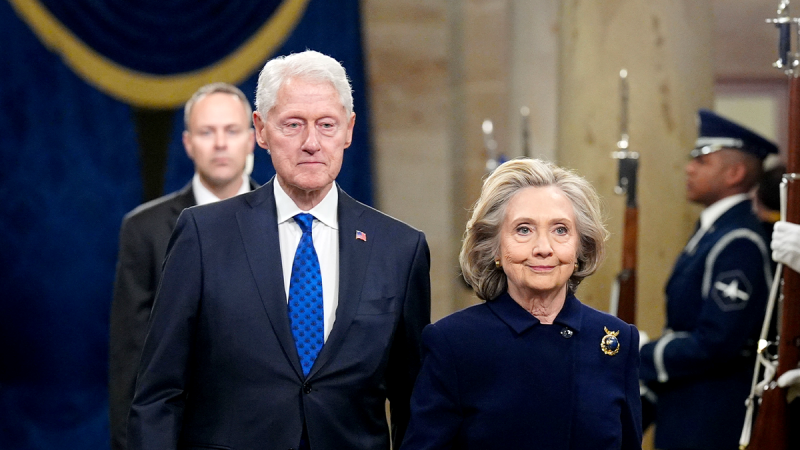
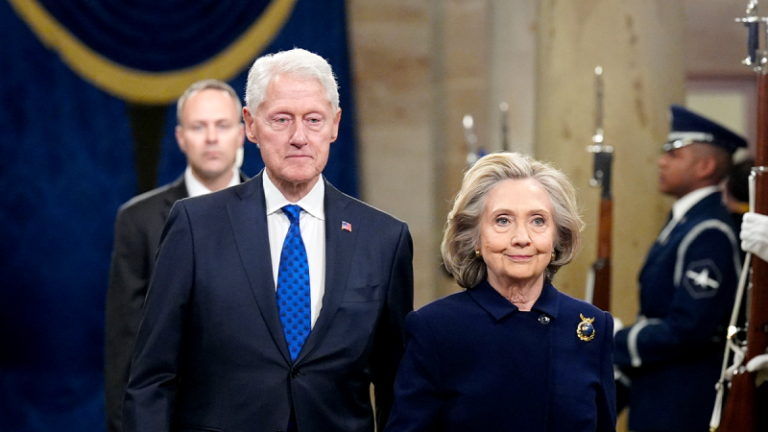
Former President Bill Clinton and former Secretary of State Hillary Clinton will be deposed by the House Oversight Committee in their hometown instead of in Washington, D.C. next week, Fox News Digital has learned.

The Clintons are testifying under oath for the committee’s probe into Jeffrey Epstein. Hillary Clinton’s deposition is scheduled for Feb. 26 while Bill Clinton will sit down with congressional staff and lawmakers on Feb. 27.

‘The Clintons’ depositions will be held in Chappaqua, New York on February 26 and 27 as an accommodation for their schedules. The depositions are in accordance with House and Committee rules,’ a spokeswoman for the House Oversight Committee told Fox News Digital.

The former first couple purchased their home in Chappaqua, just north of New York City, in 1999, and it has been their main residence since leaving the White House.

Their depositions will come after months of back-and-forth with committee Republicans about various terms for the closed-door meetings.

‘The Clintons’ testimony is critical to understanding Epstein and [Ghislaine Maxwell’s] sex trafficking network and the ways they sought to curry favor and influence to shield themselves from scrutiny,’ House Oversight Committee Chairman James Comer, R-Ky., told Fox News Digital on Thursday evening. ‘Their testimony may also inform how Congress can strengthen laws to better combat human trafficking. Our goal for this investigation is straightforward: we seek to deliver transparency and accountability for the American people and for survivors.’

House Republicans nearly moved forward with a vote on holding them both in contempt of Congress last month after the Clintons’ lawyers ripped Comer’s subpoenas as legally invalid and a breach of separation of powers.

While some Democrats agreed with the move, the majority of them accused Comer of persecuting the Clintons on political grounds.

If the votes were successful, they would both have been referred to the Department of Justice (DOJ) for prosecution. A guilty verdict for contempt of Congress carries up to one year in jail and a maximum fine of $100,000.

But days before the expected vote, the Clintons’ counsel told Comer they would agree to testify.

In the days since, however, both Clintons have waged a public pressure campaign demanding they get public hearings instead of a closed-door transcribed and taped interview. 

‘I have called for the full release of the Epstein files. I have provided a sworn statement of what I know. And just this week, I’ve agreed to appear in person before the committee. But it’s still not enough for Republicans on the House Oversight Committee,’ Bill Clinton posted on X this month.

‘Now, Chairman Comer says he wants cameras, but only behind closed doors. Who benefits from this arrangement? It’s not Epstein’s victims, who deserve justice. Not the public, who deserve the truth. It serves only partisan interests. This is not fact-finding, it’s pure politics.’

Comer has said that public hearings are not out of the question, but not before depositions behind closed doors.

Bill Clinton was known to be friendly with Epstein long before the federal case against him first emerged and has appeared in documents on the late pedophile released by the DOJ. But neither he nor Hillary Clinton are implicated in any wrongdoing.

The Clintons are two of over a dozen people and entities who have been subpoenaed for information in the committee’s bipartisan Epstein probe.

It’s not unprecedented for the committee to travel for depositions, either. Committee staff and some lawmakers were in Ohio on Wednesday to depose former Victoria’s Secret CEO Leslie Wexner, a former client of Epstein’s financial advisory firm who was named in documents released by the DOJ about the late pedophile thousands of times.

This post appeared first on FOX NEWS

For weeks, the U.S. military has quietly amassed what President Donald Trump has described as an ‘armada’ in Iran’s backyard. Mapped out across the Persian Gulf and beyond, the deployment tells its own story — one of calculated pressure backed by credible capability.

The latest signal of escalation is the movement of the world’s largest aircraft carrier, the U.S. Navy’s USS Gerald R. Ford, and its strike group from the Caribbean toward the Middle East.

The buildup coincides with indirect negotiations between Washington and Tehran over Iran’s disputed nuclear program. Trump has warned that the regime must fully dismantle its nuclear infrastructure — or face consequences.

At the heart of America’s force projection is another carrier strike group: USS Abraham Lincoln — a mobile fortress at sea, guarded by destroyers and equipped to unleash precision strikes at a moment’s notice. On deck, F-35 fighters and F/A-18 attack aircraft sit within range of dozens of key Iranian military and nuclear targets.

Meanwhile, in the Eastern Mediterranean, destroyers USS Bulkeley and USS Roosevelt provide additional strike capability and missile defense coverage — and could potentially assist Israel in defending against any Iranian counterattack.

Farther south, in the Red Sea, USS Delbert B. Black adds another layer of firepower along one of the world’s most important shipping lanes. The Red Sea links the Mediterranean to the Indian Ocean through the Suez Canal, a corridor that carries a significant share of global trade and energy supplies. 

A U.S. destroyer there not only protects commercial traffic but also gives Washington the flexibility to respond quickly to threats moving between the Middle East and Europe.

Even closer to Iran’s coastline, in the Persian Gulf and the Strait of Hormuz, USS McFaul and USS Mitscher are operating in one of the most strategically sensitive waterways on the planet. Roughly a fifth of the world’s oil passes through the Strait of Hormuz each day. Their presence signals that the U.S. can both defend that vital choke point and, if necessary, strike Iranian targets from close range.

Beyond naval forces, U.S. air power is spread across multiple Middle Eastern bases, giving commanders the ability to strike, defend and sustain operations quickly.

Several types of combat aircraft are operating from regional bases, including F-15s, F-16s and the radar-evading F-35. The A-10 specializes in close-air support missions against armored threats.

Those fighters are backed by a network of support aircraft. KC-135 and KC-46 tankers refuel jets midair, allowing them to fly farther and stay aloft longer. EA-18G electronic warfare aircraft can jam enemy radar and communications. E-3 Sentry aircraft serve as airborne command centers, tracking threats across wide areas. P-8 Poseidon planes patrol and monitor maritime activity.

Additionally, heavy transports — including C-5 Galaxy and C-17 Globemaster aircraft — move troops and equipment, while MQ-9 Reaper drones provide surveillance and can carry precision weapons. The assets give U.S. commanders flexibility to operate across air, sea and land.

Taken together, the air and naval deployments create overlapping strike capability, missile defense coverage and control over major maritime routes. For Iran, it means U.S. forces are not concentrated in a single vulnerable location — they are distributed, layered and positioned to operate from multiple directions at once. 

This post appeared first on FOX NEWS

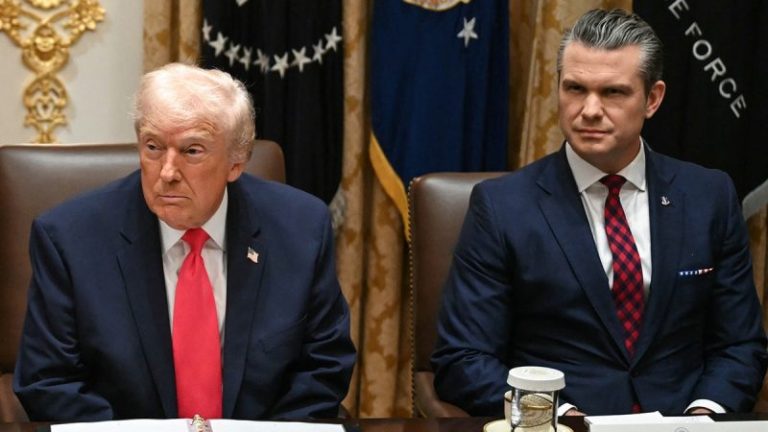
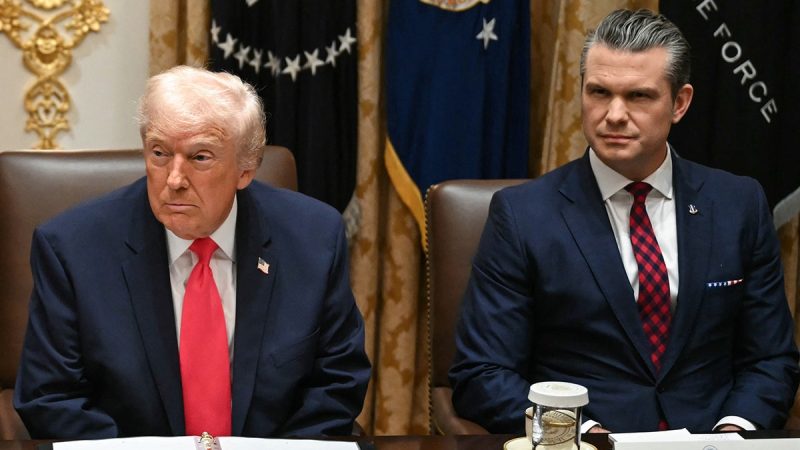
President Donald Trump said Friday he is ‘considering’ a limited military strike on Iran to pressure its leaders into a deal over its nuclear program.

‘I guess I can say, I am considering that,’ Trump said at a breakfast with governors at the White House.

This is a developing story. Please check back for updates.
 

This post appeared first on FOX NEWS

When President Donald Trump announced ‘TrumpRx’ in early February, a weight I’ve carried my entire adult life suddenly lifted from my shoulders. The website offers life-saving medications at much lower prices than normal, based on the president’s promise to give Americans the same prescription drug costs as patients in other developed countries. I can personally attest that such equal treatment — a policy known as ‘most favored nation’ pricing — is urgently needed for people who struggle with chronic disease.

I’ve had debilitating asthma since I was a child. I’ve been able to manage it thanks to a prescription drug which blocks lung inflammation and keeps my airways open. The few times I’ve gone off the medication, I’ve ended up in the emergency room, unable to breathe. That nearly happened four years ago in what I thought was the worst possible place — on the other side of the world, unable to contact my doctors or go to my pharmacy.

My family and I were in Italy, on a trip to honor my mother. She had recently been diagnosed with cancer and my brother and I scheduled the trip in between her chemo treatments, when she would be well enough to travel. She had always wanted to go there with us. But in our rush to get two families and three little kids packed, I accidentally grabbed a nearly empty inhaler.

I realized my mistake a few days into the trip, when I looked at the inhaler and saw that I only had two doses left. I wasn’t just worried about my health, though, of course, that was paramount. I worried how I’d afford the drug if I even found it in Italy.

I’ve organized my professional life around access to insurance that covers my medication, given its longstanding retail price $600 for a month’s supply. For 25 years, I’ve grappled with denied coverage letters, premium tier prescription charts and the constant worry that we would have to cut back on necessities to get my medication. At the time, in Italy, I was already paying a few hundred dollars a month for the drug — a lot, but a bargain compared to its normal price.

But I had no choice. I had to get my medication. After a few minutes of searching, I found an Italian pharmacy across town. I walked there immediately, trying to control my racing thoughts of what might happen. I knew that if I couldn’t get the drug, I couldn’t get safely back to the U.S.

Fifteen minutes later, in tears I walked out, drug in hand. It cost me only 30 euros or about $35.

At first, I was both relieved and grateful. But by the end of the day, I was scratching my head. Why was it $600 in the U.S. while Italians could get it for next to nothing? In the days that followed, I discovered that the answer is beyond complicated.

 GLP-1 drugs can be ‘too easy’ to get online, expert warns

It’s affected by everything from a lack of price transparency to the meddling of middlemen who jack up costs. It’s also true that foreign countries have been negotiating the prices of prescription drugs for decades, forcing Americans to cover the enormous cost of pharmaceutical development while they pay far below market prices.

Whatever the reason, the system doesn’t work for Americans. Brand name prescription prices in the U.S. are more than four times higher than prices in other wealthy countries. As many as 18 million Americans have struggled to buy the prescriptions they need in recent years.

I’m now using a generic version of the drug that costs significantly less. But that doesn’t change the fact that I, like many other Americans with chronic disease, have paid through the nose for decades on end, only to find the medication I needed in Italy for what seemed like pennies.

I wasn’t just worried about my health, though, of course, that was paramount. I worried how I’d afford the drug if I even found it in Italy.

Trump is fighting to fix this broken system. Before launching TrumpRx, he reached 16 deals with pharmaceutical companies to charge most-favored-nation prices. As a lifelong conservative, I’m typically uncomfortable with this kind of government intervention in the market. But other countries have already intervened and people like me have paid the price.

If pharmaceutical companies need the extra money, they should take it up with other countries that negotiated them down first. Then they could recoup their costs on the backs of others, not simply by charging more in the U.S. Bottom line, there’s no good reason why 340 million Americans should pay so much more than hundreds of millions of people who live in Europe and Asia.

I will always be grateful that my medication was so affordable in Italy back in 2022. It may very well have saved my life. But I’m even more grateful that President Trump is finally lowering prices for every American here at home.

This post appeared first on FOX NEWS

Ex-Victoria’s Secret mogul Les Wexner’s lawyer was caught on a hot mic jokingly threatening to ‘kill’ him if he continued giving long answers to questions during his deposition on Jeffrey Epstein by the House Oversight Committee.

The moment was caught after the committee released its full, nearly five-hour deposition of 88-year-old Wexner as part of its ongoing probe into Jeffrey Epstein’s network.

Several hours into the deposition, while Wexner was giving a particularly long-winded answer, Wexner’s attorney leaned over to him and whispered in his ear, ‘I’m going to f—ing kill you if you answer another question with more than five words, okay?’

Both Wexner and his attorney laughed after this statement, indicating Wexner understood it as a joke. The lawyer proceeded to instruct Wexner to ‘answer the question,’ laughing more.

Shortly before this exchange, the attorney had urged Wexner to ‘answer the question,’ saying, ‘I’m sure we all appreciate the stories, we’re just trying to answer questions that they actually want answered,’ referring to the House committee.

The Oversight Committee heard from Wexner, a billionaire fashion mogul best known for his work in revolutionizing the Victoria’s Secret store chain, about his involvement with Epstein, whom Wexner characterized as strictly a business associate rather than a close friend.

Despite being named a co-conspirator in a recently uncovered FBI document from 2019, Wexner said that he has never been directly contacted by either the FBI or the Department of Justice. He maintained his total innocence during the deposition, saying, ‘I was naïve, foolish, and gullible to put any trust in Jeffrey Epstein. He was a con man. And while I was conned, I have done nothing wrong and have nothing to hide. I completely and irrevocably cut ties with Epstein nearly twenty years ago when I learned that he was an abuser, a crook, and a liar.’

The committee stated it was releasing the full deposition with ‘no spin,’ saying, ‘The American people deserve to see the testimony for themselves—transparency matters.’

Wexner is the founder of L Brands, formerly called The Limited, through which he acquired well-known companies Victoria’s Secret, Bath & Body Works, Express, and Abercrombie & Fitch, among others. He is no longer associated with Victoria’s Secret. He was one of Epstein’s first major clients as a financial advisor, with Epstein being granted power of attorney over Wexner’s vast wealth. Wexner also sold his Manhattan townhouse to Epstein, which was later discovered to be one of the locations where federal authorities accused Epstein of abusing young women and girls under 18.

Despite this, Wexner stated that he always kept his relationship with Epstein as strictly professional, saying, ‘I don’t think I ever went to lunch, or dinner, a movie or had a cup of coffee with Jeffrey,’ adding, ‘My focus was on my business and on community.’

Wexner said he severed ties with Epstein in 2007 after learning of an investigation and discovering that Epstein had misappropriated funds from him and his family. He said a substantial amount of the money was returned. 

Wexner also testified that he was not aware of Epstein ever staying at a guesthouse on his New Albany, Ohio, estate, where Maria Farmer is said to have been abused by Epstein and associate Ghislaine Maxwell. He maintained that he only had knowledge of Epstein staying at a nearby neighbor’s residence. Pressed on whether he denies Farmer’s testimony that she was abused on his property, he stated, ‘I never met her, didn’t know she was here, didn’t know she was abused.’

He categorically denied any knowledge of either Epstein or Maxwell arranging women for prominent individuals. He also categorically denied ever having a sexual encounter with anyone introduced by Maxwell and Epstein or having any sexual relationship with Epstein himself.

He further denied any sexual contact or knowledge of another prominent Epstein victim, Virginia Giuffre.

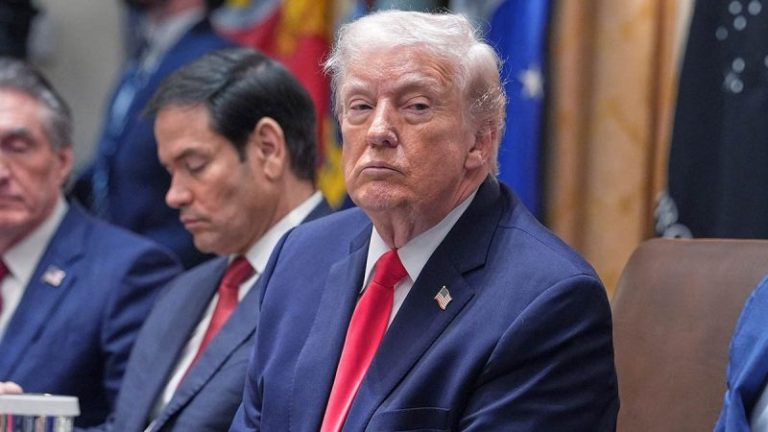
Wexner was also asked about his knowledge of Epstein and President Donald Trump’s relationship. He said that he does not think they were friends, but said Epstein ‘held him out as a friend.’

Committee members also questioned Wexner on a note he wrote in a birthday book to Epstein in which he drew breasts with the caption, ‘Dear Jeffrey, I wanted to get you what you want, so here it is … Your friend, Leslie.’

Wexner confirmed that he wrote the note but dismissed it, saying, ‘He was a bachelor, so I drew a pair of boobs as kind of a joke, offhandedly, I would say.’

Wexner is the fourth person appearing before the House Oversight Committee in its Epstein probe.

Fox News Digital’s Liz Elkind contributed to this report.

This post appeared first on FOX NEWS

The Pentagon is deploying the USS Gerald R. Ford to the Middle East, creating a rare two-carrier presence in the region as tensions with Iran rise and questions swirl about possible U.S. military action.

The Ford will reinforce the USS Abraham Lincoln already operating in theater, significantly expanding American airpower at a moment of heightened regional uncertainty.

While officials have not announced imminent action, the dual-carrier presence increases the Pentagon’s flexibility — from deterrence patrols to sustained strike operations — should diplomacy falter.

The largest aircraft carrier in the world

The Gerald R. Ford is the largest and most advanced aircraft carrier ever built.

Commissioned in 2017, the nuclear-powered warship stretches more than 1,100 feet and displaces more than 100,000 tons of water. It serves as a floating air base that can operate in international waters without relying on host-nation approval — a key advantage in politically sensitive theaters.

Powered by two nuclear reactors, the ship has virtually unlimited range and endurance and is designed to serve for decades as the backbone of U.S. naval power projection.

How much airpower does it carry?

A typical air wing aboard the Ford includes roughly 75 aircraft, though the exact mix depends on mission requirements.

Those aircraft can include F/A-18 Super Hornets, stealth F-35C Joint Strike Fighters, EA-18G Growler electronic warfare jets, E-2D Hawkeye early warning aircraft and MH-60 helicopters.

In a potential conflict with Iran, several of those platforms would be central. 

The F-35C is designed to penetrate contested airspace and carry out precision strikes against heavily defended targets. The Growler specializes in jamming enemy radar and communications — a critical capability against Iran’s layered air defense systems. 

The E-2D extends surveillance hundreds of miles, helping coordinate air and missile defense.

Together, they give commanders options ranging from deterrence patrols to sustained strike operations.

Built for higher combat tempo

What separates the Ford from earlier carriers is its ability to generate more sorties over time.

Instead of traditional steam catapults, it uses an electromagnetic aircraft launch system, or EMALS, allowing aircraft to launch more smoothly and at a faster pace. The system is designed to reduce stress on jets and increase operational tempo.

The ship also features advanced arresting gear and a redesigned flight deck that allows more aircraft to be staged and cycled efficiently.

In a high-intensity scenario — particularly one involving missile launches or rapid escalation — the ability to launch and recover aircraft quickly can be decisive.

How it compares to the Lincoln

While both the Ford and the Abraham Lincoln are 100,000-ton, nuclear-powered supercarriers capable of carrying roughly 60 aircraft to 75 aircraft, they represent different generations of naval design.

The Lincoln is a Nimitz-class carrier commissioned in 1989 and part of a fleet that has supported decades of operations in the Middle East. The Ford is the Navy’s next-generation carrier and the lead ship of its class.

The key difference is efficiency and output. 

The Ford was built to generate a higher sustained sortie rate using its electromagnetic launch system, along with a redesigned flight deck and upgraded power systems. In practical terms, both ships bring substantial strike capability — but the Ford is designed to launch and recover aircraft faster over extended operations, giving commanders greater flexibility if tensions escalate.

How it defends itself

The Ford does not sail alone. It operates as the centerpiece of a carrier strike group that typically includes guided-missile destroyers, cruisers and attack submarines.

Those escort ships provide layered air and missile defense, anti-submarine protection and additional strike capability.

The carrier itself carries defensive systems including Evolved Sea Sparrow Missiles, Rolling Airframe Missiles and the Phalanx Close-In Weapon System — designed to intercept incoming threats at close range.

That defensive posture is especially relevant in the Middle East.

Iran has invested heavily in anti-ship ballistic missiles, cruise missiles, armed drones, naval mines and fast-attack craft operated by the Islamic Revolutionary Guard Corps. The Gulf region presents a dense and complex threat environment, even for advanced U.S. warships.

Why two carriers matter

With both the Ford and the Lincoln in theater, commanders gain more than just added firepower. Two carriers allow the U.S. to sustain a higher tempo of operations, distribute aircraft across multiple areas, or maintain continuous presence if one ship needs to reposition or resupply.

Dual-carrier deployments are relatively uncommon and typically coincide with periods of heightened regional tension.

The timing — as negotiations with Tehran continue — underscores the strategic message. Carriers are often deployed not only to fight wars, but to prevent them.

By positioning both ships in the region, Washington is signaling that if diplomacy falters, military options will already be in place.

This post appeared first on FOX NEWS

Steadright Critical Minerals (CSE:SCM) is a Canadian-listed exploration and development company focused on unlocking value from Morocco’s mineral-rich terrain. It prioritizes assets with past production, strong geological datasets, and defined development pathways, aiming to shorten timelines, lower risk, and balance near-term cash flow with longer-term discovery upside.

Its core assets include the fully permitted, past-producing Goundafa polymetallic mine, the Copper Valley copper-lead-silver project in a proven mining district, and the TitanBeach heavy mineral sands project along Morocco’s Atlantic coast. A recent letter of intent with SilverLine Mining SARL could further strengthen the portfolio by adding a licensed, silver-focused asset, reinforcing Steadright’s strategy of acquiring high-quality, permitted projects.

Azurite mineral on rocky surface, highlighted with a green dashed line. from Steadright Critical MIneral

Operating in Morocco—a jurisdiction known for modern mining legislation, strong infrastructure, and competitive fiscal incentives—Steadright benefits from a supportive mining environment. The company is led by an experienced management team with decades of global mining, exploration, and capital markets expertise, positioning it to advance its projects efficiently.

Company Highlights

  • Near-Term Production: The historic Goundafa Polymetallic mine is fully permitted with a legacy of high-grade zinc, lead, copper, silver, and gold production, Goundafa offers near-term, non-dilutive cash flow from historic stockpile sales under a binding processing agreement.
  • Diversified Portfolio: Fully permitted Goundafa Polymetallic mine (PbZn-Cu-Ag-Au), the Copper Valley CopperLead-Silver Project, SilverLine Mining Sarl (LOI) and the TitanBeach Heavy Mineral Sands
  • Strategic Moroccan Operations: Operating in a mining-friendly jurisdiction with modern legislation, strong infrastructure, and significant fiscal incentives including corporate tax exemptions.
  • Experienced Leadership: Management and technical teams bring decades of international mining, exploration, and capital markets experience.

This Steadright Critical Minerals profile is part of a paid investor education campaign.*

Click here to connect with Steadright Critical Minerals (CSE:SCM) to receive an Investor Presentation

This post appeared first on investingnews.com

Investor Insight

LaFleur Minerals is advancing a district-scale gold platform anchored by a defined resource base and a fully permitted processing facility in Québec’s Abitibi region. With ongoing mill restart activities and a targeted gold pour on the horizon, the company offers investors exposure to both near-term production potential and meaningful exploration upside.

Overview

LaFleur Minerals (CSE:LFLR,OTCQB:LFLRF) is a growth-oriented gold exploration and development company focused on building a scalable mining platform within Québec’s Abitibi region, a belt that has produced more than 190 million ounces of gold historically. The company’s strategy is centered on advancing its flagship Swanson deposit while leveraging existing infrastructure to accelerate timelines to production.

Map of LaFleur Minerals

A key differentiator is LaFleur’s vertically integrated model: combining resource expansion with ownership of a permitted processing facility. This approach reduces development risk, lowers capital intensity, and positions the company to monetize discoveries faster than traditional single-asset explorers.

With a market valuation that management believes does not yet reflect the combined value of its resource base, infrastructure and exploration pipeline, LaFleur offers exposure to both near-term catalysts and long-term district-scale discovery potential.

Company Highlights

  • District-Scale Land Position: Controls ~183 sq km of claims near Val‑d’Or in Québec, one of the world’s most prolific gold jurisdictions.
  • Flagship Resource Asset: Swanson Gold Project hosts NI 43-101 resources of 123,400 oz indicated and 64,500 oz inferred with expansion potential.
  • Strategic Infrastructure Ownership: Owns the fully permitted Beacon Gold Mill with 750 tpd capacity and low restart cost.
  • Growth-Focused Exploration: 5,000 m drill program underway targeting resource growth to >1 Moz.
  • Proven Asset Consolidation: Claims assembled from prior operators including Monarch Mining, Abcourt Mines and Globex.
  • Tier-1 Jurisdiction: Québec ranks among the world’s top mining investment regions according to the Fraser Institute.
  • Experienced Leadership: Led by CEO Paul Ténière, a geologist with extensive development and technical reporting expertise.

Key Projects

Swanson Gold Project – Flagship Asset

Map highlighting LaFleur Minerals

The Swanson project forms the cornerstone of LaFleur’s growth strategy. Spanning more than 18,300 hectares, the property hosts multiple deposits and mineralized trends along favorable regional structures and deformation corridors. Historic drilling exceeding 36,000 meters demonstrates strong geological continuity and supports expansion potential across the broader land package.

Located approximately 66 km north of Val-d’Or with road and rail access, Swanson sits in close proximity to established operators such as Agnico Eagle and Eldorado, as well as developers including Probe Gold and O3 Mining. Ongoing geophysics, soil geochemistry and drilling continue to identify new targets, reinforcing the project’s potential to evolve into a large-scale gold system.

Map of LaFleur Minerals

Project Highlights:

  • Spans +18,300 hectares (183 sq km) and rich in gold and critical metals, hosts the Swanson, Bartec and Jolin gold deposits
  • Previously held by Monarch Mining, Abcourt Mines and Globex
  • Accessible by road/rail, 66 km north of Val-d’Or on the Southend Abitibi gold belt, close proximity to established producers such as Agnico Eagle and Eldorado, as well as developers like Probe Gold and O3 Mining, with direct access to several nearby gold mills
  • Mineral resource estimate reinforces status as flagship project:
    • Indicated mineral resource estimate of 2,113,000 t with average grade of 1.8 g/t gold, containing 123,400 oz of gold.
    • Inferred mineral resource estimate of 872,000 t with average grade of 2.3 g/t gold, containing 64,500 oz of gold
    • The project’s current MRE was optimized with a price of gold at US$1,850/oz, current gold market price has hit above US$3,000/oz
  • $3 million in flow-through to deploy with immediate plans to increase gold resources through diamond drilling at Swanson, Bartec, Jolin, and other gold deposits
  • Other key developments include a decline portal and ramp extending to a depth of 80 metres; well positioned for advanced exploration with over $5 million invested by the previous owner between 2021 and 2023
  • Since acquiring the Swanson deposit and consolidating the large claims package, the company has deployed in excess of $1 million in flow-through funds, completed detailed soil geochemistry and prospecting across several gold targets, completed a very-high resolution airborne magnetic and VLF-EM geophysical survey, and is currently in the process of completing a ground IP survey over the Swanson, Jolin, and Bartec gold deposits
  • Several new promising gold targets have been identified from the recent surface exploration and geophysics programs, highlighting the potential for mineral resource growth and new discoveries at Swanson

With advanced assets and infrastructure in place, LaFleur Minerals is well-positioned as a leading gold development company in Québec.

Beacon Gold Mill – Near-term Production

Aerial view of a Lafleur Mineral

The Beacon Gold Mill is a strategically located processing facility less than 50 km from Swanson and represents a rare asset for a junior developer: a fully permitted plant capable of near-term restart. The 750-tpd mill underwent approximately $20 million in upgrades and refurbishment, placing it in excellent operational condition and substantially reducing restart timelines.

An independent valuation by Bumigeme estimated rehabilitation costs at about C$4.1 million and a replacement value exceeding C$71.5 million, underscoring its strategic importance. Beyond processing Swanson material, the mill also offers potential toll-milling revenue from regional deposits, providing LaFleur with multiple pathways to cash flow as it transitions toward producer status.

Industrial machinery with large drums and walkways at LaFleur Minerals

Project Highlights:

  • Capable of custom milling operations for other nearby gold projects
  • Currently being evaluated for processing mineralized material from Swanson as part of a high-level preliminary mining and economic study
  • Past-producing Beacon Mine is located on the site of the Beacon Mill: the property consists of a mining lease, a mining concession, and 11 mining claims
  • Beacon I and II mines include mineralized zones where limited historical gold production was achieved during the period of 1984 to 1988 and again in 2005
  • The advancement of operations at the Beacon Mill has transformational qualities for the company, evolving it from explorer to a near-term gold producer in a Tier 1 jurisdiction with significant upside potential

Management Team

Kal Malhi – Chairman

A successful entrepreneur and the founder of Bullrun Capital, Kal Malhi has raised over $300 million for various public and private companies across multiple industries, including mining, biotechnology and technology.

Paul Ténière – CEO

Paul Ténière has more than 20 years of experience in mine development, geology and project management. He has held senior leadership roles across multiple mining companies and is a recognized expert in NI 43-101 compliance and technical reporting.

Harry Nijjar – CFO and Corporate Secretary

Harry Nijjar is currently a managing director with Malaspina Consultants and provides CFO and strategic financial advisory services to his clients across many industries. This experience has allowed him to help his clients successfully navigate regulatory and financial environments within which they operate. Harry holds a CPA CMA designation from the Chartered Professional Accountants of British Columbia and a BComm from the University of British Columbia

Louis Martin – Technical Advisor and Exploration Manager

Louis Martin is a professional geoscientist. and has been a major contributor to the discovery of several gold and base metal deposits during his more than 40-year career. Martin has been fortunate to be part of the exploration teams that were awarded the Discovery of the Year by the AEMQ for the West Ansil Deposit (2005) and the Louvicourt Deposit (1989). He has worked on several advanced exploration projects that included bringing four of these projects into production. For the last eight years, Martin has worked as a technical advisor and geological consultant for numerous junior and major mining companies.

Preet Gill – Director

Preet Gill is a business professional offering leading development and implementation of superior business strategy. Gill has a proven track record of identifying and creating profitable business opportunities, qualifying authentic prospects, and cultivating strong partnerships. She has over 28 years of experience in leadership roles within Home Depot Canada and has an MBA from Royal Roads University and certificates in business leadership from Queen’s University.

Harveer Sidhu – Director

Harveer Sidhu is the founder of BuildSmartr.com and has served as a director, officer and audit committee member for publicly listed companies. Sidhu is experienced in manufacturing, import and exporting, information technology systems, e-commerce and construction project management. He is also the president and director of Beyond Medical Technologies. He holds a bachelor’s degree from Simon Fraser University and has been a licensed builder with BC Housing since 2014.

Michael Kelly – Director

Michael Kelly is a former member of the Canadian Armed Forces Military Police and a retired member of the Royal Canadian Mounted Police. Kelly currently serves as a Partner at BullRun Capital Inc. and is a respected businessman based in Kelowna, British Columbia. He is also a director and member of the audit committee of Beyond Medical Technologies, an industrial/technology company with a manufacturing facility located in Delta, British Columbia.

Jean Lafleur – Senior Advisor

A highly respected geologist with over 40 years of experience in the mining sector, Jean Lafleur has led multiple exploration programs and mining projects, contributing to major gold discoveries worldwide.

This post appeared first on investingnews.com

Visit Rapid Critical Metals (ASX: RCM) at Booth #3142 at the Prospectors & Developers Association of Canada’s (PDAC) Convention at the Metro Toronto Convention Centre (MTCC) from Sunday, March 1 to Wednesday, March 4, 2026.

About Rapid Critical Metals

Rapid Critical Metals (ASX: RCM) (ASX: RCMO) is an exploration company driving the discovery and development of high-grade silver and critical mineral assets. Following a transformational pivot in mid-2025, Rapid has assembled a high-impact portfolio anchored by the Webbs and Conrads Silver Projects in New South Wales and the Prophet River Gallium–Germanium Project in British Columbia, Canada. Both projects sit within geologically rich, infrastructure-ready regions and present strong potential for near-term exploration success.Headquartered in Sydney, Rapid is fully funded and strategically positioned to deliver growth through aggressive exploration and value-accretive development. Led by an experienced team, including Chairman John Poynton AO and Managing Director Byron Miles, the Company is advancing a catalyst-rich program — with resource upgrades, step-out drilling, and new target testing set to drive a steady flow of news and shareholder value in the months ahead.

About PDAC

The World’s Premier Mineral Exploration & Mining Convention is the leading convention for people, governments, companies and organizations connected to mineral exploration. In addition to meeting more than 1,100 exhibitors, 2,500 investors and 26,000 attendees in person in 2024, participants could also attend programming, courses and networking events.

The annual convention is held in Toronto, Canada. It has grown in size, stature and influence since it began in 1932 and today is the event of choice for the world’s mineral industry.

For more information and/or to register for the conference please visit: https://www.pdac.ca/convention.

We look forward to seeing you there.

For further information:

Rapid Critical Metals
Byron Miles
+61 2 9290 9600
info@investability.com.au
https://rapidmetals.com.au/

News Provided by TMX Newsfile via QuoteMedia
This post appeared first on investingnews.com