

Author

admin

Browsing

LONDON, UK / ACCESS Newswire / February 17, 2026 / Empire Metals Limited (LON:EEE)(OTCQX:EPMLF), the AIM-quoted and OTCQX-traded exploration and development company, is pleased to announce the commencement of a major drilling campaign at the Pitfield Project in Western Australia (‘Pitfield’ or the ‘Project’). This programme is designed to evaluate the extent of the giant TiO2 mineral system at Pitfield, expand the Cosgrove Mineral Resource Estimate (MRE), and enhance the confidence levels associated with the MRE at Thomas.

Highlights

  • A total of 754 drill holes are planned:

    • 683 Air Core (‘AC’) drillholes for approximately 34,150 metres, and

    • 71 Reverse Circulation (‘RC’) drillholes for approximately 7,100 metres,

    • totalling 41,250 metres of drilling.

  • The fully funded campaign will utilise 3 AC drill rigs and 2 RC rigs and drilling is expected to be completed by mid-April.

  • The key outcome of the drilling will be an updated MRE at Thomas, with increased resource classification into the Measured and Indicated categories, and a significantly larger updated MRE at Cosgrove.

  • Updated MRE anticipated in Q3 2026 to support ongoing engineering and study work.

Shaun Bunn, Managing Director, said:‘We are pleased to commence this important drilling campaign at Pitfield, focused on upgrading our maiden MRE from the Thomas and Cosgrove Prospects (announced 14 October 2025) and extending the exploration target area. This fully-funded campaign is the largest undertaken to date at Pitfield and will significantly improve our understanding of the scale and grade of the Pitfield MRE, and also increase the confidence levels of Measured and Indicated Resources in readiness for developing mine design and Ore Reserves.’

Drilling Programmes

The titanium discovery at Pitfield is of unprecedented scale and hosts one of the largest and highest-grade titanium resources reported globally, with a current MRE totalling 2.2 billion tonnes grading 5.1% TiO₂ for 113 million tonnes of contained TiO₂.

The MRE, which covers only the Thomas and Cosgrove deposits, includes a weathered zone resource of 1.26 billion tonnes at 5.2% TiO₂ and a significant Indicated Resource of 697 million tonnes at 5.3% TiO₂, predominantly from the Thomas deposit. Titanium mineralisation at Pitfield occurs from surface and displays exceptional grade continuity along strike and down dip. The MRE extends across just 20% of the known mineralised footprint, providing substantial potential for further resource expansion.

Since commencing the maiden drilling campaign at Pitfield on 27 March 2023, Empire has completed 390 drill holes for a total 33,001 metres comprising:

  • 25 DD drill holes for 3,449 m

  • 140 RC drill holes for 18,764 m

  • 225 AC drill holes for 10,797 m.

Diamond drilling was recently conducted at the Thomas prospect, from mid-November to mid-December 2025 (announced 12 November 2025). A total of 8 holes were drilled for 745.1m.

The diamond drilling targeted the high-grade central core identified within the Thomas MRE with the primary purpose of generating ore samples for metallurgical and geotechnical testwork. The whole drill core underwent extensive geotechnical evaluation prior to cutting core samples. A quarter core sample was collected for assay analysis. These samples have been submitted to the analytical laboratory for analysis, with final results expected in Q1 2026.

Largest drilling campaign to date to commence at Pitfield

An extensive AC and RC drill programme has been planned at Pitfield consisting of exploration drilling, initial mineral resource drilling and infill mineral resource drilling. AC drilling has previously been used at Pitfield to drill-test the weathered cap and collect bulk metallurgical samples (announced 28 April 2025). It is a cost-effective, efficient and proven drilling method at Pitfield that is commonly used for shallow exploration projects, and the success of the previous drilling campaigns has confirmed its suitability for use in the Pitfield MREs.

The drill programme, the largest at Pitfield to date, will cover an area 37km long and up to 12km wide. There are 754 holes planned for a total of 41,250m. All programmes will take place in parallel ensuring the drilling is more efficient and cost effective. It is expected that the drilling will begin in late February and finish in mid-April. There will be up to 5 drill rigs at the project. Once completed, Empire will have drilled close to 75,000 meters at Pitfield.

The exploration drilling will be focused on delineating the extents of the giant Pitfield Ti-rich mineral system. Recent drilling has focussed on the Thomas and Cosgrove prospects to delineate MREs, however this has focussed on less than 20% of the currently known surface area of the mineral system. This exploration drilling campaign will generate data that will provide a much better understanding of the size of the system, the mineralisation and associated alteration and extend the area explored by drilling to 60-70% of the currently identified area of mineralization. Furthermore, the drilling will also provide essential information to support the study phase regarding the location of high-grade titanium mineralisation and the potential sites for process and infrastructure facilities.

At Thomas, AC and RC drilling will take place on a smaller spaced grid (100m x 100m) over the higher grade TiO2 rich core of the deposit to increase the confidence level of the current MRE. The drilling will focus on the weathered zone where the anatase is most prevalent.

At Cosgrove, an extensive AC and RC programme will occur to extend the current MRE to the north and the south. This drilling, as at Thomas, will be focussed on the weathered zones with the aim of significantly increasing the current MRE of 430Mt @ 5.8% TiO2. The location and spacing of the planned AC/RC drillholes have been designed to complement the existing MRE and allow the data generated from this drill programme to be incorporated with the existing MRE data which will potentially mean efficiencies in generating the updated MRE for Cosgrove.

The AC and RC drillholes will be geologically logged and sub-sampled on 2m intervals and geochemically analysed; this data will provide the basis for the updated MREs at Thomas and Cosgrove Prospects.

The drilling is expected to finish mid-April with all samples to be at Intertek Analytical Laboratory in Perth by the end of April.

Figure 1. Satellite image of Pitfield showing planned drill collars in relation to current MRE outlines.

Competent Person Statement
The technical information in this report that relates to the Pitfield Project has been compiled by Mr Andrew Faragher, an employee of Empire Metals Australia Pty Ltd, a wholly owned subsidiary of Empire. Mr Faragher is a Member of the Australian Institute of Mining and Metallurgy (AusIMM). Mr Faragher has sufficient experience that is relevant to the style of mineralisation and type of deposit under consideration and to the activity being undertaken to qualify as a Competent Person as defined in the 2012 Edition of the ‘Australasian Code for Reporting of Exploration Results, Mineral Resources and Ore Reserves’. Mr Faragher consents to the inclusion in this release of the matters based on his information in the form and context in which it appears.

**ENDS**

For further information please visit www.empiremetals.co.uk or contact:

Empire Metals Ltd

Shaun Bunn / Greg Kuenzel / Arabella Burwell

Tel: 020 4583 1440

S. P. Angel Corporate Finance LLP (Nomad & Joint Broker)

Ewan Leggat / Adam Cowl

Tel: 020 3470 0470

Canaccord Genuity Limited (Joint Broker)

James Asensio / Christian Calabrese / Charlie Hammond

Tel: 020 7523 8000

Shard Capital Partners LLP (Joint Broker)

Damon Heath

Tel: 020 7186 9950

Tavistock (Financial PR)

Emily Moss / Josephine Clerkin

empiremetals@tavistock.co.uk

Tel: 020 7920 3150

About Empire Metals Limited
Empire Metals Ltd (AIM:EEE)(OTCQX:EPMLF) is an exploration and resource development company focused on the commercialisation of the Pitfield Titanium Project, located in Western Australia. The titanium discovery at Pitfield is of unprecedented scale and hosts one of the largest and highest-grade titanium resources reported globally, with a Mineral Resource Estimate (MRE) totalling 2.2 billion tonnes grading 5.1% TiO₂ for 113 million tonnes of contained TiO₂.

Titanium mineralisation at Pitfield occurs from surface and displays exceptional grade continuity along strike and down dip. The MRE extends across just 20% of the known mineralised footprint, providing substantial potential for further resource expansion.

Conventional processing has already produced a high-purity product grading 99.25% TiO₂, suitable for titanium sponge metal or pigment feedstock. With excellent logistics and established infrastructure, Pitfield is strategically positioned to supply the growing global demand for titanium and other critical minerals.

This information is provided by RNS, the news service of the London Stock Exchange. RNS is approved by the Financial Conduct Authority to act as a Primary Information Provider in the United Kingdom. Terms and conditions relating to the use and distribution of this information may apply. For further information, please contact rns@lseg.com or visit www.rns.com.

SOURCE: Empire Metals Limited

View the original press release on ACCESS Newswire

News Provided by ACCESS Newswire via QuoteMedia


This post appeared first on investingnews.com

Over the past year, the spot price of silver has surged past a 40 year record and into triple-digit territory, reaching a high of US$121 per ounce this past January.

For silver investors who bought into the physical market when the price was low, this first leg of the silver bull market has provided an opportunity to take ample profits.

At the Vancouver Resource Investment Conference, Rick Rule, proprietor at Rule Investment Media, shared his strategy for leveraging profits made in the physical silver market.

“That’s how I save. I maintain liquidity in US currency and I save in gold,” he said.

What did Rule do with the remaining half of his gains from selling physical silver?

He deposited those profits into high-quality silver-mining stocks.

“My reasoning being as follows: If silver goes nowhere for a year, if it stays rangebound, the best silver producers are discounting US$45 silver a year from now. If the price is at US$75 or US$80 they’ll be discounting US$75 or US$80 silver, which means the stock will be up 50, 60, 70 percent,” said Rule.

“The speculative outlook for the silver stocks seemed to be better than the speculative outcome for silver. If silver stays flat for a year, by definition silver won’t give me any return. But if it stays flat, the silver stocks would give me 50 or 60 percent. So it was a better speculative outcome,’ he added.

Here’s a look at the five silver stocks Rule invested in after selling his physical silver. Market cap figures were accurate as of February 12, 2026.

1. Wheaton Precious Metals (TSX:WPM,NYSE:WPM)

TSX market cap: C$88.43 billion
NYSE market cap: US$64.53 billion

Wheaton Precious Metals is the world’s biggest precious metals streaming company.

Its business model involves making upfront payments to precious metals companies in order to gain the right to purchase all or a portion of their metal production at a low, fixed cost. Investors benefit from gaining exposure to a wide range of precious metals companies operating in politically stable jurisdictions, while reducing the risk associated with investing in individual mining stocks. The company pays a quarterly dividend.

Wheaton currently has streaming agreements in place for 23 operating mines and 25 development-stage projects across five continents. This includes investments in Newmont’s (NYSE:NEM,ASX:NEM) Peñasquito mine in Mexico, Sibanye Stillwater’s (NYSE:SBSW) Stillwater and East Boulder mines in Montana, US, and Glencore’s (LSE:GLEN,OTCPL:GLCNF) Antamina silver mine in Peru.

2. Pan American Silver (TSX:PAAS,NASDAQ:PAAS)

TSX market cap: C$33.3 billion
NASDAQ market cap: US$23.67 billion

Pan American Silver holds interest in five silver-producing mines located in four Latin American countries.

This includes its three wholly owned mines: Huaron in Peru, Cerro Moro in Argentina and La Colorada in Mexico — its largest silver-producing asset. The company also holds a 95 percent interest in the San Vicente mine in Bolivia and a 44 percent stake in the Juanicipio mine in Mexico, operated by Fresnillo (LSE:FRES,OTCPL:FNLPF). Pan American’s gold-producing segment includes its second largest silver mine by production, the El Peñon gold-silver mine in Chile.

Ranked among the world’s largest primary silver producers, Pan American’s 2025 silver production total came in at 22.8 million ounces, alongside 742,200 ounces of gold. It’s set its silver production guidance for 2026 to between 25 million and 27 million ounces, white its expected gold production for the year is 700,000 to 750,000 ounces.

3. Industrias Penoles (OTCPL:IPOAF)

OTC market cap: US$26.14 billion

Founded in 1887, Mexico-based Industrias Peñoles is a vertically integrated metals company and a global leader in refined silver production. The company holds a majority stake in Fresnillo, the world’s leading primary silver producer.

Industrias Peñoles is also a top producer of refined gold and lead in Latin America, and one of the world’s leading producers of refined zinc and sodium sulfate. Its mining portfolio includes the Sabinas mine in Zacatecas, the Tizapa mine in Zacazonapan and the Velardeña mine in Durango. In the first half of 2025, Industrias Peñoles’ overall silver production from its mining operations came in at 30.3 million ounces of the metal.

4. AbraSilver Resource (TSXV:ABRA,OTCQX:ABBRF)

TSXV market cap: C$2.15 billion
OTC market cap: US$1.57 billion

Canadian junior Abrasilver Resource’s wholly owned flagship asset is the advanced-stage Diablillos silver-gold project in Salta, Argentina. It hosts five significant deposits: Oculto, JAC, Fantasma, Laderas and Sombra.

In December 2024, the company published an updated prefeasibility study for Diablillos, outlining a net present value (NPV) of US$747 million after tax at a 5 percent discount, as well as a 27.6 percent internal rate of return (IRR) and a two year payback period. An updated mineral resource estimate from July 2025 totals approximately 199 million ounces of silver and 1.72 million ounces of gold in the measured and indicated category.

Abrasilver has been busy expanding the upside potential at Diablillos via a Phase 6 drill program. The 15,000 meter campaign is aimed at extensions across various exploration targets. Results coming in from previous campaigns continue to demonstrate the potential for identifying gold and silver resources outside of the current resource estimate.

5. Vizsla Silver (TSXV:VZLA,NYSEAMERICAN:VZLA)

TSX market cap: C$1.73 billion
NYSEAMERICAN market cap: US$1.25 billion

Vizsla Silver is advancing toward production at its Panuco silver-gold project in Sinaloa, Mexico. Its expected to reach first silver production in the second half of 2027. In May 2025, the company acquired the producing Santa Fe silver-gold mine and property located to the south of Panuco. Production at the mine between 2020 and 2024 amounted to 370,366 metric tons of ore, with an average head grade of 203 grams per metric ton (g/t) silver and 2.17 g/t gold.

At Panuco, Vizsla completed a feasibility study in November 2025, outlining over 17.4 million ounces of silver equivalent production annually over an initial 9.4 year mine life, an after-tax NPV of US$1.8 billion at a 5 percent discount, an 111 percent IRR and a seven month payback at US$35.50 silver and US$3,100 per ounce gold.

The company has several upcoming catalysts for 2026. In the first half of the year, management is focused on completing detailed engineering, underground drilling, geophysical surveys and optimization work in order to make a construction decision in the second half of 2026 once permits are received. Throughout 2026, Vizsla is expecting to conduct 60,000 meters of diamond drilling across the Panuco district. A fifth phase of metallurgical testwork to optimize silver and gold recoveries using material from a 10,000 tonne bulk sample program is also planned.

After the interview with Rule took place, 10 workers were abducted from Panuco. Mexican authorities have since recovered 10 bodies as part of an investigation into the incident, with five being identified as Vizsla workers. The company has suspended operations at the site, although engineering-based remote work continues.

Securities Disclosure: I, Melissa Pistilli, hold no direct investment interest in any company mentioned in this article.

This post appeared first on investingnews.com

Senate Republicans now have enough support within their conference to pass Trump-backed voter ID legislation, but a major hurdle remains.

The Safeguarding American Voter Eligibility (SAVE) America Act has secured the backing of 50 Senate Republicans, following a pressure campaign by the White House and a cohort of Senate conservatives over the past several weeks.

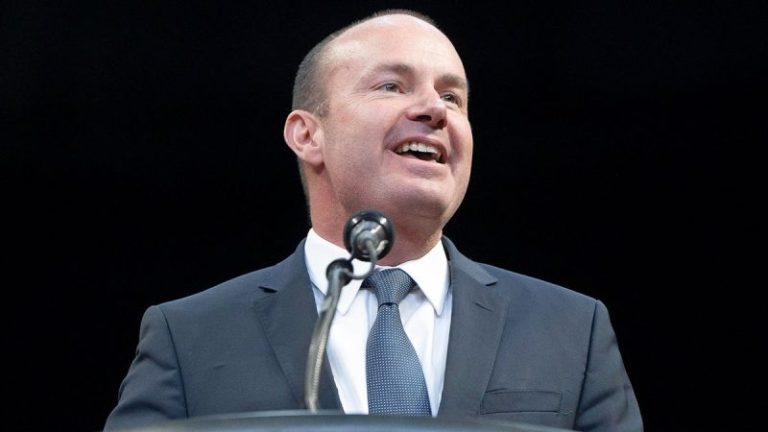
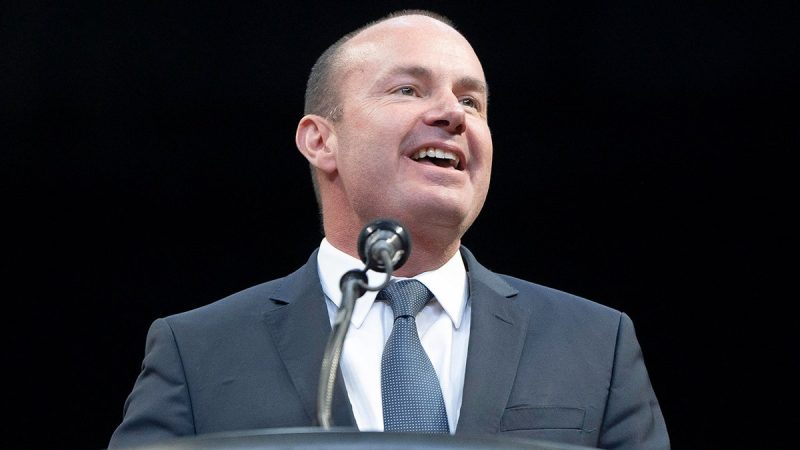
Sen. Mike Lee, R-Utah, has led the charge in the upper chamber, ramping up his efforts last week as the bill moved through the House.

Lee told Fox News Digital that he was ‘ecstatic’ about the progress made in shoring up support for the legislation and hoped the Senate would move as quickly as possible to consider it. 

‘I would love to see us turn to it next week, perhaps the day after the State of the Union address,’ Lee said. ‘I think that would be good timing. But I think this needs to get done sooner rather than later.’

That multifaceted campaign — both on social media and behind closed doors in the Senate — proved successful, drawing support from Senate Majority Leader John Thune, R-S.D., and several others.

Sen. Susan Collins, R-Maine, became the 50th senator to back the bill. That gives Republicans the internal support they need to advance the legislation procedurally, but only if they turn to the standing, or talking, filibuster.

Before leaving Washington, D.C., for a weeklong break last week, Lee and other supporters, including Sens. Ron Johnson, R-Wis., and Rick Scott, R-Fla., pitched the voter ID proposal and potential pathways to pass it to colleagues.

‘We had some good senators stand up and say, ‘No, we got to fight for this,’’ Johnson told Fox News Digital. ‘I’m with them. We need to fight for this.’

Still, the effort faces heavy resistance from Senate Democrats, who are nearly unified in their opposition.

The only potential outlier is Sen. John Fetterman, D-Pa., who has pushed back against Senate Minority Leader Chuck Schumer’s, D-N.Y., characterization of the bill as ‘Jim Crow 2.0’ but has not said whether he would ultimately support the SAVE America Act.

Despite that possibility, Schumer and most of his caucus plan to block the legislation.

‘We will not let it pass in the Senate,’ Schumer told CNN’s Jake Tapper. ‘We are fighting it tooth and nail.’

Not every Senate Republican is onboard, either. Sen. Lisa Murkowski, R-Alaska, has announced she will vote against the measure, while Sens. Mitch McConnell, R-Ky., and Thom Tillis, R-N.C., have not signed on as co-sponsors.

One option to bypass Democratic opposition would be nuking the filibuster and its 60-vote threshold — a move some congressional Republicans argue has effectively become a ‘zombie filibuster,’ since legislation can be blocked simply by withholding votes rather than holding the floor.

Despite previous pressure from President Donald Trump to eliminate the filibuster, the move does not have the votes among Republicans to succeed — a point Thune underscored last week.

‘There aren’t anywhere close to the votes — not even close — to nuking the filibuster,’ Thune said.

That leaves a return to the standing, or talking, filibuster — the precursor to today’s procedural hurdle. Under that approach, Senate Democrats would be required to hold the floor and publicly debate their opposition, as senators did for decades before the modern filibuster became standard practice.

The idea appears to be gaining traction among some Republicans, though critics warn it could effectively paralyze the upper chamber for days, weeks or even months, depending on Democrats’ resolve.

Lee said that many senators he’s spoken with are open to the idea, and that those who were reluctant didn’t believe it wouldn’t work. 

‘I understand why people might have questions about a procedure that we’re not familiar with,’ Lee said. ‘It doesn’t mean we don’t have to do it, because we do.’

Meanwhile, Trump has suggested he could take matters into his own hands if Congress cannot pass the SAVE America Act.

In a Truth Social post last week, Trump called the legislation a ‘CAN’T MISS FOR RE-ELECTION IN THE MIDTERMS, AND BEYOND.’

‘This is an issue that must be fought, and must be fought, NOW! If we can’t get it through Congress, there are legal reasons why this SCAM is not permitted,’ Trump wrote. ‘I will be presenting them shortly, in the form of an Executive Order.’

This post appeared first on FOX NEWS

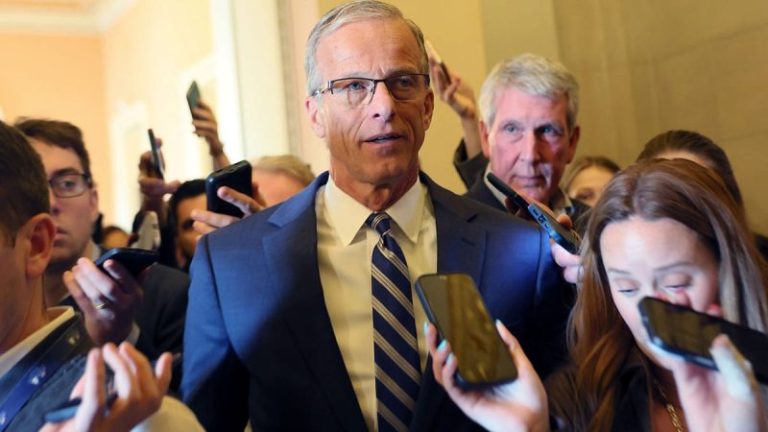
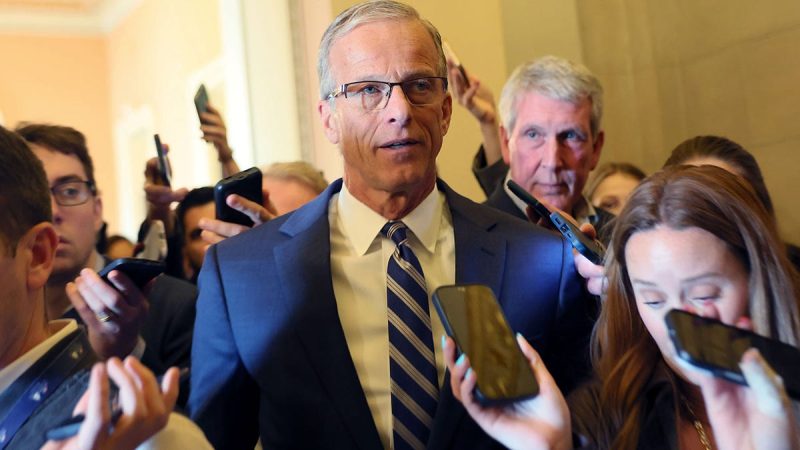
Senate Majority Leader John Thune, R-S.D., is ready to put Senate Democrats to the test on voter ID legislation.

The Safeguarding American Voter Eligibility (SAVE) America Act has earned the backing of 50 Senate Republicans, including Thune, which is enough to break through a key procedural hurdle.

Whether it can pass from the Senate to President Donald Trump’s desk is, for now, an unlikely scenario if lawmakers take the traditional path in the upper chamber. Still, Thune wants to put Democrats on the spot as midterm elections creep closer.

‘We will have a vote,’ Thune told Fox News Digital.

His comments came as he crisscrossed his home state of South Dakota, where he and Republicans in their respective states are out selling their legislative achievements as primary season fast approaches.

Thune viewed the opportunity of a floor vote as a way to have Senate Minority Leader Chuck Schumer, D-N.Y., and his caucus explain to voters why they would block a legislative push to federally enshrine voter ID and proof of citizenship to register to vote.

‘We will make sure that everybody’s on the record, and if they want to be against ensuring that only American citizens vote in our elections, they can defend that when they have to go out and campaign against Republicans this fall,’ Thune said.

But the political makeup of the Senate will prove a tricky path to navigate if Republicans want to pass the bill.

Though the majority of the Senate GOP backs the bill, without at least a handful of Senate Democrats joining them, it is destined to fall victim to the 60-vote filibuster threshold.

And Schumer has time and again made clear that he and the majority of Senate Democrats view the legislation, which passed the House last week, as a tool of voter suppression that would unduly harm poorer Americans and minority groups.

So Senate Republicans are looking at their options.

One, which Thune already threw cold water on, is nuking the Senate filibuster. The other is turning to the talking, or standing, filibuster. It’s the physical precursor to the current filibuster that requires hours upon hours of debate over a bill.

Some fear that taking that path could paralyze the Senate floor. Thune acknowledged that concern, having previously made it himself, but noted another wrinkle.

‘A lot of people focus on unlimited debate, and yes, it is something that could drag on for weeks or literally, for that matter, months,’ Thune said. ‘But it’s also unlimited amendments, meaning that every amendment — there’s no rules — so every amendment will be 51 votes.’

He argued that there are several politically challenging amendments that could hit the floor that would put members in tough reelections in a hard spot and possibly cause them to pass, which ‘could also be very detrimental to the bill in the end.’

Thune didn’t shut down the idea of turning to the talking filibuster, especially if it ended in lawmakers being able to actually pass the SAVE America Act. But in the Senate, outcomes are rarely guaranteed on politically divisive legislation.

‘I think that, you know, this obviously is a mechanism of trying to pursue an outcome, but I don’t know that, in the end, it’ll get you the outcome you want,’ Thune said. ‘And there could be a lot of ancillary damage along the way.’

This post appeared first on FOX NEWS

House Majority Whip Tom Emmer, R-Minn., is accusing Democrats of being hypocritical in their opposition to Republicans’ latest election integrity bill.

The No. 3 House Republican ripped the rival party after nearly all of them voted against the Safeguarding American Voter Eligibility (SAVE America) Act last week, specifically over its provision mandating federally accepted photo identification at the polls. It’s also sometimes referred to as the ‘SAVE Act.’

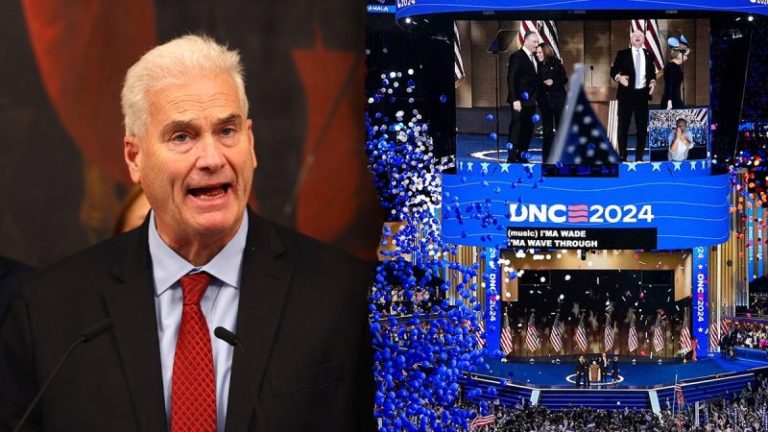
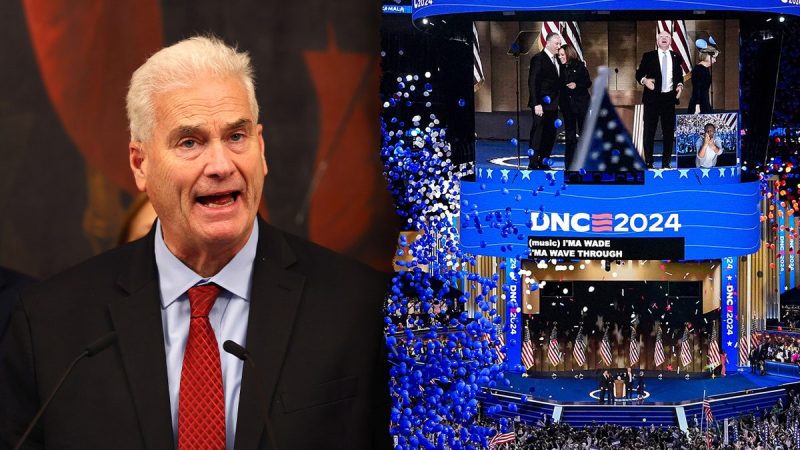
‘These guys are doing the same old broken record about voter suppression,’ Emmer told Fox News Digital. ‘Why aren’t they screaming about photo IDs at the airport? Why aren’t they screaming about photo IDs when you check out a book at the library?’

Emmer pointed out that a photo ID was required for attendees to watch former Vice President Kamala Harris accept the Democratic Party’s nomination for the White House in Chicago last year.

‘By the way, if they think it’s voter suppression, why do they require photo IDs at the Democrat National Convention to get in?’ Emmer said.

‘I mean, I think Americans are so much smarter than these people can understand, can let themselves understand,’ he said.

The SAVE America Act passed the House on Wednesday with support from all Republicans — an increasingly rare sight in the chamber — and just one Democrat, Rep. Henry Cuellar, D-Texas.

A previous iteration of the bill, just called the SAVE Act, passed the House in April of last year with support from four House Democrats.

Whereas the SAVE Act would have created a new federal proof-of-citizenship mandate in the voter registration process and imposed requirements for states to keep their rolls clear of ineligible voters, the updated bill would also require photo ID to vote in any federal election.

That photo ID would also have to denote proof-of-citizenship, according to the legislative text.

Democratic leaders in the House and Senate have both panned the bill, with House Minority Leader Hakeem Jeffries calling it ‘voter suppression’ and Senate Minority Leader Chuck Schumer, D-N.Y., dismissing it as ‘a modern-day Jim Crow.’

Jeffries also specifically took issue with a provision that would enable the Department of Homeland Security (DHS) to initiate removal proceedings if an illegal immigrant was found on a state’s voter rolls, arguing DHS would weaponize the information.

But voter ID, at least, has proven to be a popular standard in U.S. elections across multiple public polls.

A Pew Research Center poll released in August 2025 showed a whopping 83% of people supported government-issued photo ID requirements for showing up to vote, compared to just 16% of people who disapproved of it.

A Gallup poll from October 2024 showed 84% of people supported photo ID for voting in federal elections.

This post appeared first on FOX NEWS

Some of President Donald Trump‘s top Democratic critics who may run for the White House in 2028 used appearances at a high-profile European conference this past weekend to blast the Republican president’s agenda and try to beef up their foreign policy chops.

But for some of these Democrats with national ambitions, the international stop at the prestigious Munich Security Conference may have backfired.

Meanwhile, a highly anticipated address by Secretary of State Marco Rubio, who may be on the GOP’s 2028 ticket, won positive reviews for his charm offensive with European allies bruised by Trump’s aggressive second-term moves towards some of America’s oldest and closest allies.

AOC, Rubio spar over US foreign policy at global conference

Eight Democrats considered potential 2028 contenders — Rep. Alexandria Ocasio-Cortez of New York, Govs. Gavin Newsom of California and Gretchen Whitmer of Michigan, Sens. Ruben Gallego and Mark Kelly of Arizona, Chris Murphy of Connecticut and Elissa Slotkin of Michigan, and former Commerce Secretary Gina Raimondo — all descended on Munich.

‘I think they hurt themselves badly,’ Hugh Hewitt, the popular conservative radio talk show host and Fox News contributor, said of the Democrats during an appearance on ‘Fox and Friends.’

But it was Ocasio-Cortez, the progressive champion who has long been laser focused on affordability and other domestic issues, who scored the worst reviews.

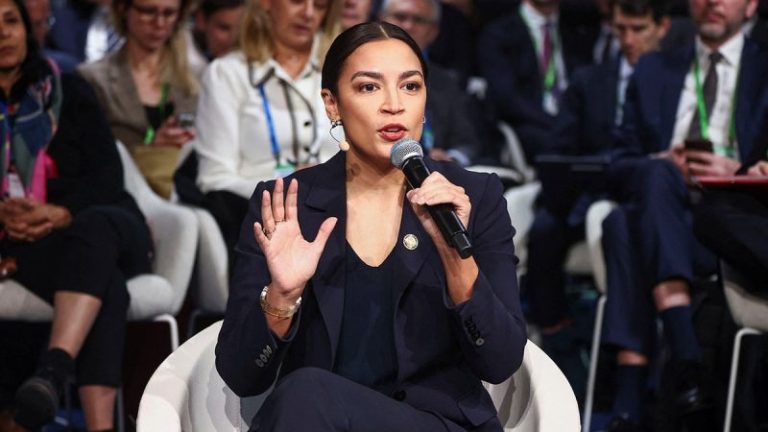
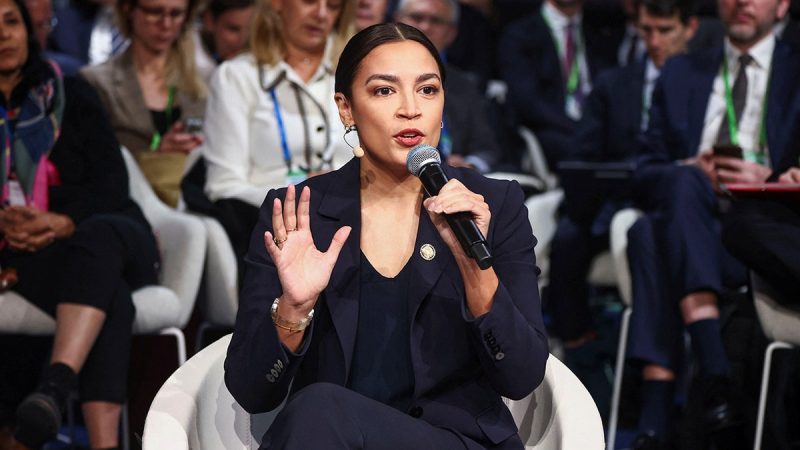
‘We are seeing our presidential administration tear apart the transatlantic partnership, rip up every democratic norm,’ Ocasio-Cortez said as she took aim at Trump. ‘I think many of us are here to say we are here, and we are ready for the next chapter, not to have the world turn to isolation, but to deepen our partnership … and increase our commitment to integrity to our values.’

But Ocasio-Cortez was heavily criticized for her gaffe when asked during a panel discussion whether the U.S. should send troops to defend Taiwan from a possible invasion by China.

The four-term lawmaker appeared to stall for nearly 20 seconds before offering that the U.S. should try to avoid reaching a clash with China over Taiwan.

‘AOC is like a parade of clichés. A model U.N. student that didn’t get enough sleep,’ Hewitt argued.

Social media posts by others on the right weren’t as kind, slamming her for offering up a world salad.

But it wasn’t just Republicans who critiqued Ocasio-Cortez.

A veteran Democratic strategist who asked to remain anonymous to speak more freely told Fox News Digital, ‘it is abundantly clear that AOC is not ready for prime time given her remarks in Europe.’

Whitmer, the term-limited governor of the key Great Lakes battleground state, was also criticized.

Asked what victory would look like for Ukraine, Whitmer said Ocasio-Cortez and U.S. Ambassador to NATO Matthew Whitaker, who were sitting with her on the panel, were ‘much more steeped in foreign policy than a governor is.’

‘Ukraine’s independence, keeping their land mass and having the support of all of the allies, I think, is the goal,’ Whitmer added.

Newsom repeatedly took aim at the president during his appearances.

‘Donald Trump is temporary,’ he said Friday during a climate change discussion. ‘He’ll be gone in three years.’ And he hammered Trump over climate policy, arguing the president is ‘doubling down on stupid.’

‘Never in the history of the United States of America has there been a more destructive president than the current occupant of the White House in Washington, D.C.,’ Newsom charged. ‘Donald Trump is trying to turn back the clock.’

Matt Mowers, a longtime Republican strategist and State Department veteran during Trump’s first administration who later was a 2020 GOP congressional nominee in swing state New Hampshire, gave the Democrats low scores.

‘What we saw on the Democratic side were a bunch of folks who were not ready for prime time,’ Mowers told Fox News Digital. ‘I think the American people are going to look at the circus group that showed up there and wonder if they can trust any of them to be in a position of power and lead America forward.’

But longtime Democratic strategist Joe Caiazzo, pointing to the Democrats at the conference, told Fox News Digital that ‘speaking in Munich serves to bolster their foreign affairs credentials, especially under the backdrop of the looming 2028 presidential campaign.’

‘It’s unclear which strategy is going to work, but I think regardless of who is successful, they will need a clear and cogent foreign policy to return our position at the global table,’ Caiazzo said.

Rubio’s speech came a year after Vice President JD Vance, the perceived 2028 Republican front-runner, delivered a scathing attack on Europe during his 2025 speech at the security forum.

America’s top diplomat, speaking a month after Trump took a sledgehammer to Europe during remarks at the World Economic Forum in Davos, Switzerland, was applauded for saying ‘in a time of headlines heralding the end of the trans-Atlantic era, let it be known and clear to all that this is neither our goal nor our wish, because for us Americans, our home may be in the Western Hemisphere, but we will always be a child of Europe.’

Striving to ease tensions fueled by Trump’s push to take control of Greenland and the president’s threats of further tariffs on European nations, Rubio emphasized that ‘the United States and Europe, we belong together.’

But while softer in tone, Rubio’s underlying message was as uncompromising as those of Trump and Vance, that Europe needed to join America’s new reshaped vision for the world, or get out of the way.

And Rubio strongly criticized European nations over their immigration and climate agenda, and slammed the United Nations, saying the world body ‘played virtually no role’ in peace efforts in Ukraine and Gaza.

Pointing to what he called ‘the dynamic duo of JD Vance’s speech last year and Marco Rubio’s speech this year,’ Mowers said, ‘You needed more of a wrecking ball last year to wake everyone up.’

And he said this year, ‘You have someone who can try to bring together more unity based upon a shared framework. But I think the two of them together have done a great job at really explaining what a U.S.-European relationship can look like for the 21st century.’

This post appeared first on FOX NEWS

A House GOP lawmaker has become the first member of his party to support a Democrat-led effort to limit presidential pardon power.

Rep. Don Bacon, R-Neb., signed on in support of legislation led by Rep. Johnny Olszewski, D-Md., to establish a congressional review process for presidential pardons.

It comes after President Donald Trump pardoned five ex-NFL players guilty of various charges including perjury, drug trafficking and counterfeiting. 

‘Across multiple administrations, we’ve seen legitimate questions raised about how this authority has been used at the same time, the ability of Congress to provide oversight has weakened,’ Bacon said in a statement. ‘Frankly, it is clear to me the pardon authority has been abused.’

And while Bacon did not mention Trump directly, Olszewski made clear that the Republican commander in chief is the main impetus for his push for a new constitutional amendment.

‘The announcement follows the Trump Administration’s decision earlier this week to pardon five former NFL players whose charges ranged from perjury to drug trafficking,’ said Olszewski’s press release announcing Bacon’s support on Monday. 

‘The pardons are part of what Olszewski describes as a disturbing pattern of abuses of the presidential pardon power benefiting the wealthy and well-connected.’

The amendment, if adopted, would give Congress the right to initiate a review process for presidential pardons if called for by 20 House members and five senators.

The review process would end with a vote on whether to nullify the pardon, needing two-thirds’ support in both the House and the Senate to succeed. 

The president would then be barred from issuing that same pardon to the same recipient again.

Former President Joe Biden notably took heat from Republicans and even some Democrats when he issued preemptive pardons for his family members and other allies, including son Hunter Biden, shortly before leaving office.

Bacon, a moderate Republican and retired Air Force brigadier general, has already announced he is not seeking re-election in November. 

He’s one of several GOP lawmakers in Congress who have been willing to buck Trump on a variety of issues, including the separation of powers.

For instance, Bacon was one of a handful of House Republicans who voted with Democrats to terminate Trump’s emergency declaration at the northern border, which the president had used to justify imposing tariffs on Canada without congressional approval.

Bacon told Fox News Digital at the time, ‘It is time for Congress to make its voice heard on tariffs.’

Fox News Digital reached out to the White House for comment but did not immediately receive a response.

This post appeared first on FOX NEWS

The NAACP formally asked a federal judge to protect voter information seized by the FBI from an election warehouse in Atlanta on Sunday.

The NAACP and other organizations say the documents contain ‘sensitive personal information,’ and asked the judge to impose limits on how the FBI can use the data. Their motion argues the seizure from the Fulton County elections building ‘infringed constitutional protections of privacy, and interfered with the right to vote.’

The motion asks the judge to ‘order reasonable limits on the government’s use of the seized data’ and to prohibit the government from using the data for purposes other than the criminal investigation cited in the search warrant affidavit.

That request includes prohibiting any efforts to use it for voter roll maintenance, election administration or immigration enforcement.

They also requested that the judge order the government to disclose an inventory of all documents and records seized, the identity of anyone who has accessed the records outside of those involved in the criminal investigation, any copying of the records and all efforts to secure the information.

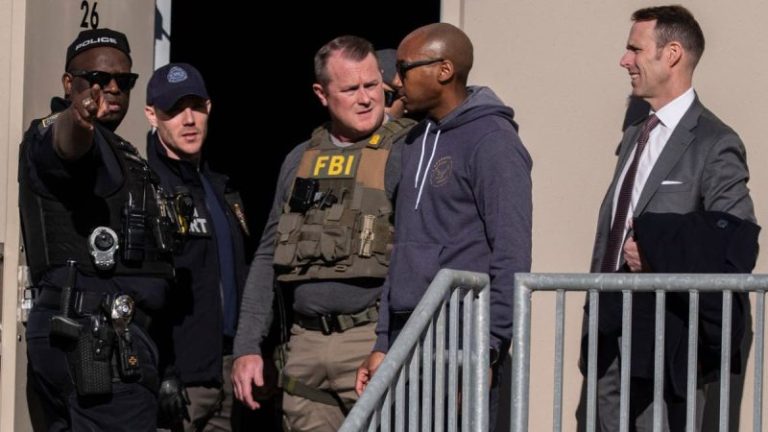
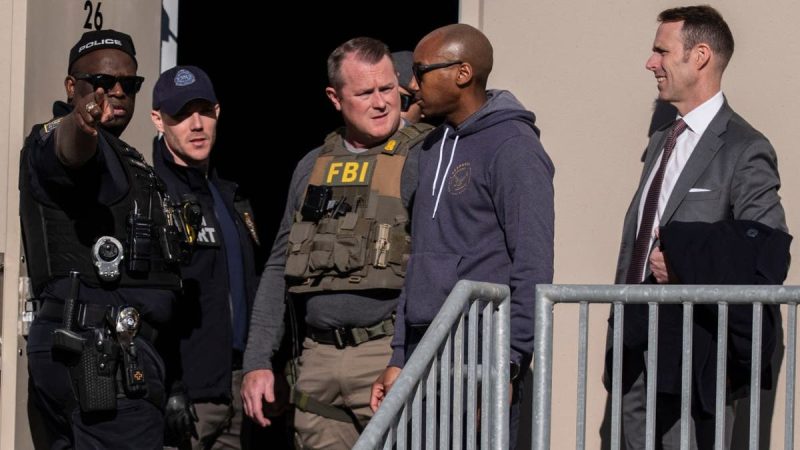
The FBI arrived to the elections warehouse on Jan. 28 with a search warrant for documents relating to the 2020 election, including all ballots, tabulator tapes from the scanners that tally the votes, electronic ballot images created when the ballots were counted and then recounted, and all voter rolls.

Lawmakers debate ‘SAVE America Act’ requiring voter ID for federal elections

Sunday’s motion was filed by the Lawyers’ Committee for Civil Rights Under Law on behalf of the NAACP, Georgia and Atlanta NAACP organizations, and the Georgia Coalition for the Peoples Agenda. It notes that the seizure happened as the Justice Department has been seeking unredacted state voter registration rolls.

Fulton County officials told reporters this month that FBI agents were seen carrying some 700 boxes of ballots from a warehouse near the election hub and loading them into a truck.

Fulton County has also separately sued the FBI in an effort to have the elections documents returned.

Fox News’ Breanne Deppisch and The Associated Press contributed to this report.

This post appeared first on FOX NEWS

Democrats were mocked for leaving one of their most popular presidents off their party’s Presidents’ Day message after Republicans noticed that former President Bill Clinton was absent.

The former Arkansas governor and 42nd commander in chief was missing from a ‘Happy President’s Day’ image that included John F. Kennedy, Lyndon Johnson, Jimmy Carter, Franklin Roosevelt, Barack Obama and Joe Biden.

The only Democratic presidents missing between Roosevelt and Biden’s tenures were Clinton and Harry Truman.

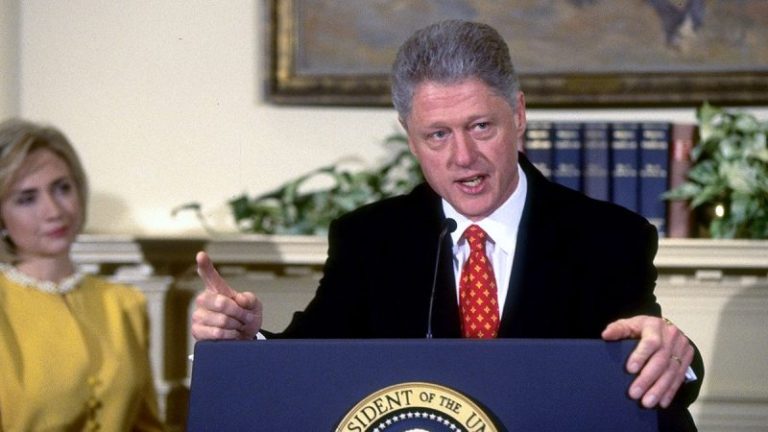
In response, the RNC retweeted the @TheDemocrats post with an image of Clinton wearing glasses and sitting next to Hillary Clinton, with a concerned or focused look on his face.

‘Forget someone again??’ the RNC caption read.

Fox News Digital reached out to the DNC to ask whether the omission was intentional and to the Clinton Foundation for comment.

Republicans, meanwhile, posted a Presidents’ Day image of Mount Rushmore featuring a color image of Trump next to President Abraham Lincoln, positioned on the right side of the South Dakota monument.

Their account also retweeted the Department of Health and Human Services, which wrote that ‘This Presidents Day, we honor the leaders who shaped our nation and reaffirm our commitment to serving the health and well-being of every American.’

HHS included a composite of Trump, Lincoln and President George Washington to make their point.

Clinton, one of the most popular presidents in recent history, was not without his share of scandal.

The late Kenneth Starr investigated Clinton for connections to a controversial 1978 land deal in the Ozarks nicknamed ‘Whitewater’ dating to Clinton’s time as Arkansas attorney general.

While Clinton was never charged with wrongdoing, Arkansas business partners Jim and Susan McDougal were convicted in connection with the failed Whitewater deal. Hillary Clinton had previously worked for the law firm that represented Jim McDougal’s bank. Gov. Jim Guy Tucker, Clinton’s successor, was also convicted.

But the Whitewater case led Starr to discover what became the Monica Lewinsky scandal — wherein Clinton allegedly had a sexual relationship with a White House intern.

On January 26, 1998, Clinton famously maintained his innocence in the face of impeachment over Starr’s case, declaring at the end of a childcare policy press conference:

‘I did not have sexual relations with that woman.’

‘I never told anybody to lie, not a single time. Never. These allegations are false. And I need to go back to work for the American people,’ Clinton added.

This post appeared first on FOX NEWS