Author

admin

Browsing

Democrats were mocked for leaving one of their most popular presidents off their party’s Presidents’ Day message after Republicans noticed that former President Bill Clinton was absent.

The former Arkansas governor and 42nd commander in chief was missing from a ‘Happy President’s Day’ image that included John F. Kennedy, Lyndon Johnson, Jimmy Carter, Franklin Roosevelt, Barack Obama and Joe Biden.

The only Democratic presidents missing between Roosevelt and Biden’s tenures were Clinton and Harry Truman.

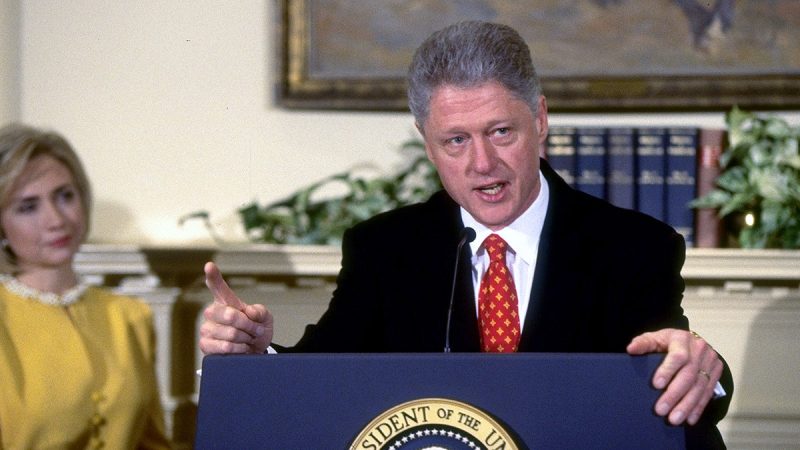
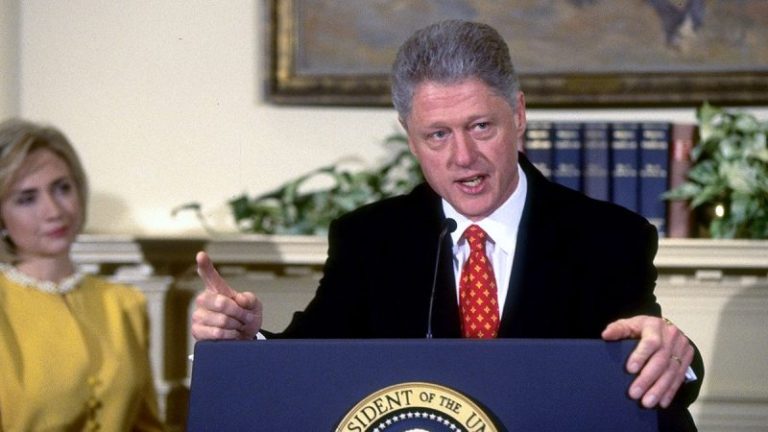
In response, the RNC retweeted the @TheDemocrats post with an image of Clinton wearing glasses and sitting next to Hillary Clinton, with a concerned or focused look on his face.

‘Forget someone again??’ the RNC caption read.

Fox News Digital reached out to the DNC to ask whether the omission was intentional and to the Clinton Foundation for comment.

Republicans, meanwhile, posted a Presidents’ Day image of Mount Rushmore featuring a color image of Trump next to President Abraham Lincoln, positioned on the right side of the South Dakota monument.

Their account also retweeted the Department of Health and Human Services, which wrote that ‘This Presidents Day, we honor the leaders who shaped our nation and reaffirm our commitment to serving the health and well-being of every American.’

HHS included a composite of Trump, Lincoln and President George Washington to make their point.

Clinton, one of the most popular presidents in recent history, was not without his share of scandal.

The late Kenneth Starr investigated Clinton for connections to a controversial 1978 land deal in the Ozarks nicknamed ‘Whitewater’ dating to Clinton’s time as Arkansas attorney general.

While Clinton was never charged with wrongdoing, Arkansas business partners Jim and Susan McDougal were convicted in connection with the failed Whitewater deal. Hillary Clinton had previously worked for the law firm that represented Jim McDougal’s bank. Gov. Jim Guy Tucker, Clinton’s successor, was also convicted.

But the Whitewater case led Starr to discover what became the Monica Lewinsky scandal — wherein Clinton allegedly had a sexual relationship with a White House intern.

On January 26, 1998, Clinton famously maintained his innocence in the face of impeachment over Starr’s case, declaring at the end of a childcare policy press conference:

‘I did not have sexual relations with that woman.’

‘I never told anybody to lie, not a single time. Never. These allegations are false. And I need to go back to work for the American people,’ Clinton added.

This post appeared first on FOX NEWS

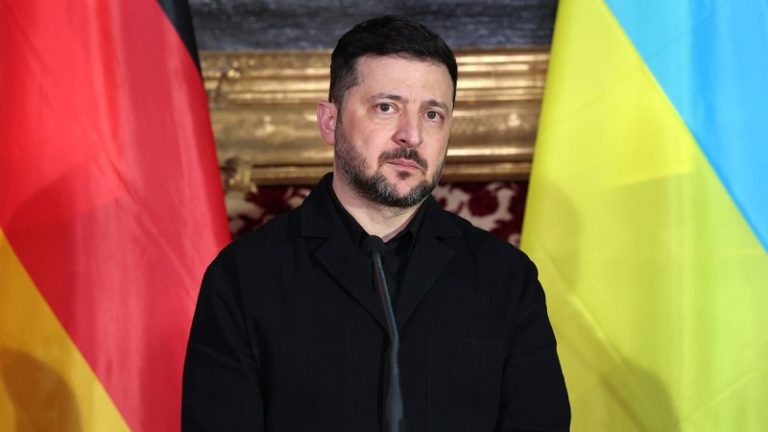
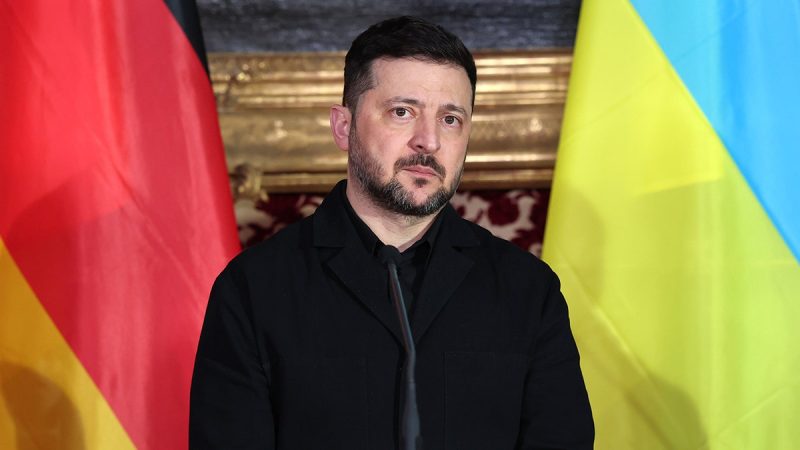
Ukrainian President Volodymyr Zelenskyy said in a post on X that he met with U.S. Sens. Richard Blumenthal, D-Conn., and Sheldon Whitehouse, D-R.I.

‘Thank you for seeing us,’ Blumenthal can be heard saying in a video included in Zelenskyy’s post. ‘We look forward to hearing from you, ah, about how we can be more helpful.’

Zelenskyy indicated in the post that during the meeting he ‘thanked the United States for its strong bipartisan support and work for peace.’

President Donald Trump has been trying to help broker peace between Russia and Ukraine, but the two nations remain locked in conflict.

‘Before our meeting, the senators met with children whom Ukraine managed to return from Russia. Thank you, this is truly important,’ Zelenskyy noted in the post.

‘We see no better tools to influence Moscow than pressure. There is an important sanctioning act in the Senate right now, and we expect it to work. I also informed them about the constant Russian strikes on our people and, in particular, on American businesses as well. It is absolutely fair that Russian money should be used to defend against this terror, and we discussed the prospects of utilizing immobilized Russian assets to purchase missiles for the Patriot systems,’ he added.

‘I thank the President, Congress, and the people of the United States for their support,’ Zelenskyy noted.

Zelenskyy: Russia launched about 1,300 drones in last week

Fox News Digital reached out to the senators’ offices on Monday.

This post appeared first on FOX NEWS

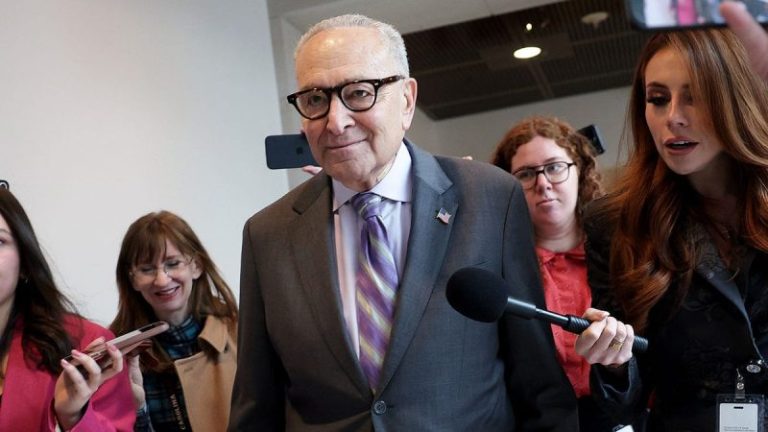
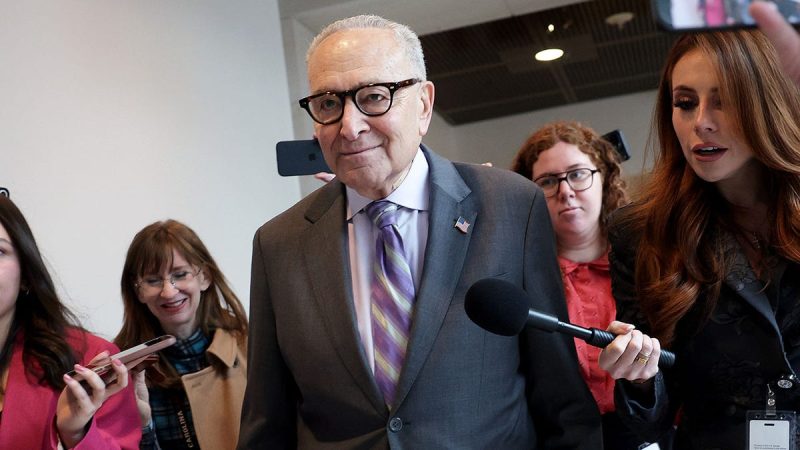
Senate Minority Leader Chuck Schumer, D-N.Y., is making a push to have the Pride flag considered on the same level as the U.S. flag in the eyes of the federal government.

Schumer announced plans to introduce legislation that would make the flag, a symbol of the LGBTQ movement, a congressionally authorized flag. The distinction would enshrine the flag with similar protections as the U.S. flag, military flags, POW/MIA flags and others recognized by Congress.

His move comes after the Trump administration removed a Pride flag from a national monument outside the Stonewall Inn earlier this month. A clash between police and patrons at a gay bar in the 1960s is widely considered the birth of the gay rights movement.

‘Stonewall is sacred ground and Congress must act now to permanently protect the Pride flag and what it stands for,’ Schumer said. ‘Trump’s hateful crusade must end.’

The flag has since been reinstalled atop the pole outside the Stonewall Inn, and Schumer’s legislative push would prevent it from being taken down in the future.

President Donald Trump has not explicitly targeted the Pride flag but previously signed an executive order restricting what types of flags may be displayed on federal property to ensure only the U.S. flag is prominently flown.

The Pride flag was taken down from the monument following an internal memo from the Department of the Interior ordering ‘non-agency’ flags at national parks be removed.

The directive, signed by National Park Service Acting Director Jessica Bowron in late January, included certain exceptions to the rule, including historical flags, military flags and federally recognized flags from tribal nations.

The Stonewall National Monument, first designated by former President Barack Obama in 2016, falls under the agency’s supervision. The Pride flag atop a large flagpole outside the famous gay bar did not fall under the list of protected flags and pennants.

‘The very core of American identity is liberty and justice for all — and that is what this legislation would protect: each national park’s ability to make its own decision about what flag can be flown,’ Schumer said. ‘Attempts to hurt New York and the LGBTQ community simply won’t fly, but the Stonewall Pride flag always will.’

This post appeared first on FOX NEWS

PERTH, AUSTRALIA AND VANCOUVER, BC / ACCESS Newswire / February 16, 2026 / Sarama Resources Ltd. (‘Sarama‘ or the ‘Company‘) (ASX:SRR)(TSXV:SWA) is pleased to announce it has appointed Davidson & Company LLP (‘Davidson & Co’) as Sarama’s audit firm, effective 13 February 2026.

Davidson & Co was appointed following the receipt by Sarama of the resignation of HLB Mann Judd, effective 10 February 2026. The Audit Committee of the Board of Directors accepted the resignation of HLB Mann Judd and recommended the appointment of Davidson & Co. The Board of Directors of Sarama, on the recommendation of the Audit Committee, appointed Davidson & Co as the new auditor until the next Annual General Meeting of Sarama.

Sarama sent a Notice of Change of Auditor (the ‘Notice‘) to HLB Mann Judd and to Davidson & Co and has received a letter from each, addressed to the securities commissions in each jurisdiction where Sarama is reporting, stating that they agree with the information contained in the Notice. The Notice and letters (the ‘Change of Auditor Package‘) have been reviewed and approved by Sarama’s Audit Committee and the Board of Directors.

The Change of Auditor Package is available under Sarama’s SEDAR+ profile at www.sedarplus.ca.

This announcement was authorised for release to the ASX by the Board of Sarama Resources Ltd.

Neither TSX Venture Exchange nor its Regulation Services Provider (as that term is defined in policies of the TSX Venture Exchange) accepts responsibility for the adequacy or accuracy of this release.

For further information, please contact:

Andrew Dinning
Sarama Resources Ltd
e: info@saramaresources.com
t: +61 8 9363 7600

SOURCE: Sarama Resources Ltd.

View the original press release on ACCESS Newswire

News Provided by ACCESS Newswire via QuoteMedia

This post appeared first on investingnews.com

Surface Metals Inc. (CSE: SUR,OTC:SURMF) (OTCQB: SURMF) (the ‘Company’, or ‘Surface Metals’) is pleased to announce it has engaged Danayi Capital Corp. (‘Danayi’), a full service marketing firm based out of Vancouver, BC, to provide digital marketing services for a 6-month term commencing on February 16, 2026. Under the terms of the agreement between Surface Metals and Danayi, the Company has agreed to pay Danayi one hundred and fifty thousand USD. No compensation in securities of the Company will be paid to Danayi. Danayi Capital Corp., an arm’s length party, is owned by Mehran Bagherzadeh. Based at 550 – 800 West Pender Street, Vancouver, BC, V6C 2V6 (e-mail: mehran@danayi.co; tel: 604-767-2983), Danayi specializes in marketing, advertising and public awareness within the mining and metals sector. To the knowledge of the Company, Danayi does not own any securities of the Company.

About Surface Metals Inc.

Surface Metals Inc. (CSE: SUR,OTC:SURMF) (OTCQB: SURMF) is a North American mineral exploration company focused on advancing a diversified portfolio of gold and lithium projects in Nevada, USA. The Company’s Cimarron Gold Project is located in Nye County, Nevada, in a historically productive gold district. Surface’s Clayton Valley Lithium Brine Project hosts an inferred resource of approximately 302,900 tonnes LCE adjacent to Albemarle’s Silver Peak Mine. Surface Metals is also advancing a sedimentary claystone lithium project in Fish Lake Valley, Nevada.

For more information, please visit: www.surfacemetals.com

On behalf of the Board of Directors
Steve Hanson
Chief Executive Officer, President, and Director
Telephone: (604) 564-9045
info@surfacemetals.com

Neither the CSE nor its regulations service providers accept responsibility for the adequacy or accuracy of this news release. This news release contains certain statements which may constitute forward-looking information within the meaning of applicable securities laws (‘forward-looking statements’). These include statements regarding the amount of funds to be raised under the Offering, and the use of such funds. There is no guarantee the Offering will be completed on the terms outlined above, or at all. Use of funds is subject to the discretion of the Company’s board of directors, and as such may be used for purposes other than as set out above. Any forward-looking statement speaks only as of the date it is made and, except as may be required by applicable securities laws, the Company disclaims any intent or obligation to update any forward-looking statement, whether as a result of new information, future events or results or otherwise.

Corporate Logo

To view the source version of this press release, please visit https://www.newsfilecorp.com/release/283975

News Provided by TMX Newsfile via QuoteMedia

This post appeared first on investingnews.com

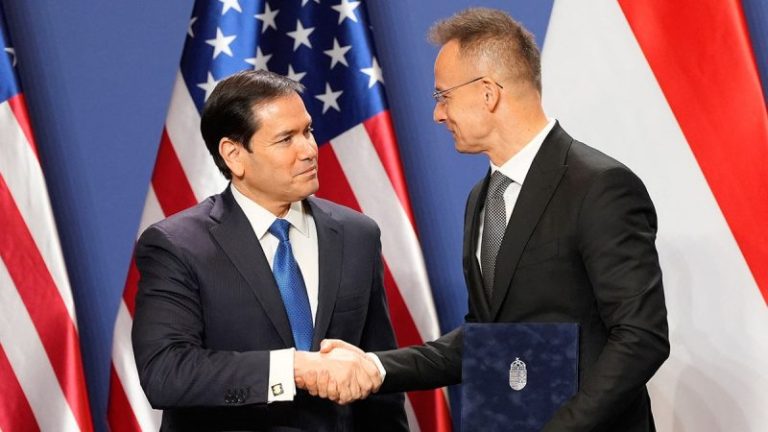
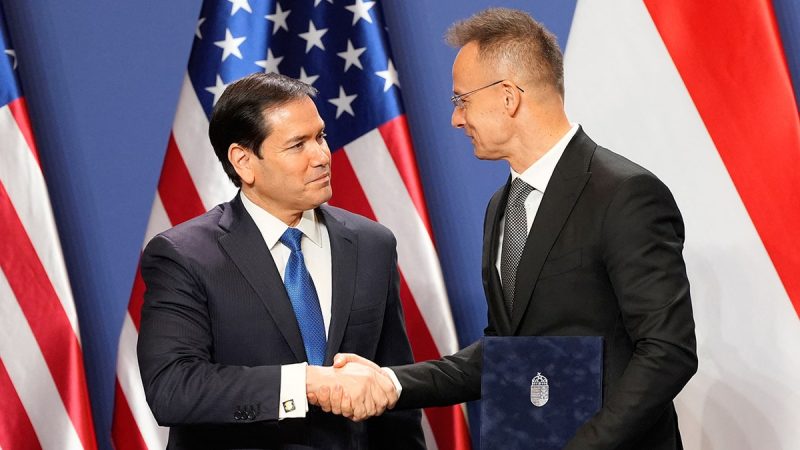
U.S. Secretary of State Marco Rubio signed a civil nuclear cooperation agreement involving the U.S. and Hungary on Monday.

During remarks at the signing ceremony, Rubio indicated that the U.S.-Hungary relationship, and the relationship between President Donald Trump and Hungarian Prime Minister Viktor Orbán, is very close.

The American diplomat described the relationship between the two nations as being ‘as close as I can possibly imagine it being.’

Rubio, during remarks delivered alongside Orbán, asserted, ‘Your success is our success.’ 

He noted that if Hungary ever faces financial problems, impediments to growth or threats to national stability, he knows ‘President Trump will be very interested’ in ‘finding ways’ to help.

Trump has praised Orbán and backed him for re-election.

‘Highly Respected Prime Minister of Hungary, Viktor Orbán, is a truly strong and powerful Leader, with a proven track record of delivering phenomenal results. He fights tirelessly for, and loves, his Great Country and People, just like I do for the United States of America. Viktor works hard to Protect Hungary, Grow the Economy, Create Jobs, Promote Trade, Stop Illegal Immigration, and Ensure LAW AND ORDER!’ Trump declared on Truth Social this month. 

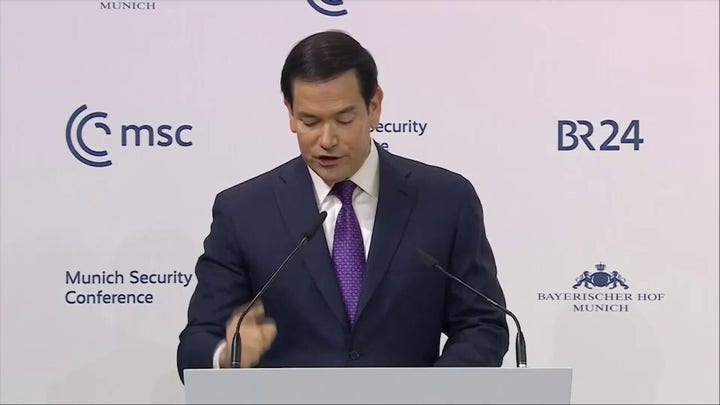
Rubio addresses Munich Security Conference saying US allies shouldn

‘Relations between Hungary and the United States have reached new heights of cooperation and spectacular achievement under my Administration, thanks largely to Prime Minister Orbán. I look forward to continuing working closely with him so that both of our Countries can further advance this tremendous path to SUCCESS and cooperation. I was proud to ENDORSE Viktor for Re-Election in 2022, and am honored to do so again. Viktor Orbán is a true friend, fighter, and WINNER, and has my Complete and Total Endorsement for Re-Election as Prime Minister of Hungary — HE WILL NEVER LET THE GREAT PEOPLE OF HUNGARY DOWN!’ Trump added.

This post appeared first on FOX NEWS

The partial government shutdown stretched into another week after negotiators failed to reach a deal to fund the Department of Homeland Security (DHS) over the weekend.

Congress is on a weeklong recess and is not scheduled to return to Washington, D.C., until next week, leaving the shutdown’s end in limbo as both parties remain far apart on key provisions.

Senate Democrats are demanding a series of reforms to Immigration and Customs Enforcement (ICE), a position they have maintained since the fatal shootings of Alex Pretti and Renee Nicole Good during ICE operations in Minnesota.

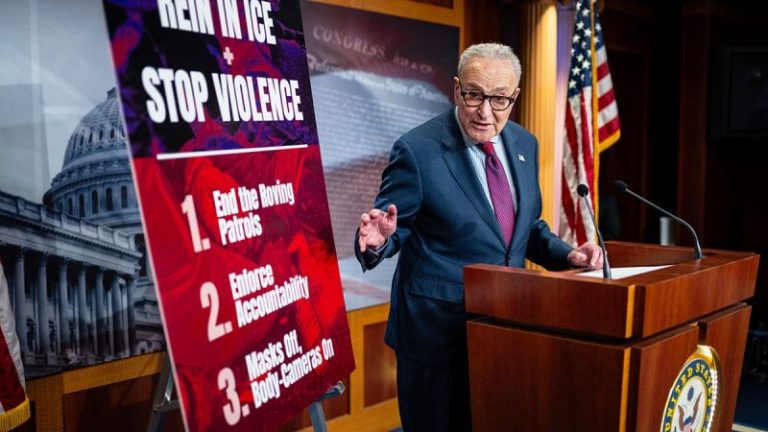
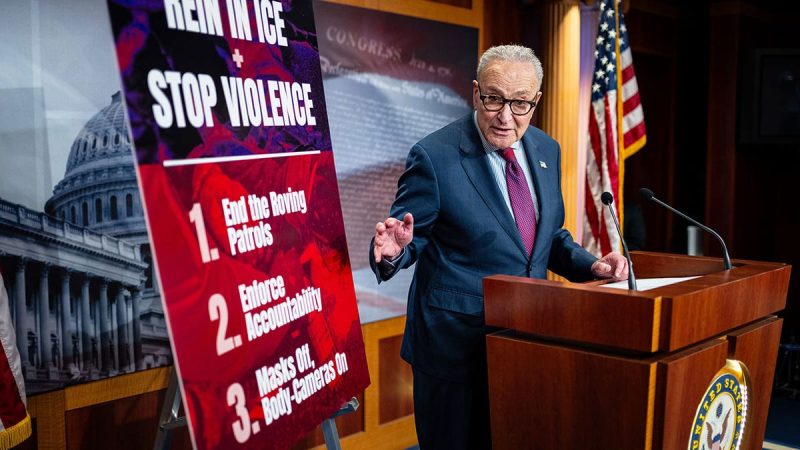
Senate Minority Leader Chuck Schumer, D-N.Y., and his caucus are standing by a list of 10 proposed reforms, including requiring ICE agents to obtain judicial warrants and limiting the use of face coverings — proposals Republicans have described as red lines.

‘Americans are tired of masked agents conducting warrantless operations in their communities — secret police,’ Schumer said. ‘They’re tired of chaos, secrecy and zero accountability. That is not what law and order looks like, and Republicans simply cannot pretend that this outrage does not exist.’

However, ICE received additional funding under previously passed legislation, and core enforcement operations are expected to continue. Other DHS agencies, including the Transportation Security Administration (TSA), the Federal Emergency Management Agency (FEMA) and the Coast Guard, remain affected by the shutdown.

The White House has led negotiations for Senate Republicans and offered Senate Democrats a proposal that they have rejected. Details of that proposal have not been made public.

‘This is a Democrat-driven shutdown caused by their intransigence and desire to use government funding for services all Americans rely on as a hostage in order to achieve an unrelated political goal,’ a senior White House official said.

Senate Majority Leader John Thune, R-S.D., said lawmakers would receive 24 hours’ notice to return if a deal is reached.

‘I think all those reasonable efforts and requests have been overshadowed by the fact that the Democrats don’t seem to want to play ball,’ Thune said.

On the House side, Speaker Mike Johnson, R-La., told lawmakers they would receive 48 hours’ notice to return if the Senate passes a bill. The House is also in recess until Feb. 23.

Johnson and other Republicans have expressed support for the original DHS funding bill crafted by House and Senate appropriators, but the speaker said he does not want further delays in DHS funding to be attributed to the House.

House Minority Leader Hakeem Jeffries, D-N.Y., has said Democrats will not accept a funding bill that does not include significant reforms to ICE.

This post appeared first on FOX NEWS

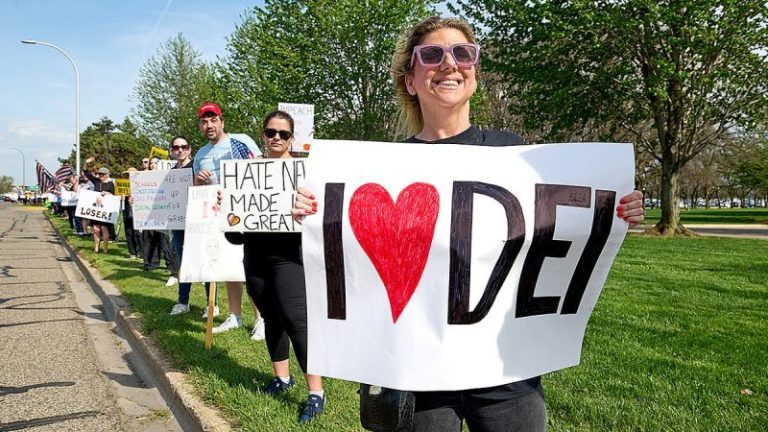
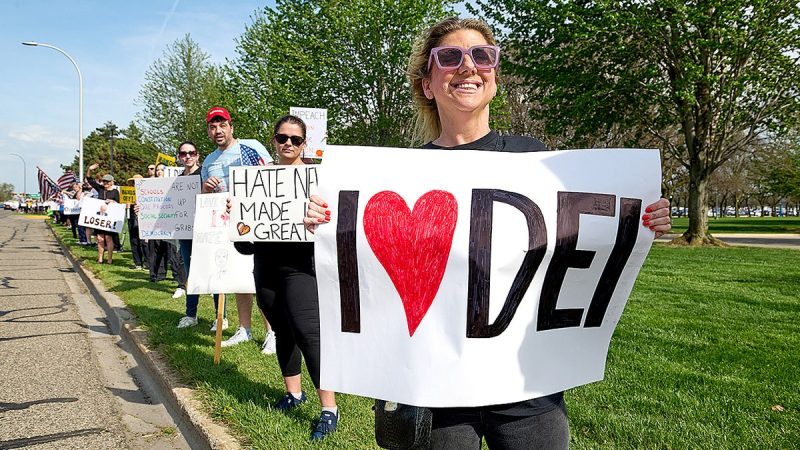
A new report from the far-left Human Rights Campaign shows a remarkable shift: a 65% drop in Fortune 500 companies publicly communicating commitments to diversity and inclusion initiatives. Just a few years ago, corporations raced to outdo one another with ever-expanding DEI pledges. Today, many are quietly stepping back.

This is not a retreat from fairness. It is a return to sanity.

For years, corporate America embraced an ideological experiment that blurred the line between equal opportunity and preferential treatment. What began as a push for broader inclusion morphed into quota-driven mandates, demographic scorecards and internal political signaling exercises that often had little to do with business performance.

Now, the legal system — and increasingly federal regulators — are pushing back.

Consider the recent lawsuit against Starbucks, where Missouri’s attorney general alleged ‘systemic discrimination’ in hiring and promotion practices tied to DEI goals. While a federal judge dismissed the case on procedural grounds, the filing itself signaled growing scrutiny over whether corporate diversity initiatives cross into unlawful discrimination.

Nike is currently facing a federal investigation by the Equal Employment Opportunity Commission over allegations that certain DEI-related employment practices may have resulted in race-based discrimination against White employees. Whether the agency ultimately finds wrongdoing or not, the investigation underscores a new reality: DEI programs are no longer insulated from legal challenge.

And JPMorgan Chase has been sued over allegations of ‘systemic’ race bias, including claims that the bank conducted ‘fake interviews’ to satisfy internal diversity targets. That allegation — that a company might go through the motions of interviewing candidates solely to hit demographic benchmarks — illustrates how performative compliance can undermine both fairness and trust.

But the scrutiny does not stop at employment law.

Jasmine Crockett supports boycott Target over DEI rollbacks

In recent weeks, the Federal Trade Commission reportedly sent letters to 42 of the largest and most profitable law firms in the United States, warning that racially discriminatory hiring practices — even if adopted under the banner of DEI — could constitute unfair or anti-competitive conduct. According to reporting, the firms were participating in a program overseen by the Diversity Lab that required at least 30% of leadership candidates to come from underrepresented groups.

That kind of industry-wide coordination raises serious questions.

First, there is the obvious Civil Rights Act concern: employment decisions cannot be made on the basis of race, period. But there is also a broader antitrust dimension. When competitors collectively adopt demographic quotas or coordinated hiring mandates, they may be engaging in collusive conduct — effectively setting industry standards through cooperation rather than competing freely for the best talent.

This theory is not new. Federal antitrust authorities have previously warned climate and ESG coalitions that there is no ‘ESG exception’ to the antitrust laws. As former FTC Chair Lina Khan stated plainly: competitors are not permitted to coordinate with one another simply because the coordination is framed as socially beneficial. The same logic applies here. There is no DEI exception to the Sherman Antitrust Act.

For years, corporate America embraced an ideological experiment that blurred the line between equal opportunity and preferential treatment. 

The implications are enormous.

Retailers such as Nordstrom, Macy’s, Bloomingdale’s, Ulta and Sephora signed the ‘Fifteen Percent Pledge,’ committing to reserve 15% of shelf space exclusively for Black-owned brands. More than seventy major corporations — including competitors like Nike, Levi Strauss, Ralph Lauren and American Eagle — signed the ‘Count Us In’ pledge, coordinating around policies that include funding transgender surgeries for employees and engaging in shared lobbying efforts.

The legal question is no longer just whether these initiatives are politically popular. It is whether they create exposure under antitrust law by reducing competition or creating coordinated market standards among competitors.

Corporate America is beginning to recognize the risk.

Public companies exist to create shareholder value — not to serve as enforcement arms for shifting social movements. When executives adopted DEI mandates that required race-based hiring targets, demographic quotas, or coordinated pledges with competitors, they exposed their companies to multi-front liability: discrimination claims from employees, regulatory investigations, shareholder lawsuits and now potential antitrust scrutiny.

The 65% drop in DEI messaging suggests something important: boards and CEOs are recalibrating.

That recalibration is healthy. 

There is nothing wrong with expanding opportunity, recruiting broadly, or fostering a respectful workplace culture. But the law demands equal treatment — not equal outcomes engineered through quotas or industry collusion. When companies forget that distinction, they risk violating both civil rights statutes and competition laws designed to protect markets.

Watchdog group exposes Idaho colleges

Markets function best when companies compete — for customers, for innovation, and, yes, for talent. The moment competitors coordinate around hiring mandates or collective pledges, they drift away from competition and toward centralized standard-setting. That is precisely what antitrust law exists to prevent.

The pendulum is swinging back toward merit.

Employees want to know they were hired because of their ability. Shareholders want disciplined capital allocation. Customers want quality products at fair prices. None of those priorities require demographic quotas or public virtue declarations.

The retrenchment we are witnessing is not an attack on diversity. It is a rejection of coercion and coordination masquerading as virtue. It is a reminder that equal opportunity under the law applies to everyone — White, Black, male, female — and that industry competitors are not allowed to suspend antitrust principles simply because the goal sounds noble.

Corporate America is finally rediscovering a simple truth: treat people equally, compete vigorously, and let merit determine outcomes.

That is not only legally sound. It is economically sound. And it is long overdue.

This post appeared first on FOX NEWS

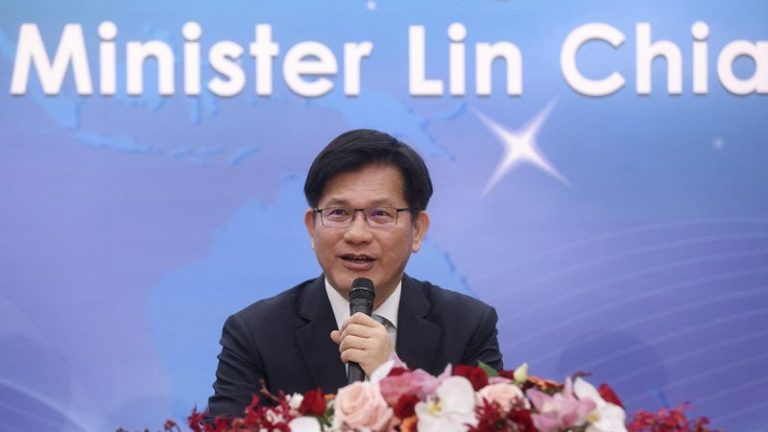
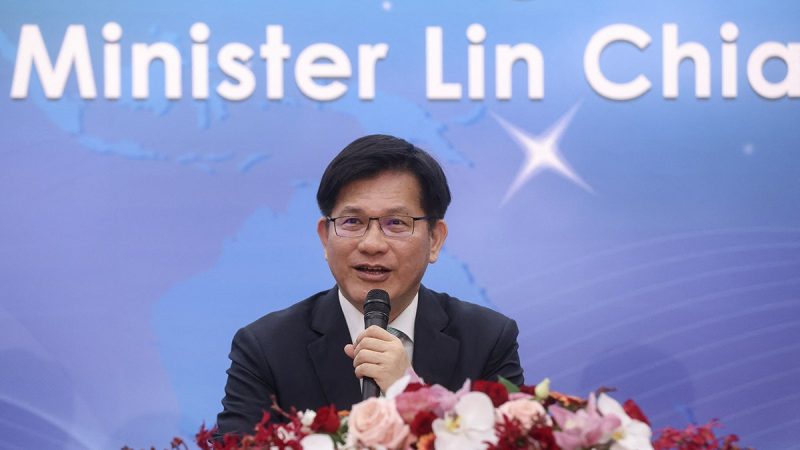
Taiwan’s foreign minister says China has ‘clearly become a troublemaker that is maliciously attempting to disrupt the cross-strait status quo and intimidate peaceful countries.’

In exclusive comments to Fox News Digital, Foreign Minister Lin Chia-lung said China’s intensifying ‘authoritarian expansionism not only directly threatens Taiwan’s security and democratic system but also poses significant challenges to peace and stability in the Indo-Pacific region and around the world.’

‘Last June,’ Lin said, ‘[Chinese] aircraft carriers Liaoning and Shandong maneuvered beyond the second island chain, marking China’s first simultaneous, dual-carrier deployment into the Western Pacific. These developments demonstrate that Beijing’s expansionist ambitions extend far beyond Taiwan and pose an increasingly serious threat to the security and stability of the Indo-Pacific region and the world.’

Communist China was founded in 1949 and has not ruled Taiwan for a single day. Officially known as the Republic of China (ROC), Taiwan is currently recognized by eleven small countries, plus the Holy See. Beijing nonetheless rejects the reality of nearly 80 years of separate rule, describing Taiwan as a ‘sacred and inseparable part of China’s territory.’

China’s posture toward independently ruled Taiwan has hardened in recent years as President Xi Jinping removed term limits and consolidated near-total power. While earlier Chinese statements included talk of ‘peaceful unification,’ Beijing now openly threatens to use force. 

In 2024, Xi directed the Chinese military to complete preparations for a Taiwan operation by 2027. Most defense analysts agree that an invasion would be costly, bloody and highly risky for China, Taiwan and any countries that come to Taiwan’s aid, such as the United States or Japan.

Lin echoed those warnings that a conflict in the Taiwan Strait would reverberate worldwide. ‘Peace and stability across the Taiwan Strait are vital to global security and prosperity,’ Lin said, noting that approximately 90% of the world’s most advanced semiconductors are produced in Taiwan and that roughly 50% of global commercial shipping passes through the strait. He added that Taiwan is grateful to the United States and other partners for resisting China’s efforts to unilaterally alter the status quo.

The foreign minister said Taiwan’s central role in geopolitics, technology and supply chains ensures that Washington places a high priority on cross-strait stability. He said U.S. policymakers understand that Taiwan’s semiconductor industry and related supply chains are critical to American economic security.

‘There is clear strategic continuity between the policies of President Trump’s first and second terms,’ said Lin, adding that Taiwan’s government will seek ways to coordinate with the United States ‘through values-based, alliance and economic diplomacy.’

Commenting on Washington’s Indo-Pacific strategy, Lin said, ‘The Trump administration and U.S. Congress continue to demonstrate a steadfast commitment to safeguarding peace and security across the Indo-Pacific region,’ Lin said, ‘which was emphasized in the 2025 National Security Strategy (NSS).’ The foreign minister also noted that ‘the recent NSS released by the Trump administration underscored Taiwan’s geopolitical importance as a link between the Northeast and Southeast Asian theaters.’

Lin said Taiwan is working to rebalance trade with the United States while strengthening strategic cooperation on AI. ‘The Trump administration’s AI Action Plan,’ he said, ‘underscores the importance of innovation, infrastructure and international cooperation for AI development.’ 

He also touted Taiwan’s growing investments in the U.S., including a $165 billion commitment by Taiwan Semiconductor Manufacturing Company (TSMC) in Arizona, and said Taipei is working to make it easier for Taiwanese companies trying to invest in the U.S.. ‘Against the backdrop of U.S.-China strategic competition and the restructuring of global supply chains,’ said Lin, ‘Taiwan’s enterprises understand the remarkable potential of investing in the United States.’

The foreign minister said Taiwan appreciates increasing American military support, highlighting that ‘Last December, the United States approved an arms sales package to Taiwan totaling $11 billion as well as signing the Taiwan Assurance Implementation Act and the National Defense Authorization Act for Fiscal Year 2026. These measures underscore the firm bipartisan support for Taiwan in the U.S. government.’

But he stressed that Taiwan is accelerating its own defense investments. ‘Last year, [Taiwan] President Lai Ching-te announced that Taiwan’s defense budget would increase to over 3% of GDP by 2026 and rise to 5% by 2030,’ he said. While parts of that plan have faced resistance in the opposition-led legislature, both major parties have publicly backed closer security cooperation with the United States and a stronger deterrence posture.

This post appeared first on FOX NEWS
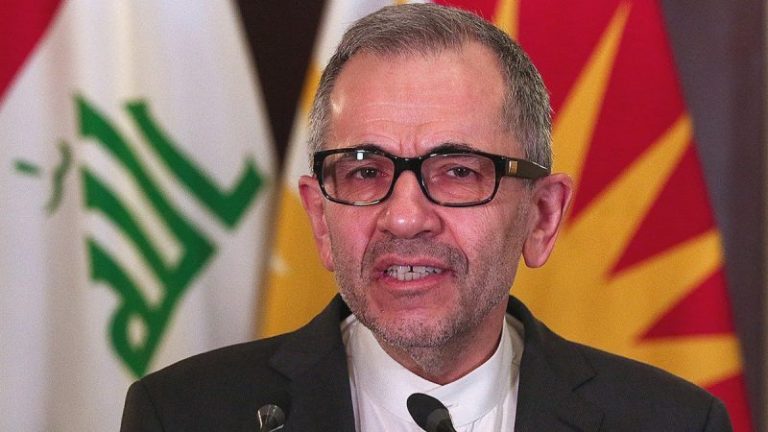
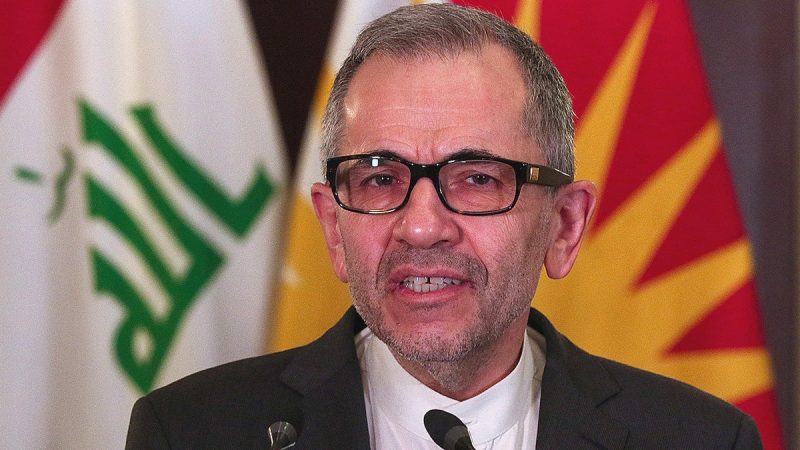
Iran claims it is open to compromise with the U.S. on a nuclear deal if the administration is willing to discuss lifting sanctions, a senior Iranian official said Sunday.

Majid Takht-Ravanchi, Iran’s deputy foreign minister, also said in an interview that the ball was ‘in America’s court to prove that they want to do a deal,’ adding: ‘If they are sincere, I’m sure we will be on the road to an agreement.’

‘We are ready to discuss this and other issues related to our program if they are ready to talk about sanctions,’ Takht-Ravanchi told the BBC.

Takht-Ravanchi’s comments came as Iran’s top diplomat traveled to Geneva for a second round of indirect talks with the U.S. delegation.

Abbas Araghchi left for the Swiss city following an initial round of negotiations last week with Oman again mediating the next round of talks, according to Iranian state media and the Associated Press.

U.S. officials, however, have emphasized that Iran — not the U.S. — is holding up progress in negotiations.

Secretary of State Marco Rubio said Feb. 14 that President Donald Trump would prefer to reach an agreement but warned it was ‘very hard to do’ one with Iran.

Past diplomatic efforts had collapsed in 2025 after Israel launched what became a 12-day war with Iran and U.S. strikes on Iranian nuclear sites.

But on Sunday, Takht-Ravanchi pointed to Tehran’s offer to dilute its stockpile of uranium enriched to 60% purity as evidence of its willingness to compromise, the BBC reported.

Asked whether Iran would ship its stockpile of more than 400 kilograms of highly enriched uranium abroad, as it did under the 2015 deal, Takht-Ravanchi said it was ‘too early to say what will happen in the course of negotiations.’

One of Iran’s main demands is that talks focus on the nuclear issue. ‘Our understanding is that they have come to the conclusion that if you want to have a deal you have to focus on the nuclear issue,’ Takht-Ravanchi said.

Takht-Ravanchi also said the ‘issue of zero enrichment is not an issue anymore and as far as Iran is concerned, it is not on the table anymore.’

Trump has since threatened further military action if a deal to curb Iran’s nuclear program cannot be reached.

The U.S. has also reinforced its military presence in the region amid heightened tensions and after spiraling protests across the country in December left thousands reportedly dead at the hands of the clerical regime.

This post appeared first on FOX NEWS