

Category

Investing

Category

VANCOUVER, BRITISH COLUMBIA / ACCESS Newswire / January 14, 2026 / CoTec Holdings Corp. (TSX-V:CTH)(OTCQB:CTHCF) (‘CoTec’ or the ‘Company’) is pleased to announce that the Company’s CEO, Julian Treger, will host an investor update on Friday, January 16, 2026, at 8:00 a.m. PST / 11:00 a.m. EST.

The update will highlight recent platform and strategic developments across the CoTec portfolio. Management will provide a high-level update on progress at MagIron, a CoTec investment advancing a U.S.-based iron ore and metallics strategy, as well as HyProMag USA, and discuss other key initiatives currently being advanced by the Company. The presentation will also include management’s outlook for 2026, outlining priorities, upcoming milestones, and areas of focus for the year ahead. A Q&A session will follow the presentation.

Investors who wish to attend the presentation may do so by clicking here to register.

Should the above link not work, please copy and paste the following link to your web browser: https://us06web.zoom.us/webinar/register/WN_0NBXb4IIRXOVP0d2l7j5Vg#/registration

About CoTec

CoTec Holdings Corp. (TSX-V:CTH)(OTCQB:CTHCF) is redefining the future of resource extraction and recycling. Focused on rare earth magnets and strategic materials, CoTec integrates breakthrough technologies with strategic assets to unlock secure, sustainable, and low-cost supply chains for the United States and its allies.

CoTec’s mission is clear: accelerate the energy transition while strengthening U.S. economic and national security. By investing in and deploying disruptive technologies, the Company delivers capital-efficient, scalable solutions that transform marginal assets, tailings, waste streams, and recycled products into high-value critical minerals.

From its HyProMag USA magnet recycling joint venture in Texas, to iron tailings reprocessing in Québec, to next-generation copper and iron solutions backed by global majors, CoTec is building a diversified portfolio with long-term growth, rapid cash flow potential, and high barriers to entry. The result is a differentiated platform at the intersection of technology, sustainability, and strategic materials.

For more information, please visit www.cotec.ca

For further information, please contact:
Eugene Hercun, VP Finance, +1 604 537 2413

Forward-Looking Information Cautionary Statement

Statements in this press release regarding the Company and its investments which are not historical facts are ‘forward-looking statements’ that involve risks and uncertainties, including statements relating to management’s expectations with respect to its current and potential future investments and the benefits to the Company which may be implied from such statements. Since forward-looking statements address future events and conditions, by their very nature, they involve inherent risks and uncertainties. Actual results in each case could differ materially from those currently anticipated in such statements. For further details regarding risks and uncertainties facing the Company, please refer to ‘Risk Factors’ in the Company’s filing statement dated April 6, 2022, a copy of which may be found under the Company’s SEDAR+ profile at www.sedarplus.ca

Neither TSX-V nor its Regulation Services Provider (as that term is defined in the policies of the TSX-V) accepts responsibility for the adequacy or accuracy of this news release.

SOURCE: CoTec Holdings Corp.

View the original press release on ACCESS Newswire

News Provided by ACCESS Newswire via QuoteMedia

This post appeared first on investingnews.com

The cobalt market entered 2025 under pressure from a prolonged supply glut, but the balance shifted sharply as the year unfolded, due almost entirely to intervention from the Democratic Republic of Congo (DRC).

After starting the year near nine year lows of US$24,343.40 per metric ton, cobalt metal prices had risen to US$53,005 by the end of December, pushed upward by supply concerns stemming from export limits in the DRC.

“The cobalt market in 2025 was characterised by a significant price recovery following the DRC banning the export of all cobalt from its borders in February,” said Aubry. “By the end of 2025, sulphate prices increased 266 percent, hydroxide increased by 328 percent and metal prices by 130 percent year-to-date.”

Q1: Cobalt moves from glut to supply shock

As mentioned, cobalt metal prices hit their weakest level since 2016 in January. Global mine output had more than doubled over five years, far outpacing demand growth from electric vehicles and other end uses.

That dynamic changed abruptly in late February, when the DRC — which supplies roughly three-quarters of the world’s cobalt — imposed a four month suspension on cobalt hydroxide exports.

The news lifted cobalt from US$24,495 at the start of the year to above US$34,000 by the end of March, with intra-month highs nearing US$36,300. The move marked the sector’s first meaningful rebound in nearly two years.

As the DRC exhibited control over cobalt supply, the market began to look to the world’s second largest cobalt-producing nation: Indonesia. Indonesia’s cobalt output is largely a by-product of its laterite nickel industry, produced through high-pressure acid leaching (HPAL) plants that process nickel-rich ores.

These facilities generate mixed hydroxide precipitate (MHP), an intermediate containing both nickel and cobalt that can be further refined into battery-grade materials. The model has enabled Indonesia to rapidly scale its cobalt supply, leveraging its dominant nickel position and integrated processing infrastructure.

Indonesia produced about 31,000 metric tons of cobalt in 2024 — roughly 10 percent of global supply — cementing its position as the world’s second largest producer behind the DRC.

Output growth is being driven by HPAL projects targeting up to 500,000 tons per annum (tpa) of mixed hydroxide precipitate, potentially yielding 50,000 tpa of cobalt, though scaling up may prove challenging.

Indonesian MHP, a lower-cost intermediate that is rich in nickel and cobalt, is increasingly viewed by Chinese refiners as a substitute for DRC-sourced cobalt hydroxide.

Q2 and Q3: A fragile equilibrium forms

The DRC’s export ban continued to underpin prices through the second quarter.

Standard-grade cobalt metal was trading near US$15 to US$16 per pound at the time, while cobalt sulfate posted even sharper gains. Despite the rally, sentiment remained cautious. Chinese refiners drew on existing inventories, and trade data showed cobalt units still flowing into China, particularly from Indonesia.

By June, prices had begun to ease as uncertainty mounted over how long the DRC would maintain controls.

Although China imported significant volumes earlier in the year, analysts warned Indonesian supply would be insufficient to fully offset reduced DRC cobalt shipments. Later that month, the DRC extended its export restrictions through September, reinforcing expectations that the market would move toward balance.

By mid-year, Chinese import data confirmed the impact — cobalt hydroxide inflows had fallen sharply, with analysts projecting constrained refinery feed into late 2025 or early 2026.

Prices stabilized in a broad US$33,000 to US$37,000 range through Q3, supported by tightening supply and diminishing inventories. Market participants increasingly viewed the DRC’s actions as a structural shift rather than a temporary correction, signaling the end of the cobalt surplus that had defined the previous two years.

By late 2025, the cobalt market had transformed from one of chronic oversupply to one approaching equilibrium — a reset driven not by demand growth, but by decisive supply-side intervention.

Q4: Cobalt quotas replace DRC ban, prices climb

After months of supply disruption, the DRC lifted its full cobalt export ban in mid-October, replacing it with a rigid quota system that will shape the market through 2026.

Under the new framework, annual DRC exports are capped at about 96,600 metric tons, roughly half of 2024 levels, with just 18,125 metric tons scheduled for shipment in Q4 2025.

This structural tightening helped sustain elevated prices that surged above US$47,000 by late October, levels not seen since early 2023, amid persistent feedstock shortages and constrained exports.

DRC quotas have provided a degree of market clarity, with major producers like CMOC Group (OTCPL:CMCLF) receiving significant allocations that underpin production plans. Despite robust output guidance, inventories outside the DRC remain tight, and market participants see continued upward price pressure as the quota system curtails supply.

“The DRC’s quota system is set to squeeze supply in the next two years — unless the country revises quotas higher,” wrote Fastmarkets’ Oliver Masson in a December market update.

“Prices are already considerably higher than they were at the beginning of the year, and they are likely to remain elevated for as long as current quota levels remain in force,’ he said. ‘Cobalt is mostly used in batteries, and the longer prices remain elevated, the more likely it is that EV manufacturers will seek to move to low-cobalt or cobalt-free chemistries where feasible. This could slow demand in the medium term.”

Cobalt price forecast for 2026

Looking ahead to 2026, analysts see the cobalt market shifting into a deficit as export caps bite and global feedstock availability shrinks. Fastmarkets projects a structural shortfall of about 10,700 metric tons against demand near 292,300 metric tons, driven by DRC quota limits and ongoing drawdowns of stocks.

Industry forecasters also anticipate that reduced shipments, combined with a stubbornly tight pipeline, will support stronger average prices next year. Some forecasts suggest cobalt could average near US$55,000 in 2026 as export quotas supplant the 2025 ban. Indonesian supply is emerging as a secondary source, with production climbing, but most analysts agree it will be insufficient to offset DRC constraints in the near term.

After a year of dramatic swings driven by supply policy in the DRC, 2026 is shaping up as the first sustained deficit environment in the cobalt market, with prices expected to remain elevated amid structural tightening.

“Prices have substantially recovered over 2025 and are expected to remain elevated in 2026 as the DRC limits exports,” said Aubry. “There is a significant potential upside risk as dwindling ex-DRC stocks present the risk of demand destruction towards the end of the year.”

Securities Disclosure: I, Georgia Williams, hold no direct investment interest in any company mentioned in this article.

This post appeared first on investingnews.com

Iron ore prices have strengthened since bottoming out in September 2024, but the base metal faced headwinds in 2025 as tariff threats and investor uncertainty weighed on the market.

Usage in steel makes iron ore one of the most widely used and essential materials in the world, and as a result its fortune is highly dependent on the strength of the construction and manufacturing sectors.

Iron ore has also seen increased demand from electric vehicle (EV) batteries over the last several years.

Among all countries, China leads the world in steel production, but lacks domestic supply to meet demand; it is also the world’s largest importer of base metals. As one of the biggest manufacturing bases and a significant source of demand for construction and EV production, China exerts considerable influence on iron ore prices.

Additionally, as 2026 begins, the definitive period for the EU’s Carbon Border Adjustment Mechanism (CBAM) is starting — it will apply levies to high-carbon imports such as steel.

How did iron ore prices perform in 2025?

Iron ore started 2025 at US$99.44 per metric ton (MT) on January 6, then hit US$107.26 on February 12.

The start of March saw a steep decline for prices as they retreated toward the US$100 mark, then climbed back to US$104.25 on April 2; a rout in the base metals market saw prices fall to US$99.05 on April 9.

While other metals recovered, iron ore continued to track lower, reaching US$97.41 on May 5 and ultimately sinking to a yearly low of US$93.41 on July 1. During the third quarter, iron ore prices gained momentum, rising above the US$100 mark in August and reaching a quarterly high of US$106.08 on September 8.

Prices were largely rangebound in Q4, dropping below US$104 only once on November 7, then recovering to post a yearly high of US$107.88 on December 4. Prices had retreated to US$106.13 by December 5.

Key iron ore price drivers in 2025

All in all, prices for iron ore didn’t fare too badly in 2025.

The biggest factor affecting growth was a significant fall-off during the first half of the year as pressures mounted from a continuing slump in the Chinese property sector and the threat of US tariffs.

The Chinese real estate sector has been in steep decline since 2021, when two of the nation’s top developers — Country Garden and Evergrande — declared bankruptcy after incurring hundreds of billions of dollars in debt. Since then, the government has introduced various stimulus measures, but has failed to turn the sector around.

As mentioned, because of the sheer size of the property market in China, it is a significant demand driver for steel products and has an outsized influence on the global iron ore market.

Another noteworthy headwind for iron ore price levels this past year was the threat of US tariffs. In early April, US President Donald Trump announced his “Liberation Day” tariffs, which applied a 10 percent levy across the board, and threatened retaliatory tariffs to close trade deficits with most countries.

The move sparked fears of a global recession and triggered a rout in equities and commodities markets, sending prices plunging. However, most markets rebounded quickly as plans were dialed back after a squeeze in the bond market that sent 10 year treasury yields up by more than half a percentage point.

Further iron ore price pressures came later in the year, when the massive Simandou mine in Guinea shipped its first iron ore, destined for smelters in China, on December 2.

Two consortia of companies own the mine. Blocks three and four have a 45/40/15 ownership split between Rio Tinto (ASX:RIO,NYSE:RIO,LSE:RIO), Chinalco and the Guinea government, and blocks one and two have a 45/35/20 split between Winning International, China Hongquiao Group (HKEX:1378,OTCPL:CHHQF) and United Mining Supply.

The mine will ramp up production over the next 30 months, and is expected to produce 15 million to 20 million MT in 2026 and 40 million to 50 million MT in 2027.

What trends will move the iron ore market in 2026?

“Construction accounts for about 50 percent of steel consumption in terms of end users. The weakness of the property market has, of course, weighed on steel demand and therefore pig iron production. However, the driver for China’s steel production has been industrialisation and urbanisation during the past two decades,” he said.

Sardain went on to state that despite a shift in focus from fixed assets to manufacturing, services and technology, overall steel demand is set to move lower. Although the decline won’t last forever and the property market will stabilize, the effect of even a mild rebound on steel production will be limited:

“However, steel production and iron ore demand have been supported by strong exports in markets such as Southeast Asia, East Asia, the Middle East, Latin America and Africa, mitigating the impact of a lower domestic steel demand. Whether steel exports can increase from their current level is debatable, and we forecast a lower steel production in China over time.’

On the tariff front, US levies aren’t likely to have much impact. Sardain pointed out that while US steel demand exceeds its production capacity, Chinese imports remain a minimal factor.

Meanwhile, the US is primarily producing steel in lower-carbon electric arc furnaces from ferrous scrap.

Although steel tariffs from Canada and Brazil are set at 25 and 50 percent, respectively, both countries have exemptions for iron ore pellets, and Canadian ferrous scrap is covered under CUSMA provisions.

But with the trade pact set to be renegotiated in 2026, it’s uncertain what it means for steel and, by extension, iron products, in the midterm. The best-case scenario is that Canadian steel will receive an exemption.

Still, the risk remains that current CUSMA blanket exemptions will be removed, allowing the US to apply additional tariffs on Canadian goods crossing the border. Likewise, in Europe, the CBAM came into effect on January 1, 2026.

While the impact may take some time to work through the market, it will still have downstream effects for producers that want to avoid tariffs on imported products. This may be one reason Chinese steel producers are switching from higher-carbon blast furnaces to electric arc furnaces in the smelting process.

“Currently, electric arc furnaces account for about 12 percent of China’s steel production, set to increase to 18 percent by the first part of the next decade,” Sardain said, noting that China is looking to cap its emissions by 2030.

The main challenge for iron ore is waning demand, as the primary input for electric arc furnaces is scrap steel, not raw iron. “Countries which will see their steel production increasing (primarily India, but to some extent Russia, Brazil or Iran) are not iron ore importers because they are self-sufficient. Steel production in the EU is flat to lower with more production coming from electric arc furnaces as part of the decarbonisation process,” Sardain said.

Soft demand growth, however, is expected to meet increasing mine supply, further dragging on prices in 2026.

Sardain suggested that all major iron ore miners will increase their production in 2026, with the largest boost coming from Guinea’s Simandou, which could shake up supply chains.

“The blocks one and two are owned by a Chinese-Singaporean consortium. It will provide China with the opportunity to diversify its supply from the major Australian producers (something that the country tried to do for the past 15 years unsuccessfully) and it will shift the supply-demand momentum in favour of China,” he said.

Additionally, the mine is important because of its 65 percent iron content.

Iron ore price forecast for 2026

Sardain expects iron ore prices to remain muted in 2026.

“We believe that price should drop below the US$100 per MT mark, although it could stay above this level in H1 due to seasonality … so, overall, prices staying between US$100 to US$105 per MT in H1, then declining below US$100 per MT in H2, with the ramp-up of the Simandou mine being a determining factor,” he said.

This is largely in line with estimates from other firms. BMI is predicting a 2026 price of US$95, while RBC Capital Markets sees iron ore averaging US$98; the overall consensus stands at US$94.

Securities Disclosure: I, Dean Belder, hold no direct investment interest in any company mentioned in this article.

This post appeared first on investingnews.com

Sankamap Metals Inc. (CSE: SCU) (‘Sankamap’ or the ‘Company’) the Company and its auditor continue to work diligently toward the completion and filing of the Company’s annual audited financial statements and management’s discussion and analysis for the fiscal year ended June 30, 2025 (the ‘Required Filings’). The Company has obtained approval from the Alberta Securities Commission to extend the Management Cease Trade Order (‘MCTO’) under National Policy 12-203 Management Cease Trade Orders (‘NP 12-203’) until January 31, 2026. Sankamap confirms that it has received the crucial confirmations from the Solomon Islands government, and that the majority of the audit work has now been completed, with only a limited number of minor confirmations and outstanding items remaining. The Company is actively working to provide the remaining items and is contacting any parties from whom confirmations are still outstanding. Subject to the completion of these remaining items, the audit file is expected to enter the final stages of review and be nearing completion.

The Required Filings were due to be filed by October 28, 2025. In connection with the anticipated delays in making the Required Filings, the Company made an application for a MCTO under NP 12-203 to the Alberta Securities Commission, as principal regulator for the Company, and the MCTO was issued on October 29, 2025. The MCTO restricts all trading by the Company’s CEO and CFO in securities of the Company, whether direct or indirect. The MCTO does not affect the ability of persons who are not directors, officers or insiders of the Company to trade their securities. The MCTO will remain in effect until the Required Filings are filed or until it is revoked or varied.

The Company expects to proceed with the filing of its interim first-quarter financial statements shortly after the Required Filings have been completed and submitted.

The Company confirms that it intends to satisfy the provisions of the alternative information guidelines described in NP 12-203 by issuing bi-weekly default status reports in the form of a news release until it meets the Required Filings requirement. The Company has not taken any steps towards any insolvency proceeding and the Company has no material information relating to its affairs that has not been generally disclosed.

For further information with respect to the MCTO, please refer to the Company’s news releases dated October 21, 2025, November 4, 2025, November 18, 2025, December 3, 2025, December 17, 2025 and December 30, 2025, available for viewing on the Company’s SEDAR+ profile at www.sedarplus.ca.

About Sankamap Metals Inc.

Sankamap Metals Inc. (CSE: SCU) is a Canadian mineral exploration company dedicated to the discovery and development of high-grade copper and gold deposits through its flagship Oceania Project, located in the South Pacific. The Company’s fully permitted assets are strategically positioned in the Solomon Islands, along a prolific geological trend that hosts major copper-gold deposits; including Newcrest’s Lihir Mine, with a resource of 71.9 million ounces of gold¹ (310 Mt containing 23 Moz Au at 2.3 g/t P+P, 520 Mt containing 39 Moz Au at 2.3 g/t indicated, 81 Mt containing 5 Moz Au at 1.9 g/t measured, 61 Mt containing 4.9 Moz Au at 2.3 g/t Inferred).

Exploration is actively advancing at both the Kuma and Fauro properties, part of Sankamap’s Oceania Project in the Solomon Islands. Historical work has already highlighted the mineral potential of both sites, which lie along a highly prospective copper and gold-bearing trend, suggesting the possibility of further, yet-to-be-discovered deposits.

At Kuma, the property is believed to host an underexplored and largely untested porphyry copper-gold (Cu-Au) system. Historical rock chip sampling has returned consistently elevated gold values above 0.5 g/t Au, including a standout sample assaying 11.7% Cu and 13.5 g/t Au2; underscoring the area’s significant potential.

At Fauro, particularly at the Meriguna Target, historical trenching has returned highly encouraging results, including 8.0 meters at 27.95 g/t Au and 14.0 meters at 8.94 g/t Au3. Complementing these results are exceptional grab sample assays, including historical values of up to 173 g/t Au3, along with recent sampling by Sankamap at the Kiovakase Target, which returned numerous high-grade copper values, reaching up to 4.09% Cu. In addition, limited historical shallow drilling intersected 35.0 meters at 2.08 g/t Au3, further underscoring the property’s strong mineral potential and the merit for continued exploration. With a commitment to systematic exploration and a team of experienced professionals, Sankamap aims to unlock the untapped potential of underexplored regions and create substantial value for its shareholders. For more information, please refer to SEDAR+ (www.sedarplus.ca), under Sankamap’s profile.

1.Newcrest Technical Report, 2020 (Lihir: 310 Mt containing 23 Moz Au at 2.3 g/t P+P, 520 Mt containing 39 Moz Au at 2.3 g/t indicated, 81 Mt containing 5 Moz Au at 1.9 g/t measured, 61 Mt containing 4.9 Moz Au at 2.3 g/t Inferred)

2. Historical grab, soil and BLEG samples from SolGold Kuma Review June 2015, and SolGold plc Annual Report 2013/2012

3. September 2010-June 2012 press releases from Solomon Gold Ltd. and SolGold Fauro Island Summary Technical Info 2012

QP Disclosure

The technical content for the Oceania Project in this news release has been reviewed and approved by John Florek, M.Sc., P.Geol., a Qualified Person in accordance with CIM guidelines. Mr. John Florek is in good standing with the Professional Geoscientists of Ontario (Member ID:1228) and a director and officer of the Company.

ON BEHALF OF THE BOARD OF DIRECTORS

s/ ‘John Florek’
John Florek, M.Sc., P.Geol
Chief Executive Officer
Sankamap Metals Inc.

Contact:
John Florek, CEO
T: (807) 228-3531
E: johnf@sankamap.com

The Canadian Securities Exchange has not approved nor disapproved this press release.

Forward-Looking Statements

Certain statements made and information contained herein may constitute ‘forward-looking information’ and ‘forward-looking statements’ within the meaning of applicable Canadian and United States securities legislation. These statements and information are based on facts currently available to Sankamap and there is no assurance that the actual results will meet management’s expectations. Forward-looking statements and information may be identified by such terms as ‘anticipates,’ ‘believes,’ ‘targets,’ ‘estimates,’ ‘plans,’ ‘expects,’ ‘may,’ ‘will,’ ‘could’ or ‘would.’

This press release contains forward-looking statements, including, but not limited to, statements regarding management’s expectations about obtaining the MCTO and completing the Required Filings within the anticipated timeline. Forward-looking statements are subject to various risks, uncertainties, and other factors that could cause actual results or events to differ materially from those expressed or implied by such statements. Sankamap does not undertake any obligation to update forward-looking statements or information, except as required by applicable securities laws. For more information on the Company, investors should review the Company’s continuous disclosure filings that are available at www.sedarplus.ca .

To view the source version of this press release, please visit https://www.newsfilecorp.com/release/280320

News Provided by Newsfile via QuoteMedia

This post appeared first on investingnews.com

Andy Schectman, president of Miles Franklin, breaks down recent silver market dynamics, including the massive rise in entities standing for delivery of physical metal, increased CME Group (NASDAQ:CME) margin requirements and China’s silver export controls.

‘We’re beginning to see at the highest level a change of mentality, a change of perception of what these metals truly are,’ he said in the interview.

Securities Disclosure: I, Charlotte McLeod, hold no direct investment interest in any company mentioned in this article.

This post appeared first on investingnews.com

The silver price has reached unprecedented levels as rising demand collides with a persistent supply deficit.

Nations around the world are taking note, with China increasing its restrictions on silver exports in an effort to secure domestic supply for key industries. The country launched an expansion of its silver export controls on January 1, 2026, and silver surged to what was then an all-time high of US$83.90 per ounce in the lead-up to the new policy.

With strong fundamentals for the metal already in place for the year ahead, could tighter export restrictions out of China make an even stronger case for triple-digit silver in 2026?

Under pressure: Silver supply deficit faces further stress

“Prior to the introduction of the new export requirements, supply of physical silver was already tight,” said Checkan in a January 6 email. ‘Last year was the fifth straight year of deficit production, bringing the physical silver deficit to just under a quarter of a billion ounces … 230 million to be exact.”

Silver’s entrenched supply-side challenges are the product of several factors, he explained.

One is increasing demand for silver in the energy sector, whether from artificial intelligence data centers or cleantech applications, such as solar panels and electric vehicles.

That reality has merged with declining mine supply — it takes around a decade to bring a new silver discovery through to production, making it difficult to meet rising demand.

“Couple that with the fact that export restrictions (80 ton minimum of production, increased capital requirements, etc.) will take a significant portion of Chinese silver producers out of the mix for potential silver exports, and you get an immediate and significant supply stressor,” added Checkan.

Under China’s silver export restrictions, only 44 companies are licensed to send their silver to the global market.

Silver gains strategic metal status

China’s silver export restrictions are considered part of a broader trend of governments around the world tightening control over natural resources considered critical to industry and national security.

“The energy transition, the expansion of the solar industry, the development of electric vehicles and advances in high-precision electronics have steadily increased domestic demand for the metal.”

By placing silver under a strict state-controlled licensing system with designating approved exporters, the Chinese government is treating the metal in much the same vein as rare earths. Controlling supply of both commodities not only addresses its national economic goals, but also helps to control global markets as well.

The US also elevated silver to strategic metal status in November with its inclusion on its US Geological Survey’s critical minerals list due to its important role in building out advanced energy and defense technologies.

Silver’s inclusion on the list makes it a potential subject for a future Section 232 investigation — a formal process conducted by the Department of Commerce to determine if imports of certain products or materials are harming national security. The result of such proceedings could result in tariffs on silver.

What China’s silver restrictions mean for the market

It’s too early to determine the full impact of China’s new silver export restrictions, but there is potential for much tighter global supply, which could translate to increased price volatility for the white metal.

“The new regulatory framework limits exports exclusively to a small group of companies previously authorized by Chinese authorities. In practice, this scheme directly reduces the volume of silver available to international markets, as not all refining companies can obtain export permits,” wrote Di Giacomo.

“The importance of this measure is amplified by China’s dominant role in silver refining and processing, which gives it structural influence over global supply,’ he added.

That’s because China holds a very prominent position in the global silver market. The Asian nation is the world’s second largest silver producer, producing 3,300 metric tons of the metal in 2024.

It also hosts the third largest silver reserves at 70,000 metric tons.

China’s largest primary silver-producing operation is Silvercorp Metals’ (TSX:SVM,NYSEAMERICAN:SVM) Ying mine in Henan province, which yielded approximately 6.43 million ounces of silver in the company’s 2025 fiscal year. The asset has a mine life that is expected to last through 2037.

Although China follows Mexico in global silver production, it leads the world in globally traded refined silver, accounting for roughly 70 percent of the market. Silver exports out of China in 2024 reached a whopping US$3.8 billion.

China’s export curbs are sparking concerns about supply chain disruptions and higher costs for solar panels, electric vehicles and electronics makers worldwide. Commodities analyst Anton Kharitonov sees the potential for the silver price to rise as much as 30 percent over the next 12 months “if China applies these export rules strictly.’

“Looking ahead to the coming quarters, the silver market may operate under conditions of greater structural rigidity. If industrial demand maintains its growth pace and restrictions remain in place, any additional disruption to global supply could amplify price movements,” said XS.com’s Di Giacomo.

China’s silver export restrictions also have the potential to further widen the growing disconnect between silver prices in the physical and paper markets. Premiums are especially high in Asia and the Middle East.

For example, analyst Stjepan Kalinic wrote on January 5 that the heaviest‑traded Comex March 2026 contract closed on January 2 at US$72.265, while in Dubai the lowest price for a 1 ounce silver coin was US$99.93.

Securities Disclosure: I, Melissa Pistilli, currently hold no direct investment interest in any company mentioned in this article.

This post appeared first on investingnews.com

(TheNewswire)

Noble Mineral Exploration Inc.


TORONTO, January 13, 2026 TheNewswire – Noble Mineral Exploration Inc. (‘Noble’ or the ‘Company’) (TSXV: NOB,OTC:NLPXF) (OTCQB: NLPXF) is pleased to provide the announcement by Canada Nickel that its Crawford Nickel Project has been name for Ontario’s One Project, One Process framework.


Noble CEO Vance White said ‘We congratulate Canada Nickel in their announcement today as to its Crawford Nickel Project being formally named for the Province of Ontario’s One Project, One Process. We believe this is a huge step forward in the potential development of the Crawford deposit.’

‘Crawford Nickel Project Named Under Ontario’s One Project, One Process Framework’


 TORONTO, January 13, 2026 – Canada Nickel Company Inc. (‘Canada Nickel’ or the ‘Company’) (TSX-V: CNC) (OTCQB: CNIKF) today announced the Province of Ontario has formally named the Crawford Nickel Project (‘Crawford’ or ‘the Project’) as the second project to be advanced under the Province’s new One Project, One Process (‘1P1P’) framework. The 1P1P framework is designed to better coordinate Ontario’s permitting and review processes for major mining developments by aligning timelines, responsibilities, and information sharing across provincial ministries. For Canada Nickel, this designation reflects the advanced state, scale, and strategic importance of the Crawford Nickel Project within Ontario’s Critical Minerals Strategy. ‘Ontario is moving at lightning speed to open this 100% Canadian owned mine to create 4,000 jobs for Canadian workers,’ said Stephen Lecce, Minister of Energy and Mines. ‘In 2026, our government is going full-tilt to unlock one of the world’s largest nickel deposits that will supercharge our economy and help end China’s critical mineral dominance. ‘Made-in -Canada’ from start to finish, as we build a domestic supply chain that includes the Western world’s largest nickel sulphide mine, a new nickel processing plant and downstream alloy production facility.’ ‘Today’s announcement underscores the strategic significance of the Crawford Nickel Project for Ontario and the province’s ambition to establish a world-leading, Made-in-Ontario critical minerals supply chain,’ said Mark Selby, CEO of Canada Nickel Company. ‘Crawford is purpose-built to anchor a new low-carbon mining and clean metals manufacturing corridor in Northeastern Ontario – driving long-term economic growth, creating high-quality jobs, and ensuring that value generation remains within the province. As the only mining project in Canada to secure this type of endorsement from both federal and provincial governments, today’s announcement strengthens our commitment to commencing construction by yearend. We look forward to working with the province through its newly announced Critical Minerals Processing Fund to help realize these ambitions.’ Importantly, Canada Nickel has engaged in comprehensive consultations with the Province of Ontario and re-affirmed that the 1P1P framework will complement – not replace our longstanding commitments to Indigenous Nations, environmental stewardship, or regulatory rigour. The framework is intended to enhance government coordination and efficiency, while maintaining the highest standards for project development and community engagement. Crawford is already advancing at the forefront of Canada’s modernized regulatory framework, having become the first mining project in the country to submit an Impact Statement under the amended Impact Assessment Act, 2019, in November 2024. Together with its designation under the 1P1P framework and its referral to the federal Major Projects Office in November 2025, these milestones establish a clear path to responsibly accelerate development. 2 Crawford is expected to be the largest nickel sulphide project in the western world and among the most economically significant mining developments in Canada. Independent analysis estimates the Project will generate more than $70 billion in GDP over its initial 40+ year mine life, including approximately $67 billion for Ontario alone, while supporting 1,000 direct and 3,000 indirect and induced jobs. Through its patented In-Process Tailings (IPT) Carbonation technology, Crawford is also expected to permanently store up to 1.5 million tonnes of CO₂ annually, positioning it to become one of Canada’s largest carbon storage facilities, and the world’s first net-zero carbon nickel mines. All technical information derived in this news release is from the Company’s Crawford Feasibility Study, published in November 2023.

Qualified Person and Data Verification

Stephen J. Balch (P.Geo. – Ontario), VP Exploration of Canada Nickel and a ‘Qualified Person’ within the meaning of NI 43-101, has verified the data disclosed in this news release, and has otherwise reviewed and approved the technical information in this news release on behalf of Canada Nickel Company Inc.

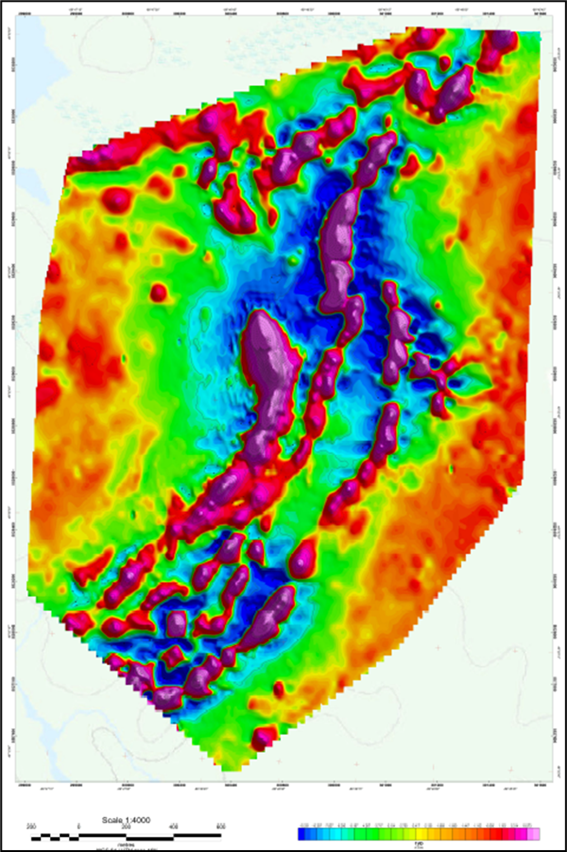
The magnetic images shown in this news release were created from Canada Nickel’s interpretation of datasets provided by the Ontario Geological Survey.

About Canada Nickel Company

Canada Nickel Company Inc. is advancing the next generation of nickel-sulphide projects to deliver nickel required to feed the high growth electric vehicle and stainless-steel markets. Canada Nickel Company has applied in multiple jurisdictions to trademark the terms NetZero NickelTM, NetZero CobaltTM, NetZero IronTM and is pursuing the development of processes to allow the production of net zero carbon nickel, cobalt, and iron products. Canada Nickel provides investors with leverage to nickel in low political risk jurisdictions. Canada Nickel is currently anchored by its 100% owned flagship Crawford Nickel-Cobalt Sulphide Project in the heart of the prolific Timmins-Nickel District. For more information, please visit www.canadanickel.com.


About Noble Mineral Exploration Inc.

Noble Mineral Exploration Inc. is a Canadian-based junior exploration company, which has holdings of securities in Canada Nickel Company Inc., Homeland Nickel Inc., East Timmins Nickel Inc.(20%), and its interest in the Holdsworth gold exploration property in the area of Wawa, Ontario.

Noble holds mineral and/or exploration rights in ~70,000ha in Northern Ontario, ~14,000ha elsewhere in Quebec and Newfoundland, upon which it plans to generate option/joint venture exploration programs.

Noble holds mineral rights and/or exploration rights in ~18,000 hectares in the Timmins-Cochrane areas of Northern Ontario known as Project 81, ~2,215 hectares in Thomas Twp/Timmins, as well as an additional 20% interest in ~38,700 hectares in the Timmins area and ~175 hectares of mining claims in Central Newfoundland. Project 81 hosts diversified drill-ready gold, nickel-cobalt and base metal exploration targets at various stages of exploration. Noble also holds ~4,600 hectares in the Nagagami Carbonatite Complex and its ~3,200 hectares in the Boulder Project both near Hearst, Ontario, as well as ~3,700 hectares in the Buckingham Graphite Property, ~10,152 hectares in the Havre St Pierre  Nickel, Copper, PGM property, and ~1,573 hectares in the Cere-Villebon Nickel, Copper, PGM property, ~569 hectare Uranium/Rare Earth property (Chateau) and a ~461 hectare Uranium/Molybdenum property (Taser North),  all of which are in the province of Quebec. 

Noble’s common shares trade on the TSX Venture Exchange under the symbol ‘NOB.’

More detailed information on Noble is available on the website at www.noblemineralexploration.com.


Cautionary Note and Statement Concerning Forward Looking Statements

This press release contains certain information that may constitute ‘forward-looking information’ under applicable Canadian securities legislation.  Forward looking information includes, but is not limited to, the potential of the Mann West Nickel Sulphide Project, timing for filing a technical report in support of the Mineral Resource Estimate, the significance of drill results, the ability to continue drilling, the impact of drilling on the definition of any resource, timing and completion (if at all) of additional mineral resource estimates, the potential of the Timmins Nickel District, strategic plans, including future exploration and development plans and results, and corporate and technical objectives.  Forward-looking information is necessarily based upon several assumptions that, while considered reasonable, are subject to known and unknown risks, uncertainties, and other factors which may cause the actual results and future events to differ materially from those expressed or implied by such forward-looking information.  Factors that could affect the outcome include, among  others:  future prices and the supply of metals, the future demand for metals, the results of drilling, inability to raise  the money necessary to incur the expenditures required to retain and advance the property, environmental liabilities  (known  and  unknown), general business, economic, competitive, political and social uncertainties, results of  exploration programs, risks of the mining industry, delays in obtaining governmental approvals, failure to obtain  regulatory or shareholder approvals.  There can be no assurance that such information will prove to be accurate, as actual results and future events could differ materially from those anticipated in such information.  Accordingly, readers should not place undue reliance on forward-looking information.  All forward-looking information contained in this press release is given as of the date hereof and is based upon the opinions and estimates of management and information available to management as at the date hereof.  Canada Nickel disclaims any intention or obligation to update or revise any forward-looking information, whether because of new information. Neither TSX Venture Exchange nor its Regulation Services Provider (as that term is defined in policies of the TSX Venture Exchange) accepts responsibility for the adequacy or accuracy of this release.


Contacts:

H. Vance White, President

Phone:        416-214-2250

Fax:        416-367-1954

Email:        info@noblemineralexploration.com


Copyright (c) 2026 TheNewswire – All rights reserved.

News Provided by TheNewsWire via QuoteMedia

This post appeared first on investingnews.com

Perth, Australia (ABN Newswire) – Altech Batteries Ltd (ASX:ATC,OTC:ALTHF) (FRA:A3Y) (OTCMKTS:ALTHF) announced that in order to maximise support for its Silumina AnodesTM pilot plant in Saxony, Germany, the R&D laboratory will be transferred from Perth to Germany and repositioned. This is anticipated to provide operational, R&D and cost benefits to the Company.

Highlights

– The Silumina AnodesTM pilot plant is constructed and operated at Altech’s premises in Saxony, Germany

– Strategic decision to transfer the R&D laboratory from Perth to Germany

– Location of laboratory and pilot plant in close proximity anticipated to benefit R&D testwork, the operation of pilot plant as well as provide cost benefits

– Appointment of new German based Chief Technology Officer (previous employee of Fraunhofer Institute)

The Silumina AnodesTM battery materials project involves game changing technology incorporating highcapacity silicon into lithium-ion batteries. Through in house R&D, the Company has cracked the ‘silicon code’ and successfully achieved a 30% higher energy battery with improved cyclability or battery life. Higher density batteries result in smaller, lighter batteries and substantially less greenhouse gases, and is the future for the EV market.

Altech has signed non-disclosure agreements with world leading automobile companies in Germany and the USA to supply commercial samples of the Silumina AnodesTM material for the prospective customers for in-house testing.

In conjunction with the repositioning of the R&D laboratory, Altech is pleased to announce that it has appointed German based Dr Luise Bloi as its new Chief Technology Officer. Dr Bloi has a Master of Science (M. Sc.) in Chemistry and has completed her PhD studies in Chemistry on ‘Carbon-based Anodes for Lithium All Solid-State Battery Concepts’. Dr Bloi has collected broad experience in the battery field working with Skeleton Technologies, ACC Automotive Cells Company and as a previous employee of the Fraunhofer Institute, Altech’s joint venture partner in the CERENERGY(R) Sodium-Chloride Solid-State (SCSS) battery project.

About Altech Batteries Ltd:

Altech Batteries Limited (ASX:ATC,OTC:ALTHF) (FRA:A3Y) is a specialty battery technology company that has a joint venture agreement with world leading German battery institute Fraunhofer IKTS (‘Fraunhofer’) to commercialise the revolutionary CERENERGY(R) Sodium Alumina Solid State (SAS) Battery. CERENERGY(R) batteries are the game-changing alternative to lithium-ion batteries. CERENERGY(R) batteries are fire and explosion-proof; have a life span of more than 15 years and operate in extreme cold and desert climates. The battery technology uses table salt and is lithium-free; cobalt-free; graphite-free; and copper-free, eliminating exposure to critical metal price rises and supply chain concerns.

The joint venture is commercialising its CERENERGY(R) battery, with plans to construct a 100MWh production facility on Altech’s land in Saxony, Germany. The facility intends to produce CERENERGY(R) battery modules to provide grid storage solutions to the market.

Source:
Altech Batteries Ltd

Contact:
Daniel Raihani
Managing Director
Altech Batteries Limited
Tel: +61-8-6168-1555
Email: info@altechgroup.com

Martin Stein
Chief Financial Officer
Altech Batteries Limited
Tel: +61-8-6168-1555
Email: info@altechgroup.com

News Provided by ABN Newswire via QuoteMedia

This post appeared first on investingnews.com

The silver price hit a new all-time high on Tuesday (January 13), rising as high as US$89.19 per ounce.

The white metal’s most recent rise continues a breakout that began on January 9 on a mixed bag of economic uncertainty, rising geopolitical tensions in Venezuela and Iran and underlying industrial demand strength.

Adding fuel to the fire this week are increased expectations for a lower interest environment.

On January 9, the US Department of Justice served the US Federal Reserve with grand jury subpoenas, threatening a criminal indictment over Chair Jerome Powell’s testimony to the Senate Banking Committee this past June.

The event has sparked concerns that US President Donald Trump’s feud with the Fed over interest rates has taken a darker turn, although Trump has denied knowledge of the department’s move.

Powell’s term as Fed chair ends in May, but two years still remain on his term as a governor of the board.

The Fed’s next rate announcement is set for January 28, and CME Group’s (NASDAQ:CME) FedWatch tool shows strong expectations for a hold. That’s despite core consumer price index (CPI) data showing that inflation rose by a lower-than-expected 0.2 percent for December. On an annual basis, core CPI was up 2.6 percent.

Target rate probabilities for January Fed meeting.

Target rate probabilities for January Fed meeting.

Chart via CME Group.

Trump has frequently criticized Powell for not lowering rates quickly enough, and Powell’s replacement, who has not yet been announced, is widely expected to be more in line with Trump’s views.

“We see increased interference with the Fed as a key bullish wildcard for the precious metals in 2026,” Carsten Menke, head of next-generation research at Julius Baer Group, told Bloomberg. He noted that because silver is a smaller market than gold, it typically reacts “more strongly to such concerns.”

Silver price chart, January 5 to 13, 2026

Silver price chart, January 5 to 13, 2026.

Silver and its sister metal gold tend to fare better when rates are lower, meaning rate cut expectations coupled with the investigation of Powell and the Fed have helped to stoke prices for the precious metals.

While silver is known for lagging behind gold before outperforming, it’s now ahead in terms of percentage gains — silver is up about nearly 200 percent year-over-year, while gold has risen around 72 percent.

The yellow metal also hit a new all-time high on Tuesday, peaking at US$4,633.99 per ounce.

In addition to rate-related factors, silver’s breakout this year has been driven by various other elements.

As a precious metal, it’s influenced by many of the same factors as gold, but its October price jump, which took it past the US$50 level, was also driven by a lack of liquidity in the London market.

While that issue appears to have resolved, silver remains in a multi-year supply deficit. Tariff concerns and silver’s new status as a critical mineral in the US have also provided support.

In addition to its appeal as a precious metal, silver’s industrial side shouldn’t be forgotten — according to the Silver Institute, the white metal’s ‘global silver industrial demand is poised to grow further as demand from vital technology sectors accelerates over the next five years. Sectors such as solar energy, automotive electric vehicles and their infrastructure, and data centers and artificial intelligence will drive industrial demand higher through 2030.’

What’s next for the silver price?

Time will tell what’s next for silver, but some experts see it continuing to outperform gold in 2026.

‘So is it going to US$100 or US$200? It’s possible. I don’t really care, because … I don’t use either my silver or my gold as speculative vehicles. That’s not what they’re about to me.’

Securities Disclosure: I, Melissa Pistilli, hold no direct investment interest in any company mentioned in this article.

This post appeared first on investingnews.com