Category

Latest News

Category

The House GOP’s largest caucus released a plan for a second ‘big, beautiful bill’ on Tuesday morning, which the group says could cut the federal deficit by over $1 trillion.

Republican Study Committee Chairman August Pfluger, R-Texas, unveiled the roadmap for what’s likely to be a massive piece of legislation during a press conference alongside House Budget Committee Chairman Jodey Arrington, R-Texas, whose panel would play a central role in advancing any budget reconciliation bill.

Budget reconciliation allows the majority parties in the House and Senate to pass significant policy reforms by lowering the Senate’s threshold to advance a bill to a simple majority rather than 60 votes, provided its measures adhere to a specific set of guardrails.

It comes as House Republicans wrestle with a razor-thin majority, which just got slimmer after the abrupt resignation of former Rep. Marjorie Taylor Greene, R-Ga., and the sudden death of Rep. Doug LaMalfa, R-Calif.

Republicans’ first reconciliation legislation, which President Donald Trump dubbed his ‘big, beautiful bill,’ was passed after months of tense intraparty negotiations with all but two GOP lawmakers’ support.

At the time, the threat of Trump’s first-term tax cuts in the Tax Cuts and Jobs Act (TCJA) expiring at the end of 2025 was critical to getting the ideologically diverse GOP conference on board with the bill — while Republicans have no such anchor this year.

Asked about those dynamics by Fox News Digital, Pfluger said, ‘That’s why this framework is so important.’

‘We spent a lot of time looking at what the theme of a reconciliation bill should be, what is the overlapping area that we all care about. And I would also submit to you that Democrats care about this as well,’ Pfluger said. ‘The details of exactly which bills will be included that’s the hard work that we now will embark upon.’

Affordability appears to be the cornerstone of the legislation, according to an 11-page document obtained by Fox News Digital.

Republicans are seeking to lower healthcare costs by changing the existing Obamacare subsidy structure to route dollars directly to taxpayers through Health Savings Accounts (HSAs) rather than money going to insurance companies, and codifying the Trump administration’s executive actions on most favored nation drug pricing, that is aimed at lowering the costs of popular prescription drugs.

The bill would also include measures codifying Trump’s energy deregulation policies in order to lower costs for U.S. oil and natural gas. 

A provision in the framework on taxing ‘third-party litigation to discourage frivolous lawsuits that undermine economic growth’ regarding U.S. energy, and a series of other fees associated with lawsuits, are expected to raise federal revenues by at least $27 billion.

‘I’m just talking about the affordability issue — I do think it’s the most important issue for November,’ Arrington said. ‘I think it’s the most important issue for the American people.’

Rep. Stephanie Bice, R-Okla., among the Republicans who spoke at the press conference, honed in on the deregulatory aspect as a pathway to lowering costs.

We must do this second package to continue to codify President Trump’s agenda and to enact a pro-growth and pro-America agenda. Affordability starts with energy and deregulation,’ she said.

The framework also includes a host of other priorities floated by Republicans this year, including limiting ‘federal transportation funding to states and cities granting driver’s licenses to illegal aliens, and to sanctuary jurisdictions violating federal law and undermining the President’s effort to secure the border,’ which the document said would save $76.3 billion federal dollars.

It would also impose new restrictions on illegal immigrants being able to use federal programs like the Low-Income Housing Tax Credit and block federal funds for states that allow illegal immigrants to get government healthcare benefits.

The framework also aims to make home buying more affordable for Americans with new ‘Home Savings Accounts,’ which would allow them to pull from other tax-advantaged savings accounts if that money went toward buying a home.

Speaker Mike Johnson, R-La., has said on multiple occasions that he hopes for a second reconciliation bill, but has not endorsed a specific piece of legislation yet.

This post appeared first on FOX NEWS
Greenland’s prime minister declared Tuesday that, ‘we choose Denmark,’ if it had to decide between remaining a Danish territory or becoming part of the United States, a report said. 

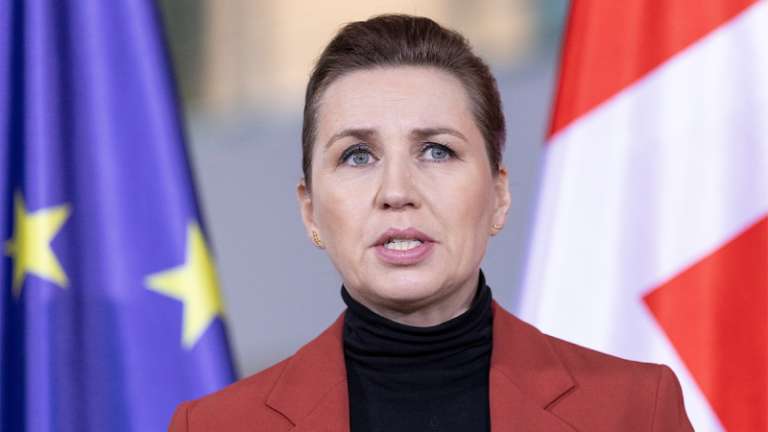
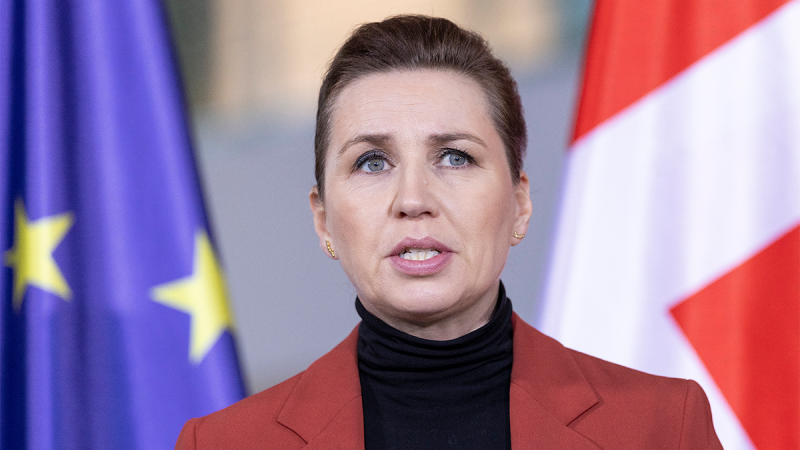
Jens-Frederik Nielsen made the remark while appearing alongside Danish Prime Minister Mette Frederiksen during a joint press conference in Copenhagen, according to Reuters. 

‘We face a geopolitical crisis, and if we have to choose between the U.S. and Denmark here and now then we choose Denmark,’ Nielsen reportedly said. ‘We stand united in the Kingdom of Denmark.’ 

The comment comes as Denmark’s Foreign Minister Lars Lokke Rasmussen said he and his Greenlandic counterpart Vivian Motzfeldt are set to meet with Secretary of State Marco Rubio and Vice President JD Vance on Wednesday at the White House, Reuters reported.

‘Our reason for seeking the meeting we have now been given was to move this whole discussion, which has not become less tense since we last met, into a meeting room where we can look each other in the eye and talk about these things,’ Rasmussen said. 

A source familiar with the matter confirmed to Fox News that Rasmussen will be visiting the White House. 

President Donald Trump said on Sunday that the U.S. must acquire Greenland — not lease it — arguing the Arctic territory lacks defenses and warning that Russia or China would move in if Washington does not act, a move he said is critical to U.S. and NATO security.

While speaking with reporters on Air Force One on Sunday night, Trump was asked about Greenland and whether the U.S. had made an offer to acquire the territory from Denmark. 

‘I haven’t done that. Greenland should make the deal because Greenland does not want to see Russia or China take over,’ he said. ‘Basically, their defense is two dog sleds. You know that? You know what their defense is? Two dog sleds.’

The president was also clear that his administration is not talking about leasing Greenland short term, but only about acquiring the Danish territory. 

‘If we don’t do it, Russia or China will, and that’s not going to happen when I’m president,’ Trump said. 

Fox News’ Patrick Ward and Greg Wehner contributed to this report. 

This post appeared first on FOX NEWS

After the Trump administration’s decision to withdraw from dozens of United Nations and other international organizations, experts say more international bodies could soon find themselves on the chopping block.

The announcement that the U.S. wouldexit 66 international organizationswas in response to President Donald Trump’s February 2025 executive order calling for a review of U.S. support to ‘all international organizations.

Secretary of State Marco Rubio said in reaction to the announcement that the U.S. is ‘rejecting an outdated model of multilateralism — one that treats the American taxpayer as the world’s underwriter for a sprawling architecture of global governance.’ Rubio warned the State Department continues to review international organizations, and that those subject to the January cuts ‘are by no means the only offenders.’

Rubio said that the U.S. was not turning its back on the world but was looking to review the ‘international system,’ which he said, ‘is now overrun with hundreds of opaque international organizations, many with overlapping mandates, duplicative actions, ineffective outputs and poor financial and ethical governance.’

Hugh Dugan, former Senior Director for International Organization Affairs at the National Security Council during President Trump’s first term, told Fox News Digital that U.N. Secretary General Antonio Guterres ‘always misread’ the prior executive order ‘as a cost-cutting directive.’ In trying to ‘cut his way to growth’ through the UN80 initiative, 

Dugan said that Guterres ‘meat-cleavered budgets, hitting bone and flesh as much as fat, but at base it was business as usual: no focus on the U.N.’s pitiful return on investment.  Instead of only cutting the bottom line, also he should have grown the top line by working smarter for new efficiencies.’   

Launched in March 2025, the UN80 initiative was designed to identify inefficiencies inside the U.N. system and cut costs across an expansive bureaucracy. In response to Trump’s withdrawal from U.N. entities, Guterres’ spokesperson Stéphane Dujarric said in a statement that the secretary general, ‘regrets the announcement by the White House,’ and stated that ‘assessed contributions to the United Nations’ regular budget and peacekeeping budget…are a legal obligation under the U.N. Charter for all Member States, including the United States.’

Brett Schaefer, a senior fellow at the American Enterprise Institute, told Fox News Digital that impacted organizations external to the U.N. ‘don’t receive very much money,’ and ‘don’t necessarily merit U.S. funding or support.’ Withdrawing from those organizations is ‘more pruning around the margins than a fundamental reassessment of U.S. relationships with international organizations,’ he said.

For the 31 U.N.-affiliated groups on the list, Schaefer said that the withdrawal order is ‘an opportunity to signal to the U.N. where the United States would like to see consolidation or elimination of duplication, which is rather rife within the U.N. system.’

Schaefer said that withdrawing from the U.N. Population Fund and U.N. Framework Convention on Climate Change was ‘very consistent with the Trump administration’s policy.’ Schaefer also indicated that withdrawing from the U.N. Council on Trade and Development (UNCTAD) was a formalization of policy shift that occurred in 2018 when UNCTAD admitted ‘Palestinians as a full member state’ and U.S. law ‘prohibit[ed] U.S. funding’ for the organization.

Other choices, like departing from the U.N. Department for Economic and Social Affairs, ‘didn’t quite make sense,’ Schaefer said. He noted that the department is funded through the regular U.N. budget, which makes the move ‘more of a signal than it is really an effective policy.’

Future rounds of cutting

Schaefer noted several organizations, including the World Meteorological Organization, World Intellectual Property Organization, U.N. Office for the Coordination of Humanitarian Affairs (UNOCHA), Food and Agricultural Organization (FAO), and U.N. Development Programme, that could be subject to future cuts.

While smaller nations utilize the UNDP to administer their humanitarian donations, the U.S. does not need ‘a middleman’ to fund non-governmental organizations and provide aid, Schaefer said. He also noted that the organization ‘has had a problem with corruption’ that included concealing North Korean counterfeit money and providing the country with dual-use technology.

Schaefer said that the U.S. can ‘promote agricultural development in developing countries’ through entities outside the FAO, which he said is ‘currently led by a Chinese national’ who is ‘using that organization to promote Chinese policies and Chinese commercial interests in developing countries.’

On Dec. 31, UNOCHA was a signatory to a memo ‘which was sharply critical of Israel,’ Schaefer said. Schaefer believes the memo constituted ‘a violation of their neutrality’ that should result in reprimand. Schaefer said that Under-Secretary-General for Humanitarian Affairs and Emergency Relief Coordinator Tom Fletcher ‘has made repeated statements echoing false accusations of Israel causing famine and hunger and other humanitarian suffering in Gaza that has since been proved to be false and without basis.’

The WIPO, WMO, and FAO declined to comment about whether they might be a target of future cuts.

A UNDP spokesperson said that the U.S. ‘has been a steadfast partner’ and that the it maintains its commitment to working alongside the U.S. to ‘address urgent humanitarian needs, promote stability, and advance prosperity worldwide.’ The spokesperson noted that ‘UNDP projects are subject to strict oversight and accountability policies and mechanisms,’ with the UNDP ‘consistently rank[ing] amongst the most transparent organizations included in the [Aid Transparency Index.] 

According to the UNDP spokesperson, ‘no evidence of systematic fraud or diversion of funds was found’ when concerns involving the Democratic People’s Republic of Korea were investigated in 2006. The spokesperson said that the DPRK project ‘concluded in 2020. Any future engagement would require consensus from UNDP’s Executive Board and clear directives from Member States.’

A UNOCHA spokesperson noted that the U.S. had just signed an agreement with UNOCHA ‘reinforcing our partnership.’

The U.S. pledged to allocate $2 billion to UNOCHA at the end of December for global humanitarian needs.[iii] In recent years, officials previously told Fox News Digital that the U.S. had contributed between $8 and $10 billion to UNOCHA

This post appeared first on FOX NEWS
A top House lawmaker and former softball coach is arguing that allowing transgender women who were born male to play on female sports teams is ‘the biggest form of bullying.’

House GOP Conference Chairwoman Lisa McClain, R-Mich., is expected to appear at a rally in support of banning biological males from playing on school sports teams for girls and women on Tuesday.

It’s the same day the Supreme Court is expected to hear oral arguments on the legality of such bans in two states, cases that could have ramifications for school sports across the country.

The cases, challenging state laws by GOP-led governments in Idaho and West Virginia, will decide whether discrimination based on gender identity violates federal civil rights laws.

But McClain, who spent almost a decade coaching girls’ softball, said it was not an issue of left or right.

‘This isn’t a conservative-progressive [issue]. You can’t put a label on it. The label is female versus male. Those are the labels you should be talking about,’ McClain said. ‘It’s, does this Supreme Court recognize females?’

As a business owner before Congress, McClain said she also coached her daughter and other girls, starting when her child was 9 through high school.

She said there would have been ‘intense conversations’ if her team had to face another with a transgender player.

‘I’ll just share with you, it wouldn’t happen,’ she said of the hypothetical face-off.

‘You want to talk about fairness and all that stuff. I’ll compete with any female athlete, any female athlete. Don’t have a guy pretending to be a woman come in, undress in the locker room in front of my daughter or any of the girls that are on my team. Are you kidding me?’

LGBTQ advocates have said a Supreme Court ruling in favor of the state governments would be a step back for transgender rights.

But people who support the bans, like McClain, have said it’s a fight for women’s rights.

‘Where all these feminists that fought so hard for women, for women’s rights, for Title IX?’ she asked. 

‘This is an attack on women. So you can stand with the transgenders, that’s fine. You can be who you want to be, be transgender, if that’s who you want to be. But when who you are decides to infringe on my rights, that’s when I have a problem.’

This post appeared first on FOX NEWS
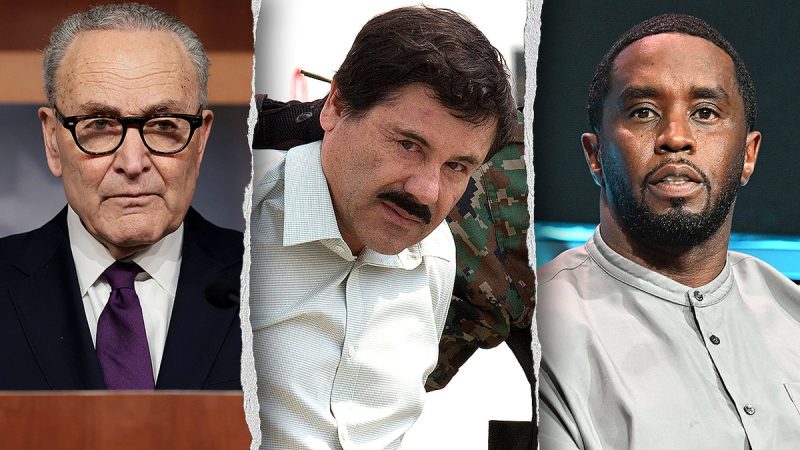
Senate Majority Leader John Thune, R-S.D., warned that the allegations against Federal Reserve Chair Jerome Powell must be legitimate, and not politically influenced, as bipartisan unease over the criminal probe continues to ripple through the Senate. 

‘I haven’t seen the case or whatever the allegations or charges are,’ Thune said. ‘But I would say they better be — they better be real and they better be serious.’

Thune’s comments followed a wave of bipartisan anger over the Department of Justice’s (DOJ) criminal probe into Powell, with Senate Republicans threatening to block any of President Donald Trump’s future Fed nominees until the issue was resolved. 

Sen. Thom Tillis, R-N.C., vowed to ‘oppose the confirmation of any nominee for the Fed — including the upcoming Fed chair vacancy,’ shortly after the news of the probe into Powell broke.

He was later backed up by Sen. Lisa Murkowski, R-Alaska, who said after speaking with the central bank chief that ‘it’s clear the administration’s investigation is nothing more than an attempt at coercion,’ and she threatened a congressional investigation into the DOJ. 

When asked about Tillis’ position, Thune said that people would ‘react to this differently,’ but reiterated that without knowing the full breadth of the investigation, it was hard to jump to conclusions. 

‘But as I’ve said earlier, I think it’s really important that it can resolve quickly and that there not be any appearance of political interference with the Fed or its activities,’ he said.

Powell contended that the investigation was not related to testimony he gave before the Senate Banking Committee last year regarding the $2.5 billion renovation of the Fed’s headquarters in Washington, D.C., but rather a consequence of the Federal Reserve ‘setting interest rates based on our best assessment of what will serve the public, rather than following the preferences of the president.’ 

Thune also acknowledged that Tillis’ hold on Fed nominees would make things difficult moving forward as the investigation plays out, given that Powell’s term atop the central bank expires in May. 

He said that it would be good to ensure continuity at the Fed, and ‘that the central bank maintains its independence.’ 

‘I mean, they’ve got a couple of key missions when it comes to the economy, particularly dealing with inflation, which obviously is impacted by interest rate policy,’ Thune said. ‘And so I want to see them operate in an independent way, free of politics.’

Meanwhile, Senate Minority Leader Chuck Schumer, D-N.Y., railed against the investigation and called the allegations fueling it ‘clearly bogus.’ 

‘Anyone with two eyes and half a brain knows exactly what this criminal probe represents: a brazen attempt by Donald Trump to cannibalize the Fed’s independence,’ he said.

This post appeared first on FOX NEWS
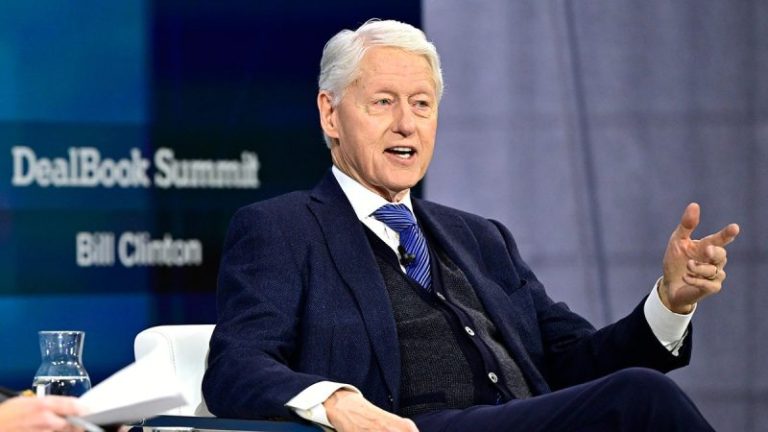
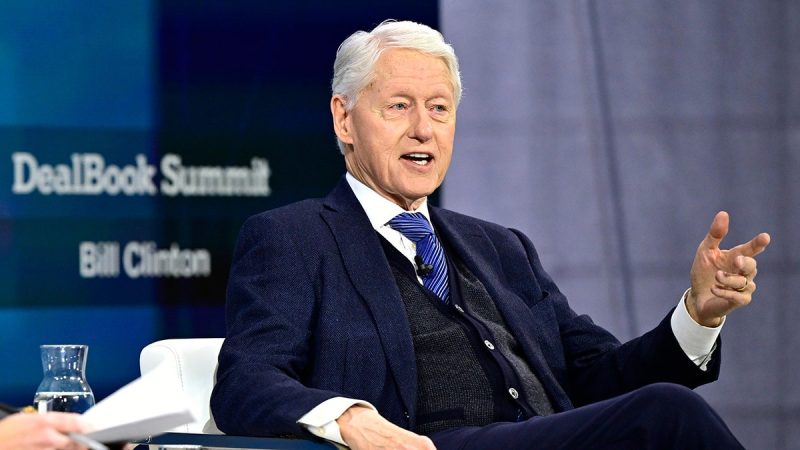
Former President Bill Clinton appears to have defied a congressional subpoena to appear before the House Oversight Committee on Tuesday morning.

Clinton was compelled to sit for a sworn closed-door deposition in the House’s bipartisan probe into Jeffrey Epstein, but Fox News Digital did not see him before or after the scheduled 10 a.m. grilling.

House Oversight Committee Chairman James Comer, R-Ky., had threatened to begin contempt of Congress proceedings against Clinton if he did not appear Tuesday.

Other lawmakers seen going into the committee room include Reps. Lauren Boebert, R-Colo., and Scott Perry, R-Pa.

This story is breaking and will be updated.

This post appeared first on FOX NEWS
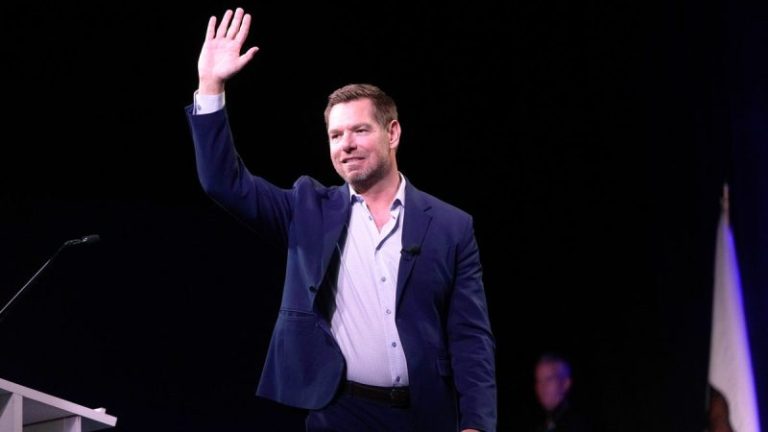
President Donald Trump urged the people of Iran to ‘take over’ the country’s institutions on Tuesday, saying he has canceled all meetings with the Iranian regime until its crackdown on unrest ends.

Trump made the announcement on social media, vowing that those responsible for killing anti-regime demonstrators will ‘pay a big price.’ Iran had previously claimed it was in contact with U.S. officials amid the protests.

‘Iranian Patriots, KEEP PROTESTING – TAKE OVER YOUR INSTITUTIONS!’ Trump wrote on Truth Social. ‘Save the names of the killers and abusers. They will pay a big price.’

‘I have canceled all meetings with Iranian Officials until the senseless killing of protesters STOPS. HELP IS ON ITS WAY,’ he added.

Since the unrest broke out, Iranian authorities have killed at least 646 protesters, with thousands more deaths expected to be confirmed. Reuters reported the death toll at 2,000, citing an unnamed Iranian official.

The White House confirmed on Monday that Trump was weighing whether to bomb Iran in reaction to the crackdown.

White House press secretary Karoline Leavitt told reporters that diplomacy remains Trump’s first option, but that the president ‘has shown he’s unafraid to use military options if and when he deems necessary.’

‘He certainly doesn’t want to see people being killed in the streets of Tehran. And unfortunately that’s something we are seeing right now,’ she added.

Iranian authorities have used deadly force against anti-regime protesters and have cut off public internet access in an effort to stop images and video from spreading across the globe.

The protests represent the highest level of unrest Iran has seen since nationwide protests against the death of Mahsa Amini at the hands of morality police in 2022.

German Chancellor Friedrich Merz went so far as to predict an end to Ayatollah Ali Khamenie’s regime.

‘I assume that we are now witnessing the final days and weeks of this regime,’ he told reporters while in India on Tuesday.

‘When a regime can only maintain power through violence, then it is effectively at its end. The population is now rising up against this regime,’ he added.

This post appeared first on FOX NEWS
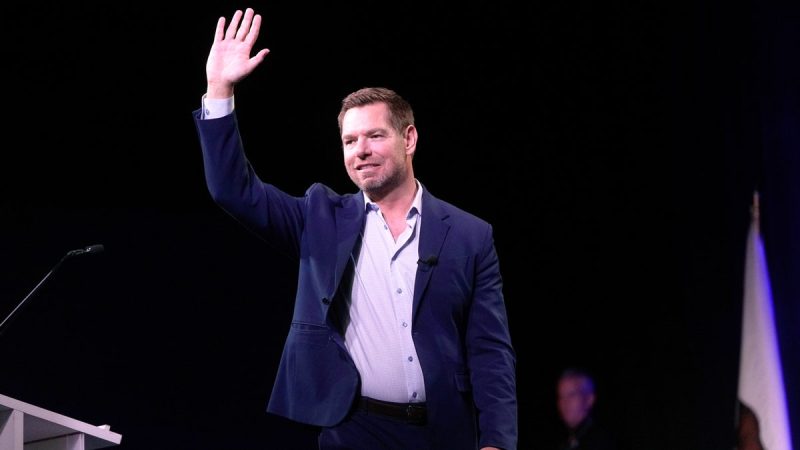
As Iran weakens, a power vacuum is emerging across the Middle East — and Saudi Arabia is moving to fill it by recalibrating relations with former rivals, hedging global partnerships and asserting a more independent foreign policy, according to several experts.

Javed Ali, former senior official at the National Security Council and professor at the University of Michigan, told Fox News Digital that ‘Since Iran’s 1979 revolution, both Saudi Arabia and Iran have vied for influence across the broader Muslim world. Mohammed bin Salman’s consolidation of power in the kingdom has also introduced a markedly different vision from that of his predecessors.’

Riyadh’s recent moves, from Yemen to Turkey, are fueling debate over whether Crown Prince Mohammed bin Salman’s expanding regional role still aligns with U.S. interests. As part of that recalibration, Bloomberg reported on Jan. 9 that Turkey is seeking entry into the Saudi–Pakistan mutual defense pact signed four months earlier, according to people familiar with the talks.

Michael Rubin, a senior fellow at the American Enterprise Institute, said Saudi Arabia’s current trajectory must be viewed through years of accumulated frustration with U.S. policy.

‘To be fair to MBS, previous U.S. administrations did not uphold their end of the bargain either,’ Rubin told Fox News Digital, pointing to repeated Houthi attacks on Saudi territory. ‘The Houthis launched hundreds of drones and rockets that the Obama administration ignored.’

Rubin said tensions deepened as Mohammed bin Salman pursued reforms long urged by U.S. policymakers, only to face sharp criticism from Washington. He cited the Biden administration’s decision to remove the Houthis’ terror designation.

‘By no objective measure should Secretary of State Antony Blinken have removed the terror designation from the Houthis,’ Rubin said, calling the move ‘pure spite directed at MBS and Donald Trump.’

Rubin said that decision marked a turning point. ‘MBS calculated that if the United States did not have his back, he would need to embrace a Plan B,’ he said, describing outreach to Russia and China as tactical signaling rather than ideological realignment.

Saudi geopolitical researcher Salman Al-Ansari rejects claims that Riyadh is drifting ideologically or embracing Islamist movements, framing Saudi policy as interest-driven.

‘Saudi Arabia does not base its foreign policy on ideological alignment, but on pragmatic considerations aimed at stability and development,’ Al-Ansari told Fox News Digital. He said outreach to Turkey reflects an effort to de-escalate rivalries. ‘The rapprochement with Turkey reflects this diplomatic approach, which seeks to transform the Middle East from a region of chronic conflict into one of greater stability.’

Al-Ansari said the shift has already delivered results. ‘This shift has given Riyadh increased flexibility in engaging regional powers, a change Ankara quickly recognized and that has translated into expanding economic cooperation.’

He rejected claims of alignment with the Muslim Brotherhood. ‘Saudi Arabia designated the group as a terrorist organization in 2014, and this position remains unchanged,’ he said.

Those competing interpretations of Saudi intent are now colliding most visibly in Yemen where the Saudi-Emirati alliance originally formed to counter Iran’s Houthi proxy. While both entered the war to roll back Iranian influence, their strategies diverged. Riyadh backs a unified Yemeni state under the internationally recognized government, arguing fragmentation strengthens Iran. The UAE has supported southern separatists, including the Southern Transitional Council, prioritizing control over ports and security corridors.

In the last few days, Saudi and Yemeni government forces have largely recaptured southern and eastern Yemen from the UAE-backed Southern Transitional Council (STC), and the STC’s leader reportedly fled to the UAE amid the group’s reported dissolution, highlighting a sharp rift involving Emirati support for separatists

Rubin called Yemen the clearest warning sign. ‘This is best seen in Yemen, where he has been supporting the Muslim Brotherhood faction militarily and attacking the more secular Southern Forces in a way that only empowers al Qaeda in the Arabian Peninsula and the Houthis,’ he said.

Al-Ansari countered that ‘differences with the UAE stem from its backing of separatist armed actors in Yemen, which complicates the political process, fragments the anti-Houthi front, and ultimately benefits the Iranian-backed Houthi militia.’

Rubin warned of long-term consequences. ‘By ‘blowback’ I mean the same Islamists MBS cultivates today will end up targeting Saudi Arabia in the future,’ he said.

With Iran weakened and regional power shifting, Washington now faces a central question: whether Saudi Arabia’s expanding role will reinforce U.S.-backed stability, or redefine the balance of power in ways that test the limits of the long-standing partnership.

This post appeared first on FOX NEWS
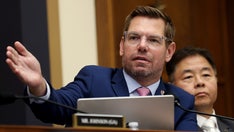
Australia’s ambassador to the U.S. who criticized President Donald Trump is leaving his post early. The announcement comes just a few weeks after the U.S. president made a cutting remark about the diplomat.

‘It is with deep appreciation for his tireless contribution to our national interests over the last three years in Washington that we today announce the Hon Dr. Kevin Rudd AC will conclude his posting as Australia’s Ambassador to the United States at the end of March 2026,’ a joint statement issued by Australian Prime Minister Anthony Albanese MP and Australian Minister of Foreign Affairs Penny Wong read.

In their statement, Albanese and Wong seemed to defend the work that the Hon. Dr. Kevin Rudd AC had done in his position. In what could be seen as a swipe at the Trump administration, the two said that Rudd ‘delivered concrete outcomes for Australia – during both Democrat and Republican Administrations – in collaboration with our closest ally and principal strategic partner.’ 

They also highlighted his knowledge of U.S.-China relations, which is particularly relevant as he takes the helm of the Asia Society, a nonprofit headquartered in New York, which aims to foster relationships between the U.S. and Asia.

Rudd, who previously served as Australia’s prime minister, thanked Albanese and Wong for their ‘kind remarks’ ahead of his departure and gave some insight into his new role.

‘I will be remaining in America working between New York and Washington on the future of U.S.-China relations, which I have always believed to be the core question for the future stability of our region and the world,’ Rudd wrote in an X post from his unofficial account.

On his official X account, Rudd said that ‘It has been an honor to serve as Australia’s Ambassador to the United States over the last three years. I thank the Prime Minister and the Foreign Minister for their kind remarks today.’

Rudd is no stranger to Asia Society, as he served as the organization’s president and CEO 2021-2023. He was also the inaugural President of the Asia Society Policy Institute (ASPI) for nearly 10 years, holding the position from 2015 until 2023. Now, he is set to serve as the president and CEO of the organization and will hold a leading role in the ASPI’s Center for China Analysis, which he established in 2022, according to Asia Society.

In October, when Albanese visited the U.S., Trump was asked about Rudd’s remarks, with one reporter wondering if the comments were the reason why the meeting in Washington was so late in the year. Trump said that he did not know what the ambassador had said before asking Albanese if Rudd was still working for him. In response, Albanese pointed at Rudd who seemed to stumble as he tried to explain the remarks he made, first clarifying that he said them before he took the position as ambassador to the U.S. However, Trump quickly cut him off, saying, ‘I don’t like you either. I don’t and I probably never will.’

Rudd made headlines in November 2024 when he deleted a series of tweets that were critical of Trump after the U.S. president won his second term. Rudd had described Trump in a 2020 post as ‘the most destructive president in history,’ according to reporting from NDTV. Rudd made the comments while serving as the chair of the ASPI. Rudd’s office said that the posts were deleted to prevent others from taking them as remarks made in his capacity as ambassador

‘This has been done to eliminate the possibility of such comments being misconstrued as reflecting his positions as ambassador and, by extension, the views of the Australian Government. Ambassador Rudd looks forward to working with President Trump and his team to continue strengthening the US-Australia alliance,’ a statement from Rudd’s office that was shared with Fox News Digital in November 2024 read.

It is not immediately clear whether these past remarks played a role in Rudd’s departure. However, a Trump administration official told Fox News Digital that Rudd ‘worked well with President Trump and the administration.’ The official added that ‘We wish him well.’

Fox News Digital reached out to Rudd and the White House for comment.

This post appeared first on FOX NEWS
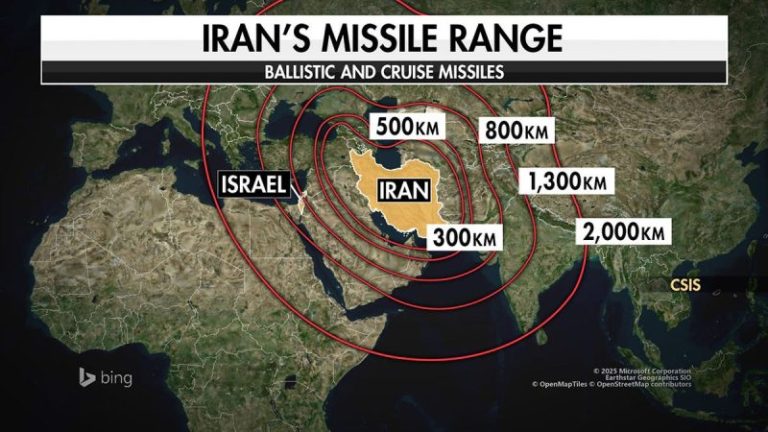
The U.S. Virtual Embassy Iran is telling American citizens who are still in the country to leave immediately. 

The warning Tuesday comes as more than 600 people have been killed in the ongoing anti-government demonstrations, according to an activist group. The U.S.-based Human Rights Activists News Agency said 512 of the dead were protesters and 134 were members of Iran’s security forces, The Associated Press reported. 

‘Leave Iran now. Have a plan for departing Iran that does not rely on U.S. government help,’ the U.S. Virtual Embassy Iran said on its website, suggesting land crossings into Armenia or Turkey if it is ‘safe to do so.’ 

‘If you cannot leave, find a secure location within your residence or another safe building. Have a supply of food, water, medications, and other essential items,’ it added.

‘Protests across Iran are escalating and may turn violent, resulting in arrests and injuries. Increased security measures, road closures, public transportation disruptions, and internet blockages are ongoing,’ the embassy also said. ‘The Government of Iran has restricted access to mobile, landline, and national internet networks. Airlines continue to limit or cancel flights to and from Iran, with several suspending service until Friday, January 16.’ 

The protests began late last month with shopkeepers and bazaar merchants demonstrating against accelerating inflation and the collapse of the rial, which lost about half its value against the dollar last year. Inflation topped 40% in December.  

The unrest soon spread to universities and provincial cities, with young men clashing with security forces.   

‘U.S.-Iranian dual nationals must exit Iran on Iranian passports. The Iranian government does not recognize dual nationality and will treat U.S.-Iranian dual nationals solely as Iranian citizens,’ according to the embassy. ‘U.S. nationals are at significant risk of questioning, arrest, and detention in Iran. Showing a U.S. passport or demonstrating connections to the United States can be reason enough for Iranian authorities to detain someone.’

The embassy also said, ‘Turkmenistan’s land borders are open, but U.S. citizens need special authorization from the Government of Turkmenistan before approaching the border,’ and that, ‘U.S. citizens with an urgent need to depart Iran via Azerbaijan should be aware that entry into Azerbaijan from Iran has been restricted for U.S. citizens during periods of heightened tension, such as the June 2025 conflict between Iran and Israel.’ 

‘The U.S. government does not have diplomatic or consular relations with the Islamic Republic of Iran,’ the U.S. Virtual Embassy Iran continued. ‘The Swiss government, acting through its embassy in Tehran, serves as the protecting power for U.S. interests in Iran.’

Prior to the ongoing protests, the State Department issued a ‘Level 4 – Do not travel’ advisory for the Islamic Republic of Iran in December. 

At the time, it urged Americans not to visit the country, ‘due to the risk of terrorism, unrest, kidnapping, arbitrary arrest of U.S. citizens, and wrongful detention. ‘

Fox News’ Efrat Lachter contributed to this report.

This post appeared first on FOX NEWS