Tag

featured

Browsing

First lady Melania Trump announced Thursday that an additional seven Ukrainian children have returned to their families in the war-torn country as part of a Russia-Ukraine youth reunification initiative.

‘My dedication to guaranteeing the safe return of children to their families in this region is unwavering,’ Melania Trump said in a statement shared by the White House, which noted that six boys and one girl were involved.

‘I commend the leadership and persistent diplomacy of Russia and Ukraine in the pursuit of the reunification of children and families. Their bridge-building has created a tangible collaborative environment — an anchor for optimism. This cooperation will continue to drive the process forward through the next phase,’ she added.

‘In close partnership, my representative and I have provided humanitarian support from the United States to enhance the reunification initiative’s outcome. My hope is that, ultimately, our collective efforts will lead to broader regional stability,’ Melania Trump also said.

The first lady previously wrote a ‘peace letter’ to Russian President Vladimir Putin telling him ‘it is time’ to protect children and future generations around the globe, Fox News Digital reported in August.

President Donald Trump then hand-delivered the message to the Russian leader before their summit in Alaska that month.

In October, Melania Trump said eight Ukrainian children displaced during the ongoing war with Russia had been reunited with their families.

‘Each child has lived in turmoil because of the war in Ukraine. Three were separated from their parents and displaced to the Russian Federation because of frontline fighting. The other five were separated from family members across borders because of the conflict, including one young girl who has now been reunited from Ukraine to Russia,’ Melania Trump said at the time.

‘My ongoing mission is twofold: to prioritize and optimize a transparent, free flow of health-related information surrounding all children who have [fallen] victim to this war, and to facilitate the reunification of children with their families until each individual returns home,’ Melania Trump said. 

Fox News Digital’s Brooke Singman and Rachel Wolf contributed to this report.

This post appeared first on FOX NEWS

Former Honduran President Juan Orlando Hernández thanked President Donald Trump for pardoning him, writing on social media that he was ‘wrongfully convicted.’

‘My profound gratitude goes to President @realDonaldTrump for having the courage to defend justice at a moment when a weaponized system refused to acknowledge the truth. You reviewed the facts, recognized the injustice, and acted with conviction. You changed my life, sir, and I will never forget it,’ Hernández wrote on X in his first remarks since he was released by the Bureau of Prisons.

‘I was set up by the Biden Harris administration and the deep state through a rigged trial. There was no real evidence, only the accusations of criminals who sought revenge. Yet the truth of my innocence prevailed,’ he said in part.

Hernández was sentenced to 45 years in prison in June 2024 for conspiring to distribute more than 400 tons of cocaine and for related firearms offenses.

Former Attorney General Merrick Garland said the ex-two-term president used his power to support one of the largest and most violent drug trafficking conspiracies in the world.

‘Hernández received millions of dollars of drug money from some of the largest and most violent drug-trafficking organizations in Honduras, Mexico, and elsewhere, and used those bribes to fuel his rise in Honduran politics,’ the Department of Justice said.

Hernández’s brother, Juan Antonio Hernández Alvarado, was also convicted in October 2019 and sentenced to life in prison.

Trump said he pardoned the former Honduran leader because ‘a lot of people in Honduras’ asked him to, adding he feels ‘very good about it.’

‘Well, he was the president, and they had some drugs being sold in their country, and because he was the president, they went after him – that was a Biden horrible witch hunt,’ Trump told reporters Tuesday.

Several GOP lawmakers criticized the pardon amid the White House’s targeting of alleged drug boats off the coast of Venezuela.

Sen. Bill Cassidy, R-La., criticized the decision to pardon Hernández, saying it made little sense to free him while the U.S. continues to pursue Venezuelan President Nicolás Maduro on federal narco-terrorism charges.

Sen. Thom Tillis, R-N.C., also criticized the move in an interview on CNN, saying he couldn’t understand how the U.S. could ‘threaten a potential land war against a thug and a narco-terrorist who plays like he’s the president of Venezuela, and then go easy on someone whose investigation that led to an indictment started in the Trump administration.’

This post appeared first on FOX NEWS

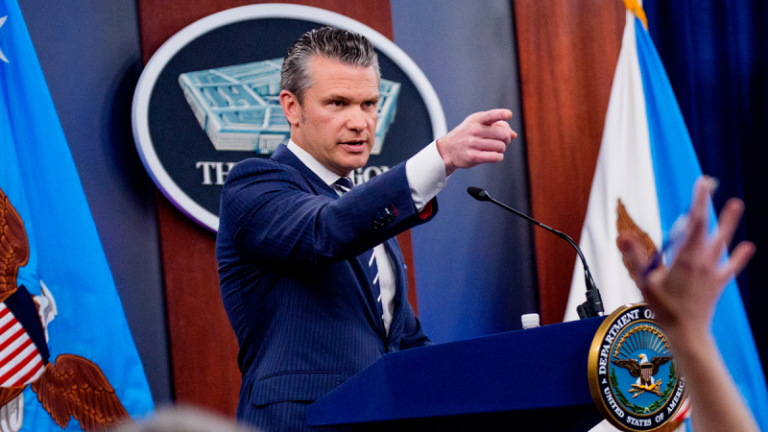
Secretary of War Pete Hegseth ‘acted within his authority’ by sharing sensitive details about Houthi strikes over Signal, Armed Services Chairman Roger Wicker said after viewing a report from the Pentagon Inspector General (IG). 

‘It is clear from the reports that the Secretary acted within his authority to communicate the information in question to other cabinet level officials,’ the Mississippi Republican said in a statement. 

‘It is also clear to me that our senior leaders need more tools available to them to communicate classified information in real time and a variety of environments. I think we have some work to do in providing those tools to our national security leaders.’

U.S. officials often use Signal, an encrypted private messaging app, to communicate, even for sensitive information when they or the recipients of their messages are not near a Sensitive Compartmented Information Facility (SCIF).

Sources familiar with the report told Fox News that it had also determined Hegseth ‘created risks to operational security’ by sharing details of the March Houthi strikes with Cabinet officials over Signal. His actions ‘could have resulted in failed US mission objectives and potential harm to US pilots,’ one source familiar with the report said it determined. 

Pentagon chief spokesperson Sean Parnell said of the report: ‘This Inspector General review is a TOTAL exoneration of Secretary Hegseth and proves what we knew all along – no classified information was shared. This matter is resolved and the case is closed.’

A classified version of the report has been handed over to the Senate Armed Services Committee and is available for members of the committee to view. An unclassified, redacted version will be made public on Thursday. 

Trump administration officials used Signal to discuss sensitive military strikes against the Houthis in Yemen in March. Then-national security advisor Mike Waltz had created the chat, which included many of Trump’s top Cabinet members, and inadvertently added Jeffrey Goldberg, editor-in-chief of the Atlantic.

The IG launched a probe in April following requests from top lawmakers on Capitol Hill. It was intended to examine whether Secretary Pete Hegseth improperly discussed operational plans for a U.S. offensive against the Houthis in Yemen and will also review ‘compliance with classification and records retention requirements,’ according to a memo from Inspector General Steven Stebbins.

Hegseth’s Signal messages revealed F-18, Navy fighter aircraft, MQ-9s, drones and Tomahawks cruise missiles would be used in the strike on the Houthis.

‘1215et: F-18s LAUNCH (1st strike package),’ Hegseth said in one message notifying the chat of high-level administration officials that the attack was about to kick off.

‘1345: ‘Trigger Based’ F-18 1st Strike Window Starts (Target Terrorist is @ his Known Location so SHOULD BE ON TIME – also, Strike Drones Launch (MQ-9s),’ he added, according to the report.

‘1410: More F-18s LAUNCH (2nd strike package)’

‘1415: Strike Drones on Target (THIS IS WHEN THE FIRST BOMBS WILL DEFINITELY DROP, pending earlier ‘Trigger Based’ targets)’

‘1536 F-18 2nd Strike Starts – also, first sea-based Tomahawks launched.’

‘MORE TO FOLLOW (per timeline)’

‘We are currently clean on OPSEC’ — that is, operational security.

Waltz later wrote that the mission had been successful. ‘The first target — their top missile guy — was positively ID’d walking into his girlfriend’s building. It’s now collapsed.’

Trump administration officials have insisted that nothing classified was shared over the chat. The report should offer clarity on that claim.

Thursday will be a contentious day for the Pentagon — Adm. Frank M. Bradley, commander of Special Operations Command, will also be on Capitol Hill to offer his account of the Sept. 2 ‘double tap’ strike on alleged narco-traffickers. 

After one strike on a boat carrying 11 people and allegedly carting drugs toward the U.S. left two survivors clinging to the wreckage, Bradley ordered another to take out the remaining smugglers.

Lawmakers and legal analysts have claimed that killing shipwrecked survivors is a war crime. Bradley is briefing leaders on the House and Senate Armed Services Committees. 

Original reporting by the Washington Post claimed that direction came from the top: Hegseth had directed the commander to ‘kill them all.’ But Hegseth claimed he issued no such directive and did not witness the second strike. He said Bradley made the decision on his own, but he stands by it. U.S. officials who spoke with the New York Times said Hegseth did not order the second strike.

This post appeared first on FOX NEWS

Senate Democrats now have their plan to extend expiring Obamacare subsidies, but it’s unlikely that Senate Republicans will give it the green light. 

Senate Minority Leader Chuck Schumer, D-N.Y., unveiled Democrats’ plan to prevent the subsidies from expiring by the end of this year on Thursday. Senate Democrats’ strategy, which mirrors the option on the table put forth by House Democrats, would extend the subsidies for three years with no tweaks or reforms. 

‘I’m announcing that Senate Democrats will introduce legislation for a clean, three-year extension of the current [Obamacare] tax credits,’ Schumer said on the Senate floor. ‘This is the bill, a clean, three-year extension of [Obamacare] tax credits that Democrats will bring to the floor of the Senate for a vote next Thursday. And every single Democrat will support it.’

Senate Majority Leader John Thune, R-S.D., guaranteed Senate Democrats a proposal of their choosing, but the hope in the upper chamber is that a bipartisan compromise would emerge in time for the vote next week, which is expected to come by Dec. 11. 

However, no such plan has materialized given a litany of issues both sides have with moving forward. Senate Republicans want reforms, like income caps and the inclusion of language that would prevent the enhanced subsidies from using taxpayer dollars to fund abortions, while Democrats, who are open to some reforms, largely want a clean extension of the subsidies as illustrated by Schumer’s plan. 

Whether Senate Republicans put forth their own plan remains in the air, too. 

Senate Health, Education, Labor and Pensions Committee Chair Bill Cassidy, R-La., and Senate Finance Committee Chair Mike Crapo, R-Idaho, have been working on a Republican proposal, which likely largely centers on funneling the subsidy money into Healthcare Savings Accounts (HSAs) rather than directly to insurance companies. 

The duo pitched ideas and proposals to Republicans during their weekly closed-door meeting on Tuesday, but no unified strategy emerged. 

Schumer argued that Democrats’ proposal would be the last shot the Republicans and Congress would have to prevent the subsidies from lapsing and stopping healthcare premiums from skyrocketing. 

‘If Republicans block our bill, there’s no going back,’ he said. ‘We won’t get another chance to halt these premium spikes before they kick in at the start of the New Year. Those insurance premiums in January will land like a hammer blow on the American people.’

This post appeared first on FOX NEWS

Here we go again.

After a resounding 99–1 defeat in the Senate earlier this year, the Big Tech oligarchs are hard at work doing what they do best: trying to sneak a massive corporate giveaway into must-pass legislation in the dead of night. This time, they’re targeting the National Defense Authorization Act, a bill essential to our military and national security, as the vehicle for decade-long AI amnesty. Or another must-pass bill, if the NDAA doesn’t work for them. Or even a legally questionable executive order, as their Hail Mary.

They tried this in July. And now, led once again by Sen. Ted Cruz, R-Tex., they want to ram through a federal takeover of AI with zero meaningful rules or even guardrails. They call it ‘federal preemption.’ But let’s be blunt: federal preemption with no federal rules is not governance. It’s amnesty. Total, blanket, corporate amnesty for trillion-dollar Big Tech monopolists who have spent decades crushing competition, shuttering small businesses, canceling conservatives and harming children.

If their idea is so great, why are they terrified of public debate? Why are they running from votes? Why do they only try to pass this through 9,000-page must-pass bills in the dead of night?

Because they know the truth: If the American people ever saw what’s really in these proposals, the answer would be the same as last time: Hell. No.

Big Tech already showed us exactly what it does with immunity. Section 230 created a legal shield for Google, Amazon, Facebook and Apple. These trillion-dollar monopolists used their government-granted amnesty to censor conservatives, manipulate elections, destroy competition and turn the Internet into a surveillance empire. Now they want the same deal for AI. But bigger. And more dangerous.

This ‘AI amnesty’ blocks states from protecting their own citizens. No state rules. No local safeguards. And absolutely no federal guardrails. A total vacuum, and the perfect playground for tech oligarchs who want to scrape every work of American creativity, censor every voice they dislike, experiment on children’s developing minds with unsafe AI tools and plant data centers wherever they please while working-class families foot the energy bill.

Big Tech insists this is necessary to ‘compete with China.’ That is nonsense. These companies spent years doing China’s bidding. Google killed America’s Project Maven, our drone AI program, because its woke employees protested helping the U.S. military. At the same time, Google was running Project Dragonfly, a censorship system built for the Chinese Communist Party. They wouldn’t help our troops, but they were happy to help the CCP censor its own citizens.

And now these same companies claim they’re our last defense against China? Please.

Their real concern isn’t China. It’s profit. They want carte blanche to steal every copyright in America, train their machines on it and cash in, all without paying a dime to the creators whose work built this country’s entertainment, journalism and cultural industries. They want to replace America’s creative economy with a copy-paste machine. And they want Congress to bless it.

The American people deserve better, and President Trump consistently demonstrates the leadership needed to stop this scam. When Big Tech and its lobbyists pressured him to accept AI amnesty earlier this year, he stood firm. He refused to sell out the American people to Silicon Valley. And that courage helped kill the deal 99–1.

The American people understand what’s at stake. We know Big Tech can’t be trusted, not with our data, not with our elections, and certainly not with artificial intelligence. We know we can’t ‘steal like China to compete against China,’ nor can we become digital sharecroppers on our own soil just to pad corporate profits.

If Congress wants to discuss federal preemption, fine. But it must get done through regular order. Public hearings. Public debate. Up-or-down votes. And only after legislation is drafted that protects the people Big Tech has targeted for years: conservatives, children, creators and communities. The 4 Cs must get protection in any AI deal.

Conservatives must finally gain protection from the censorship that these monopolists weaponized for decades. We must protect children from predatory AI systems, including chatbots that have advised depressed minors to kill themselves – and their parents. Or AI teddy bears – Pedo Bears – that speak in sexually explicit terms to kids. Creators deserve protection from the copyright theft that Big Tech openly admits it needs to train its models. And we must safeguard our communities from data centers that raise energy costs, drain water supplies and bulldoze residential neighborhoods, so Silicon Valley can build another server farm.

These are not radical demands. These are basic, commonsense protections in a free society. But Big Tech insists that any safeguards, any at all, will ‘slow innovation,’ ‘harm national security,’ ‘hurt competitiveness’ or even ‘help China.’ Those talking points are as dishonest as they are insulting.

Big Tech executives think they can buy Congress, hide behind fake national-security arguments and bully America into agreeing to their terms. They thought they could get away with it last time. They were wrong. With President Trump’s leadership, with grassroots conservatives mobilized, and with the sunlight of exposure, we beat them. And we will beat them again.

But only if Congress hears loud and clear: No AI amnesty. Not in the NDAA. Not in any other must-pass legislation. Not in an executive order. Not ever.

The Big Tech oligarchs spent hundreds of millions of dollars chasing Trump out of office in 2020. They’ve censored, silenced, de-platformed and canceled Trump, his aides and his allies. If we give these Big Tech oligarchs AI amnesty, it’s only so they can continue to censor conservatives, prey on children, drive-up electricity and water bills in communities and rip off creators.

If the tech oligarchs want a debate, they can step into the arena. They can defend their ideas in the open. They can answer for the children harmed, the conservatives censored, the creators robbed and the communities exploited. They can stop hiding behind lobbyists and must-pass bills and make their case like everyone else.

Until then, Congress must reject any attempt to slide this corporate giveaway into the NDAA, any other must-pass legislation or any executive order. No shortcuts. No back-room tricks. No surrender to the Silicon Valley oligarchy.

The stakes are too high. The consequences are too great. And the American people are watching.

Hell no to AI amnesty. Protect our children. Protect our creators. Protect our communities. Protect our country.

This post appeared first on FOX NEWS

Absent direct military action, President Donald Trump is running low on options amid his standoff with Venezuelan President Nicolás Maduro, according to experts.

Strikes near Venezuelan waters aimed at drug traffickers, sanctions and a $50 million bounty have so far been unsuccessful in forcing Maduro, whom the U.S. has designated as a leader of the Tren de Aragua drug cartel, to step down from power.

After repeated threats, adversaries may now view a lack of direct military action as a sign of weakness from the U.S. But Maduro is in an equally difficult position — his own military capabilities are dwarfed in comparison to Trump’s, and experts say China and Russia lack the will to directly challenge the U.S. in its own hemisphere.

Meanwhile, the clock is ticking: Trump’s unprecedented military buildup in the Caribbean — including sending the world’s largest aircraft carrier to the region — is taking away resources from other theaters.

Katherine Thompson, a senior fellow in defense and foreign policy studies at the libertarian think tank the Cato Institute, said that there are very few tools left at Trump’s disposal to oust Maduro, aside from a targeted strike against the Venezuelan leader or a land invasion. 

While the White House has not directly said that it is seeking regime change, recent media reports indicate that Trump and Maduro have spoken about the Venezuelan leader departing his post.

Thompson noted that previous efforts to squeeze out Maduro, including imposing sanctions on Venezuela and backing opposition leader Juan Guaidó during Trump’s first term, have proven unsuccessful. 

‘It does not seem like there is — outside of the military option — anything new on the table that hasn’t really been tried,’ Thompson said.

Even so, Thompson cast doubt on whether military action would prove successful. 

‘If the offer on the table from the Trump administration is we’re going to potentially execute an invasion unless you talk to us, perhaps that’s a strong enough diplomatic, strategic move that gets Maduro to capitulate,’ Thompson said. ‘But it just doesn’t seem like we’re picking up that many signals from the Maduro regime that that is going to be palatable.’ 

Meanwhile, Thompson said that adversaries like Russia and China are probably confused about why the Trump administration has fixated on the Maduro regime, which doesn’t jeopardize U.S. interests as much as other actors, when the Trump administration has adopted an ‘American First’ mantra. 

‘I imagine for them, it’s probably a bit puzzling, if they’re looking at it through a real, brass tacks, realist lens, why this administration would be prioritizing ousting the Maduro regime, as opposed to conflicts in other theaters,’ Thompson said.

As a result, the Trump administration’s actions focusing on Venezuela likely leave a bit of ‘befuddlement’ on the part of Russia and China about how serious the U.S. is about putting American interests first, Thompson said.

She added that China may be wondering if the U.S. diverting resources, such as directing the aircraft carrier USS Gerald R. Ford to the Caribbean, could provide an opportunity for it to invade Taiwan if the U.S. is tied up with operations in Venezuela. Multiple U.S. officials have said they believe China will be capable of invading Taiwan by 2027. 

Will Russia and China back Venezuela? 

While there may be greater interest from China to take action within its own theater, experts agreed it was unlikely that Russia or China would actually get involved and back Venezuela should military operations between the U.S. and Caracas escalate — even though Moscow and Beijing are strategic allies with Venezuela. 

Some analysts said Maduro would find himself largely isolated if Trump launched military strikes against Venezuela. Russia, still consumed by its war in Ukraine, is unlikely to offer anything beyond denunciations of U.S. action, and China, despite years of deep economic engagement with Caracas, is also expected to stop well short of military involvement, they said. 

From Moscow’s perspective, there is both ideological and strategic discomfort with an American intervention — but little appetite or capability to counter it.

‘Moscow opposes unilateral U.S. military intervention, especially when aimed at toppling a friendly authoritarian regime. That said, Russia lacks the will and ability to stop U.S. intervention in this part of the world should Trump decide to go that route,’ said John Hardie, a Russian military analyst at the Foundation for Defense of Democracies (FDD).

Hardie said Russia is watching Washington’s internal debate carefully. 

‘Analysts in Moscow interpret the internal debate in Washington over Venezuela as evidence that although Republican views on foreign policy are shifting, the more traditional, hawkish camp still retains influence,’ Hardie said. ‘This whole episode probably also reinforces Russian views of Trump as unpredictable and impulsive, though I suspect Moscow is glad to see Trump prioritizing the Western Hemisphere over other regions more central to Russian interests.’

China’s likely response would mirror its recent behavior in other conflicts. Beijing has major financial stakes in Venezuela but has shown little willingness to risk confrontation with the United States, especially in the Western Hemisphere.

Jack Burnham, a China analyst at FDD, said Maduro should take note of how China behaved during the 12-Day War, when Iran came under intense U.S.- and Israeli-led strikes.

‘If Maduro is expecting support from China, he should have had his expectations corrected by Tehran’s recent experience under fire,’ Burnham said. ‘Despite China providing key war-related materials to Iran prior to the 12 Day War, once the conflict escalated, Beijing stood down, content to stand on the sidelines and offer statements.’

Burnham said that same pattern would likely apply now: ‘If American military action accelerates, look for Beijing to engage in a war of words rather than send badly needed supplies to Caracas.’

Trump’s crusade against drugs

The Trump administration has beefed up its military presence off the coast of Venezuela and has adopted a hard-line approach to address the flow of drugs into the U.S. For example, it designated drug cartel groups like Tren de Aragua, Sinaloa and others as foreign terrorist organizations in February.

The Trump administration has repeatedly said it does not recognize Maduro as a legitimate head of state, but instead, a leader of a drug cartel. In August, the Trump administration upped the reward for information leading to Maduro’s arrest to $50 million, labeling him ‘one of the largest narco-traffickers in the world.’

On Sunday, Trump confirmed that he spoke to Maduro over the phone last week, after the New York Times reported that the two had talked, but declined to provide specifics on what they discussed. However, The Miami Herald reported on Sunday that Trump gave Maduro an ultimatum, guaranteeing the Venezuelan leader and his family safety — if he resigned immediately. 

The White House did not provide comment when asked if the Trump administration is pushing a regime change, and whether Maduro had been offered any incentives to step down. However, the officials said all options are on the table to mitigate the influx of drugs into the U.S. 

‘President Trump has been clear in his message to Maduro: stop sending drugs and criminals to our country,’ White House spokesperson Anna Kelly said in a statement to Fox News Digital on Tuesday. ‘The President is prepared to use every element of American power to stop drugs from flooding in to our country.’

The White House did not respond to a request for comment from Fox News Digital on The Miami Herald’s report. 

Additionally, the New York Post reported on Tuesday that U.S. officials are discussing potentially sending Maduro to Qatar, although officials familiar with Qatar’s role in the negotiations said Maduro will not head there. It’s unclear where Maduro would flee to, and no countries have confirmed they will accept him. 

Trump’s reported negotiation with Maduro comes as the strikes in the Caribbean are facing heightened scrutiny from the legal community and lawmakers.

While lawmakers have questioned the legality of the strikes since the beginning, the attacks have come under renewed scrutiny after the Washington Post reported on Friday that Secretary of War Pete Hegseth verbally ordered everyone onboard the alleged drug boat to be killed in a Sept. 2 operation. The Post reported that a second strike was conducted to take out the remaining survivors on the boat. 

On Monday, the White House confirmed that a second strike had occurred, but disputed that Hegseth ever gave an initial order to ensure that everyone on board was killed when asked specifically about Hegseth’s instructions.

The White House also said Monday that Hegseth had authorized Adm. Frank ‘Mitch’ Bradley to conduct the strikes, and that Bradley was the one who ordered and directed the second one. 

At the time of the Sept. 2 strike, Bradley was serving as the commander of Joint Special Operations Command, which falls under U.S. Special Operations Command. He is now the head of U.S. Special Operations Command. 

According to Hegseth, carrying out a subsequent strike on the alleged drug boat was the right call. 

‘Admiral Bradley made the correct decision to ultimately sink the boat and eliminate the threat,’ Hegseth said Tuesday. 

Altogether, the Trump administration has conducted more than 20 strikes against alleged drug boats in Latin American waters, and has enhanced its military presence in the Caribbean to align with Trump’s goal to crack down on drugs entering the U.S.

The last confirmed strike occurred on Nov. 15. Hegseth said Tuesday that although there has been a pause in strikes in the Caribbean because alleged drug boats are becoming harder to find, the Trump administration’s crusade against drugs will continue. 

‘We’ve only just begun striking narco-boats and putting narco-terrorists at the bottom of the ocean because they’ve been poisoning the American people,’ Hegseth said Tuesday. 

This post appeared first on FOX NEWS

The U.S. Institute of Peace has been formally rebranded as the Donald J. Trump Institute of Peace, marking the latest step in the president’s months-long effort to dismantle the congressionally created agency.

The name change comes after a turbulent year for the organization, which the Trump administration has sought to shut down while shifting its authority to the Department of Government Efficiency (DOGE).

The institute has been fighting the move in federal court, but layoffs proceeded after an appeals court stayed a lower-court ruling that temporarily blocked the administration’s plan.

The agency’s website briefly went offline Wednesday morning before returning with promotion for Trump’s upcoming peace-agreement ceremony between the Democratic Republic of Congo and Rwanda.

White House spokesperson Anna Kelly defended the renaming, telling Fox News Digital the former institute had been ‘a bloated, useless entity that blew $50 million per year while delivering no peace.’

‘Now, the Donald J. Trump Institute of Peace, which is both beautifully and aptly named after a President who ended eight wars in less than a year, will stand as a powerful reminder of what strong leadership can accomplish for global stability,’ Kelly said. 

She added Trump ‘ended eight wars in less than a year,’ framing the institute’s new name as recognition of his ‘peace through strength’ approach.

‘Congratulations, world!’ Kelly said.

Secretary Marco Rubio echoed that sentiment in a post responding to the announcement.

‘President Trump will be remembered by history as the President of Peace,’ Rubio wrote. ‘It’s time our State Department display that.’

The U.S. Institute of Peace was created by Congress in 1984 as a nonpartisan organization supporting conflict-prevention and peace-building efforts abroad. The dismantling and rebranding into a Trump-named entity represents one of the most sweeping agency overhauls of Trump’s second term.

Earlier this year, U.S. District Judge Beryl Howell ruled that the administration’s shutdown effort was unlawful. But the ruling was stayed on appeal, clearing the way for terminations to move forward in July as the administration restructured the agency and continued transferring functions elsewhere.

The institute did not immediately respond to Axios’ request for comment on the rebranding or the status of its ongoing legal challenge.

The State Department did not immediately respond to Fox News Digital’s request for comment.

This post appeared first on FOX NEWS

President Donald Trump is on board with releasing the video footage of the second strike targeting an alleged drug boat on Sept. 2. 

The Trump administration is currently facing heightened scrutiny for its strikes against alleged drug smugglers in the Caribbean, amid confirmation from the White House that the U.S. military conducted a second strike against one of the vessels after the first strike left survivors. 

Trump shared footage of the first strike, and said Wednesday he supported releasing documentation of the second strike as well. 

‘I don’t know what they have, but whatever they have we’d certainly release. No problem,’ Trump told reporters on Wednesday.

Secretary of War Pete Hegseth told reporters Tuesday that he watched the first strike live, but left for a meeting and did not learn of the second strike until later. 

The White House said Monday that Hegseth had authorized Adm. Frank ‘Mitch’ Bradley to conduct the strikes, and that Bradley was the one who ordered and directed the second one. 

At the time of the Sept. 2 strike, Bradley was serving as the commander of Joint Special Operations Command, which falls under U.S. Special Operations Command. He is now the head of U.S. Special Operations Command.

According to Hegseth, conducting the subsequent strike against the alleged drug boat was the right call. 

‘Admiral Bradley made the correct decision to ultimately sink the boat and eliminate the threat,’ Hegseth said Tuesday. 

Hegseth and the White House have faced additional questions about the legality of the strikes targeting alleged drug smugglers, after the Washington Post reported on Friday that Hegseth verbally ordered everyone onboard the alleged drug boat to be killed in a Sept. 2 operation.

The Post reported that a second strike was conducted to take out the remaining survivors on the boat. 

Meanwhile, the White House has disputed that Hegseth ever gave an initial order to ensure that everyone on board was killed, when asked specifically about Hegseth’s instructions.

On Capitol Hill though, lawmakers on both sides of the aisle are pushing for greater oversight and accountability on the strikes, amid concerns the second strike targeting survivors was illegal. 

Despite previous efforts in recent months to introduce a war powers resolution to curb Trump’s ability to conduct these strikes that failed to garner enough Republican support for passage, Senate Minority Leader Chuck Schumer, D-N.Y., Tim Kaine, D-Va., Adam Schiff, D-Calif., and Rand Paul, R-Ky., introduced another war powers resolution on Wednesday to bar Trump from using U.S. armed forces to engage in hostilities within or against Venezuela.

‘Although President Trump campaigned on no more wars, he and his Administration are unilaterally moving us closer to one with Venezuela — and they are doing so without providing critical information to the American people about the campaign’s overall strategy, its legal rationale, and the potential fallout from a prolonged conflict, which includes increased migration to our border,’ Kaine said in a statement on Wednesday. 

The Trump administration has conducted more than 20 strikes against alleged drug boats in Latin American waters, and has enhanced its military presence in the Caribbean to align with Trump’s goal to crack down on drugs entering the U.S.

This post appeared first on FOX NEWS

House Oversight Committee Chairman James Comer, R-Ky., is accusing Democrats on his panel of selectively releasing information related to Jeffrey Epstein.

It came hours after committee Democrats released photos and videos capturing what they called ‘never-before-seen’ views of Epstein’s private compound in the U.S. Virgin Islands.

But Comer told Fox News Digital that many of those images published by Democrats were already released by Project Veritas founder James O’Keefe, now the head of O’Keefe Media Group.

‘Ranking Member Robert Garcia and Democrats on the Oversight Committee continue to embarrass themselves,’ Comer said on Wednesday.

‘Throughout the course of our investigation, Democrats have cherry-picked documents and doctored some of them, and now they are chasing headlines by slapping ‘never-before-seen’ on images and video that were reported by O’Keefe Media Group months ago. The only thing ‘never-before-seen’ is such a reckless Ranking Member.’

It came after Oversight Democrats publicized images from Epstein’s island, Little Saint James, including images that appear to show a room with a dentist’s chair and a chalkboard that has words like ‘power,’ ‘deception,’ and ‘appear’ written on it.

O’Keefe himself accused committee Democrats on X of publishing the images with redactions while claiming he himself posted similar photos without information blotted out.

Ranking Member Rep. Robert Garcia, D-Calif., said in a press release when that first crop came out, ‘These new images are a disturbing look into the world of Jeffrey Epstein and his island. We are releasing these photos and videos to ensure public transparency in our investigation and to help piece together the full picture of Epstein’s horrific crimes…It’s time for President Trump to release all the files, now.’

Roughly 18 minutes after Fox News Digital reached out for a response to Comer’s statement, House Oversight Committee Democrats posted on X that they were releasing ‘an additional 150+ photos and videos sent to our committee from Epstein Island.’

The tranche includes images of a framed photo of Epstein and Ghislaine Maxwell meeting the pope. 

Another image of a framed photo appears to show two different people’s hands latched together, while others show works of art — including a lamp whose base resembles a naked woman’s torso.

One photo shows a Samsung computer that appears to reflect several different security camera angles, only three of which look functional and which show the outdoors.

Another image appears to show a nightstand that holds a sleeping mask and a box of tissues, among others.

A spokesperson for the House Oversight Committee majority pledged the panel will release more files soon while criticizing Democrats for what they called a selective release.

‘The House Oversight Committee has received approximately 5,000 documents in response to Chairman Comer’s subpoenas to J.P. Morgan and Deutsche Bank, as well as his request to the U.S. Virgin Islands. The Majority is reviewing these materials and will make them public soon, just as the Committee has already done with the more than 65,000 pages produced during this investigation,’ the spokesperson said.

‘It is odd that Democrats are once again releasing selective information, as they have done before. The last time Democrats cherry-picked and doctored documents, their attempt to construct yet another hoax against President Trump completely collapsed.’

Comer has already released thousands of pages’ worth of documents related to his committee’s Epstein investigation.

Democrats have accused him of running cover for President Donald Trump, who was previously friends with Epstein but has denied and never been implicated in any wrongdoing related to the late pedophile.

Republicans in turn have accused Democrats of sabotaging a bipartisan probe in order to create a false narrative about Trump.

This post appeared first on FOX NEWS

FBI Director Kash Patel and Deputy Director Dan Bongino pushed back against a blistering report from an alliance of active-duty and retired FBI personnel that portrayed the bureau as directionless under its new leadership, defending sweeping reforms they say have delivered major gains in accountability and public safety.

‘When the director and I moved forward with these reforms, we expected some noise from the small circle of disgruntled former agents still loyal to the old Comey–Wray model,’ Bongino told Fox News Digital Wednesday. 

‘That was never our audience. Our responsibility is to the American people. And under the new leadership team, the bureau is delivering results this country hasn’t seen in decades — tighter accountability, tougher performance standards, billions saved and a mission-first culture. That’s how you restore trust.’

New York Post columnist and Fox News contributor Miranda Devine said last week that an internal 115-page report from FBI active-duty and retired agents and analysts heavily criticized Patel and Bongino since they took on their respective jobs earlier this year.

The alliance criticized Patel as ‘in over his head’ and Bongino as ‘something of a clown,’ according to The New York Post.

The outlet said the 115-page assessment was written in the style of an FBI intelligence product and analyzed reports from 24 FBI sources and sub-sources who described their experiences inside the bureau.

Devine said Patel was described by multiple internal sources as inexperienced, with one source saying he ‘has neither the breadth of experience nor the bearing an FBI director needs to be successful.’

Patel told Fox News Digital the FBI is ‘operating exactly as the country expects.’

‘Every reform we carried out this year had a single goal — build an FBI that is faster, stronger, more accountable and fully aligned with protecting the American people. We streamlined the structure, pushed talent from Washington back into the field, expanded our national security capabilities with new tools like the counter-drone school, overhauled FOIA responsiveness and eliminated billions in waste,’ he said.

‘The impact is undeniable — historic drops in crime, major takedowns of criminal and extremist networks and record-setting arrests across violent crime, espionage, terrorism and child exploitation.’

This post appeared first on FOX NEWS