Tag

featured

Browsing

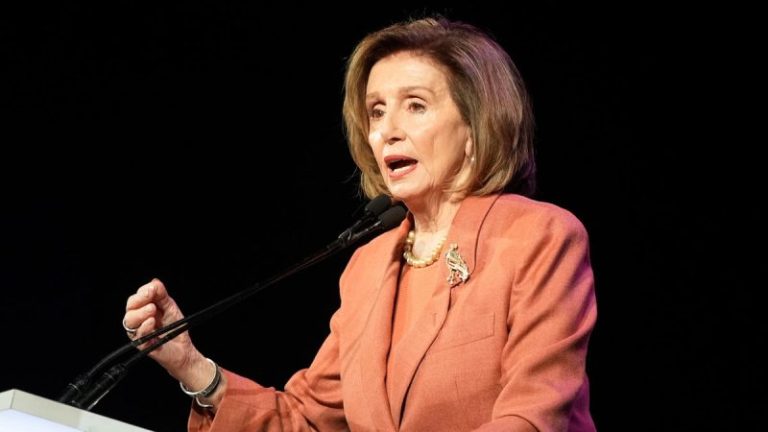
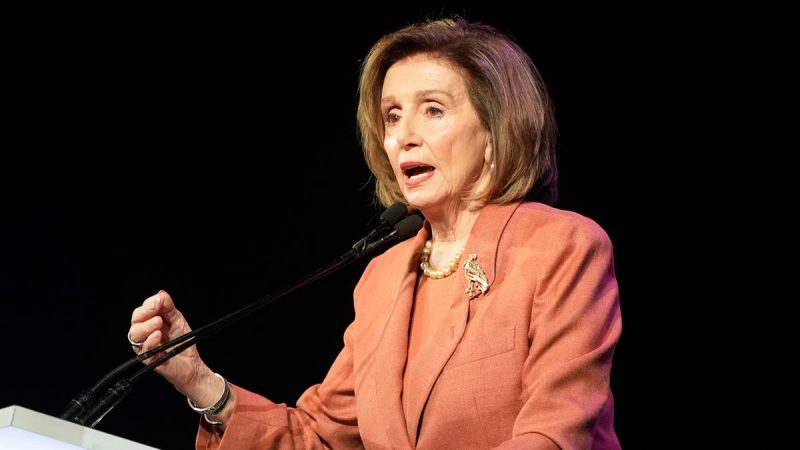
A clip of former U.S. House Speaker Nancy Pelosi, D-Calif., has resurfaced online where she flatly defended the then-Obama administration’s decision to strike Libya — without the congressional authorization she believes President Donald Trump should have secured before conducting his own strikes over the weekend.

‘You’re saying that the president did not need authorization initially and still does not need any authorization from Congress on Libya?’ a reporter asked Pelosi at a press event back in 2011.

‘Yes,’ Pelosi answered plainly.

The unambiguous answer contrasts sharply with Pelosi’s view of Trump’s strikes against Iran on Saturday.

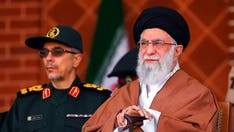
In a joint effort targeting Iranian military leadership, the U.S. and Israel killed Iranian Supreme Leader Ayatollah Ali Khamenei on Saturday, citing an imperative to halt Iran’s pursuit of developing a nuclear weapon.

Pelosi swiftly condemned the operation.

‘President Trump’s decision to initiate military hostilities into Iran starts another unnecessary war which endangers our servicemembers and destabilizes an already fragile region,’ Pelosi said in a post to X.

‘The Constitution is clear: decisions that lead our nation into war must be authorized by Congress.’

Pelosi, alongside other Democrats, is pursuing a war powers resolution that would limit Trump from taking further military action against Iran without express congressional approval.

Trump’s strikes bear similarity to President Barack Obama’s decision to strike Libya in 2011 under Operation Odyssey Dawn.

In that operation, Obama ordered a series of strikes against Libya in March 2011, looking to deter Muammar Gaddafi from attacking civilian protesters.

Gaddafi, known as the ‘Mad Dog of the Middle East,’ was the ruler of Libya from 1969 to 2011. He had a long and complicated relationship with the U.S. — at times aligning with national objectives and, at others, governing in a manner the U.S. couldn’t ignore.

The final straw came in the Libyan revolt of 2011, when demonstrations broke out in Benghazi and other cities. Like recent uprisings in Iran, Gaddafi met the threat to his rule with crushing force, marching his forces toward several Libyan cities that had resisted his power.

In what he described as attempts to uphold international law, Obama said the U.S., in partnership with the North Atlantic Treaty Organization (NATO), had taken the strikes to protect Libya’s civilians to protect Libya’s civilians.

‘We struck regime forces approaching Benghazi to save that city and the people within it,’ Obama said in remarks after the attacks.

The strikes did not kill Gaddafi.

Gaddafi was killed later that year at the hands of revolutionaries in October.

While Obama said he had consulted a bipartisan group of congressional lawmakers, he did not pursue a declaration of war before carrying out his strikes.

‘So, for those who doubted our capacity to carry out this operation, I want to be clear: The United States of America has done what we said we would do,’ Obama said.

Pelosi’s office did not respond to a request for comment on whether she saw any key differences between the attacks carried out by Obama and those now ordered by Trump.

Related Article
Massie-led push to handcuff Trump on Iran gets Jeffries
Massie-led push to handcuff Trump on Iran gets Jeffries’ backing

This post appeared first on FOX NEWS

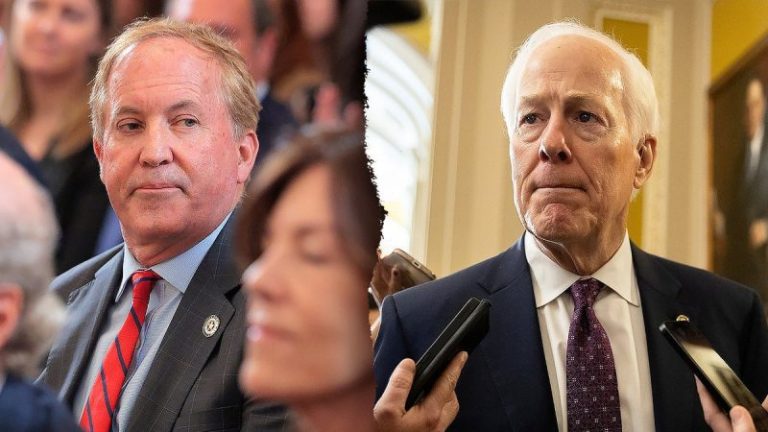
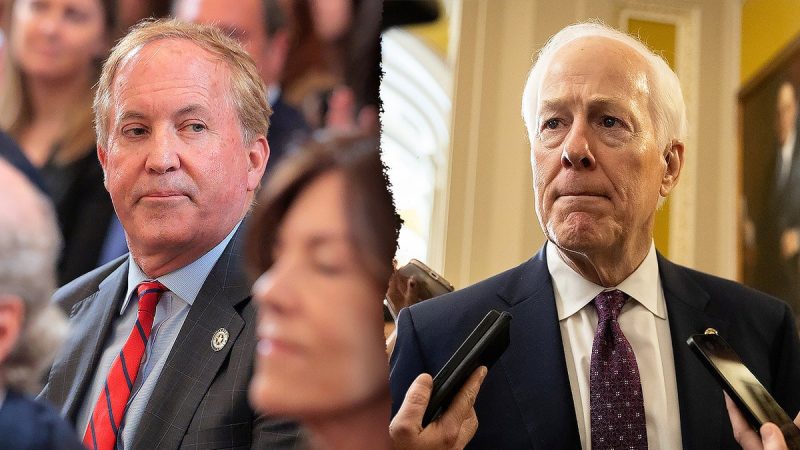
WACO, TEXAS — Two of this primary season’s fiercest rivals have one thing in common: unflinching support for President Donald Trump’s decision to strike Iran.

Texas Attorney General Ken Paxton and Sen. John Cornyn, R-Texas, are both leaning into their relationship with Trump and their record of support over the years as they vie for the Republican nomination in Texas’ contentious Senate primary. While it’s a crowded primary, including Rep. Wesley Hunt, R-Texas, all eyes are on Paxton and Cornyn. 

And as they push for Trump’s coveted endorsement in the final stretch of their intense campaign, their support of the president has remained unwavering.

Paxton told Fox News Digital outside his final campaign event ahead of the March 3 primary that he believed Trump ‘did the right thing’ with Operation Epic Fury. When asked what voters were saying, he said, ‘No one wants foreign wars.’

‘But the reality is, when you’ve got a country that’s trying to build nuclear weapons, that is willing to use them, and that has demonstrated terrorist activity for decades, 40 or 50 years, you’ve got to deal with that, or eventually it comes to you,’ Paxton said.

Cornyn had a front-row view of Trump’s decision.

Chairman of the Joint Chiefs of Staff Gen. Dan ‘Raizin’ Caine said Tuesday during a press conference at the Pentagon that Trump gave the go-ahead to launch Operation Epic Fury while en route to Corpus Christi, Texas, to promote his energy agenda.

Cornyn and others from the Texas delegation were on Air Force One when Trump gave the order. When asked by Fox News Digital whether he was aware of the plan while traveling with the president, Cornyn said Trump was ‘a very cool customer.’

‘He asked us whether we supported a strike on Iran,’ Cornyn recalled. ‘The members of Congress who were there in the cabin of Air Force One all raised our hands and said we did support that, recognizing the gravity of the decision and that only the president, as commander in chief, could make it.’

In Washington, D.C., lawmakers are grappling with the decision, with members of both parties calling for a vote to limit Trump’s war powers in the region. Both Paxton and Cornyn said they are open to debate on the matter.

Cornyn argued it comes down to a simple choice.

‘I want to know who’s standing on the side of American peace and security, and who’s standing on the side of a nuclear-armed Iran,’ Cornyn said. ‘I think that’s the choice.’

How long the country remains involved in the operation remains an open question. Trump said in a video address that the U.S. would continue operations ‘until all of our objectives are achieved,’ but later suggested it could take ‘four weeks or less.’

Some Senate Democrats, including Sen. Andy Kim, D-N.J., argued the strike was ‘the same dangerous and foolish decision’ former President George W. Bush, a fellow Texan, made more than two decades ago in the Middle East.

‘I think the president is doing his best to get in and out. Bush was into nation-building, a very different approach to things. I do not think that’s Trump’s idea here or his endeavor,’ Paxton said. ‘I’m very confident that he’s going to do whatever he can to take them out, and he’s encouraging the people in Iran to take their country back.’

‘He’s not encouraging us to move in and help them do that,’ Paxton added. ‘We’re just taking out the bad guys, and then it’s up to them to build their country in a way that they see fit.’

Related Article

Bipartisan revolt targets Trump
Bipartisan revolt targets Trump’s war powers after massive Iran strikes

This post appeared first on FOX NEWS

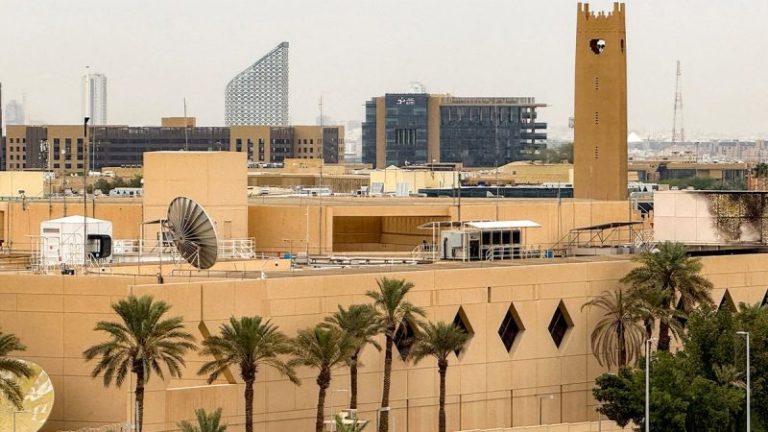
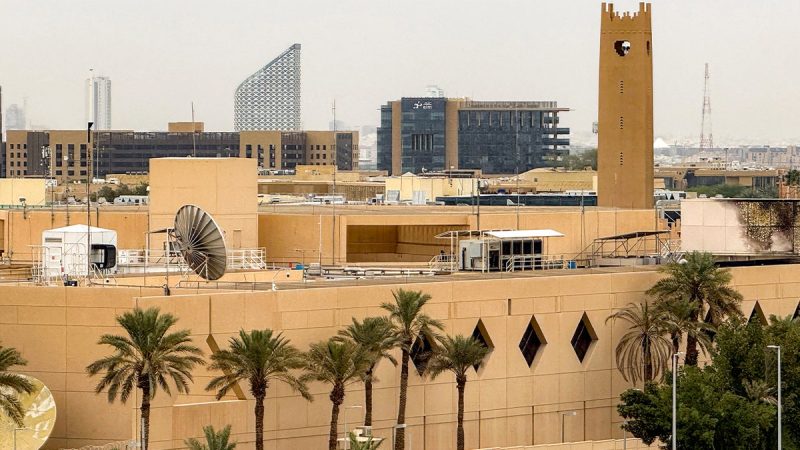
The U.S. Embassy in Riyadh was hit by two drones from Iran on Monday as Americans in Saudi Arabia were instructed to shelter in place. The embassy was empty at the time of the hits and no injuries were reported as a result of the attack.

On Tuesday, the embassy issued a security alert saying that the shelter in place order for Jeddah, Riyadh and Dhahran remained in effect, and it added that U.S. citizens throughout Saudi Arabia were advised to remain indoors. It also advised U.S. citizens to ‘avoid the embassy until further notice’ due to the attack.

‘We advise all U.S. citizens to maintain a personal safety plan. Crises can happen unexpectedly while traveling or living abroad, and a good plan helps you think through potential scenarios and determine in advance the best course of action,’ the embassy’s Tuesday alert read.

In the security alert, the embassy urged U.S. citizens to shelter in place, monitor its website for updates, enroll in the State Department’s Smart Traveler Enrollment Program (STEP), ensure their passports are valid for potential short-notice travel, remain aware of their surroundings, avoid demonstrations and large gatherings, follow local authorities’ instructions and monitor official information sources for the latest updates.

Secretary of State Marco Rubio in a video posted on X urged Americans in the Middle East to register with STEP, saying that it would allow them to see the latest safety and security guidance amid the ‘cowardly attacks’ from Iran.

Saudi Arabia’s Foreign Ministry released a statement condemning the attack, saying ‘the repetition of this cowardly and unjustified attack blatantly violates all international norms and laws, including the 1949 Geneva Convention and the 1961 Vienna Convention on Diplomatic Relations.’

‘The Kingdom emphasizes that the repetition of this flagrant Iranian behavior, which comes despite the Iranian authorities’ knowledge that the Kingdom has affirmed it will not allow its airspace or territory to be used to target Iran, will push the region toward further escalation,’ the foreign ministry’s statement read.

Iran has launched attacks in the region against Israel and several countries that have U.S. interests in retaliation for the U.S. and Israel’s joint military offensive known as Operation Epic Fury. Saudi Arabia condemned the retaliation on Feb. 28.

‘The Kingdom of Saudi Arabia expresses its rejection and condemnation in the strongest terms of the blatant and cowardly Iranian attacks that targeted the Riyadh Region and the Eastern Province, which were successfully intercepted,’ the Saudi Foreign Ministry’s Feb. 28 statement read. ‘These attacks cannot be justified under any pretext or in any way whatsoever, and they came despite the Iranian authorities’ knowledge that the Kingdom had affirmed it would not allow its airspace or territory to be used to target Iran.’

Amid the retaliatory strikes, the State Department has ordered the evacuation of non-emergency personnel and their families from Kuwait, Bahrain, Iraq, Qatar, Jordan and the United Arab Emirates.

Related Article
US casualties rise to 6 following Iranian retaliation for massive strikes

This post appeared first on FOX NEWS

The State Department on Monday urged Americans to depart immediately from more than a dozen countries across the Middle East, warning of ‘serious safety risks’ as the Iran war intensifies.

Assistant Secretary of State for Consular Affairs Mora Namdar said U.S. citizens should leave from Bahrain, Egypt, Iran, Iraq, Israel, the West Bank and Gaza, Jordan, Kuwait, Lebanon, Oman, Qatar, Saudi Arabia, Syria, the United Arab Emirates and Yemen.

The department said Americans who need help arranging departure via commercial means can contact the State Department 24/7 at +1-202-501-4444 from abroad or +1-888-407-4747 from the U.S. and Canada.

The travel push was amplified by the State Department’s official travel account, which urged Americans abroad to enroll in the Smart Traveler Enrollment Program, or STEP, at step.state.gov to receive the latest security updates from their nearest U.S. embassy or consulate.

Officials have warned that conditions in the region remain volatile, and that security situations can change quickly as fighting tied to the Iran conflict continues.

The warnings come days after the United States launched Operation Epic Fury, striking command-and-control centers, Iranian air defense capabilities, missile and drone launch sites.

In a Feb. 28 Worldwide Caution security alert, the State Department said Americans worldwide, and especially those in the Middle East, should exercise increased caution, monitor local security alerts and expect potential travel disruptions, including periodic airspace closures.

The evacuation push follows a cascade of security alerts issued by U.S. embassies across the region since Saturday, many ordering or recommending Americans to shelter in place.

At least nine U.S. missions, including Bahrain, Iran, Kuwait, the United Arab Emirates, Saudi Arabia, Iraq, Jordan, Qatar and Israel, have issued repeated shelter-in-place directives or advisories over the past several days.

In multiple cases, embassy personnel and their families were ordered to remain at home, with Americans urged to stay in secure structures away from windows and be prepared for incoming missiles or drones.

In Saudi Arabia, the embassy in Riyadh closed Tuesday after two Iranian drones struck the building, prompting expanded shelter-in-place orders for Jeddah, Riyadh and Dhahran. No injuries were reported.

Related Article
Iran’s security chief accuses Trump of ‘Israel First’ policy,
Iran’s security chief accuses Trump of ‘Israel First’ policy, ‘delusional fantasies’ in region

This post appeared first on FOX NEWS

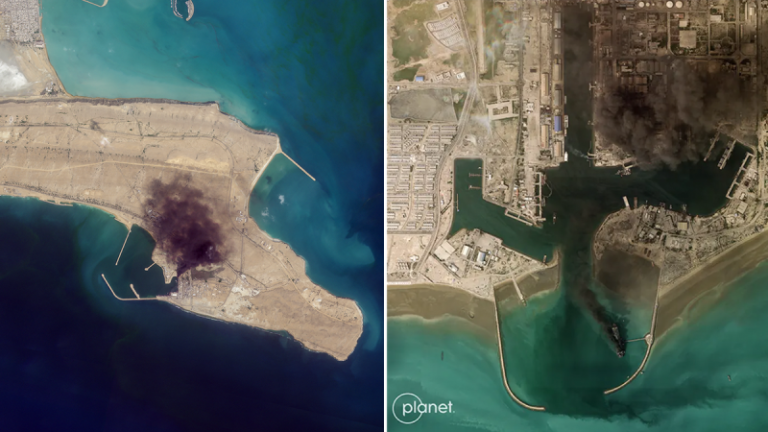
New satellite images offer a stark look at the devastation inside Iran after U.S.-Israeli strikes, while also revealing the damage left behind by Tehran’s retaliatory attacks across the region.

According to U.S. Central Command, which oversees American military operations across the Middle East, U.S. forces struck more than 1,250 targets during the first two days of Operation Epic Fury.

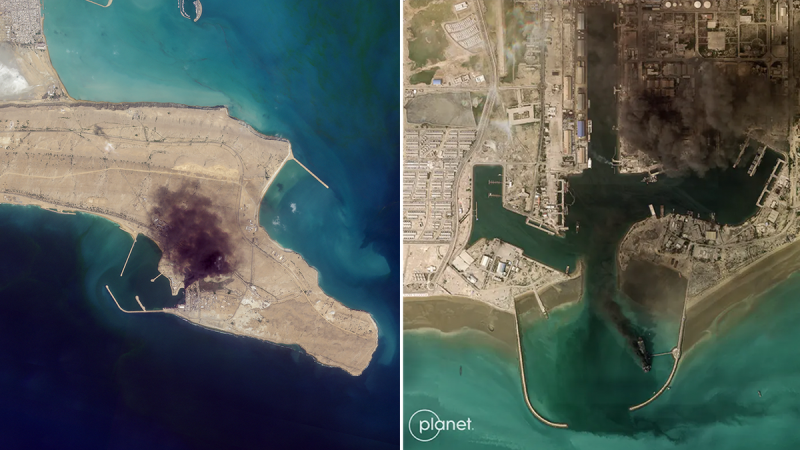
Planet Labs satellite imagery captured burning ships and damaged facilities at the Konarak base in southern Iran, as well as significant destruction at Iran’s naval headquarters in Bandar Abbas on the Persian Gulf, reflecting the scale of the strikes on military infrastructure.

Imagery from Vantor shows the Choqa Balk drone facility in western Iran was hit, along with damage to other key military and strategic sites targeted in the U.S.–Israeli strike campaign. 

Radar systems at the Zahedan air base in eastern Iran — near the country’s borders with Pakistan and Afghanistan — were also struck.

The two facilities are about 800 to 900 miles apart, underscoring the broad reach of the coordinated strikes.

Additionally, satellite imagery from Planet Labs shows thick smoke plumes rising above Tehran, signaling explosions and fires inside the Iranian capital.

The smoke underscores how the conflict has moved beyond isolated military sites and into the heart of Iran’s political center.

Iran responded with missile and drone strikes of its own, expanding the conflict across the region. Satellite images reveal damage to the port city of Sharjah in the United Arab Emirates. The city of Sharjah is the third most populous after Dubai and Abu Dhabi.

The Jebel Ali Port, the region’s largest maritime hub, was also targeted, underscoring how the retaliation extended beyond military sites to key infrastructure.

The U.S. has warned that further retaliation could follow, as both sides signal they are prepared for additional rounds of strikes. Pentagon officials said U.S. forces in the region remain on high alert and have publicly cautioned that any new attacks on U.S. citizens would prompt a forceful response.

With damage now visible from western Iran to the Persian Gulf, the coming days could determine whether the confrontation stabilizes — or spirals into a wider regional war.

Related Article
Fires rage at Iran
Fires rage at Iran’s Bandar Abbas naval headquarters, Strait of Hormuz traffic stalled

This post appeared first on FOX NEWS

President Donald Trump on Monday sent an official notification to Congress about the U.S. strikes against Iran, in which he attempted to justify the military action in the now expanding conflict in the Middle East.

In a letter obtained by FOX News, Trump told Senate President Pro Tempore Chuck Grassley, R-Iowa, that ‘no U.S. ground forces were used in these strikes’ and that the mission ‘was planned and executed in a manner designed to minimize civilian casualties, deter future attacks, and neutralize Iran’s malign activities.’

This comes after joint U.S.-Israeli strikes against Iran on Saturday as part of Operation Epic Fury, triggering a response from Tehran and a wider conflict in the region. The strikes killed the Islamic Republic’s Supreme Leader Ali Khamenei and other military leaders.

Trump wrote that it is not yet possible to know the full scope of military operations against Iran and that U.S. forces are prepared to take potential further action.

‘Although the United States desires a quick and enduring peace, not possible at this time to know the full scope and duration of military operations that may be necessary,’ Trump wrote. ‘As such, United States forces remain postured to take further action, as necessary and appropriate, to address further threats and attacks upon the United States or its allies and partners, and ensure the Government of the Islamic Republic of Iran ceases being a threat to the United States, its allies, and the international community.’

‘I directed this military action consistent with my responsibility to protect Americans and United States interests both at home and abroad and in furtherance of United States national security and foreign policy interests,’ he added. ‘I acted pursuant to my constitutional authority as Commander in Chief and Chief Executive to conduct United States foreign relations.’

Trump said he was ‘providing this report as part of my efforts to keep the Congress fully informed, consistent with the War Powers Resolution,’ as some Republican and Democrat lawmakers attempt to restrain the president’s military action, which they affirm is unconstitutional without congressional approval.

The president also accused Iran of being among the largest state sponsors of terrorism in the world and purported that the ‘Iranian regime continues to seek the means to possess and employ nuclear weapons,’ even after the White House said in June that precision strikes at the time ‘obliterated’ Iran’s nuclear enrichment facilities.

‘As I previously communicated to the Congress, Iran remains one of the largest, if not the largest, state-sponsors of terrorism in the world,’ Trump said in the letter on Monday. ‘Despite the success of Operation MIDNIGHT HAMMER, the Iranian regime continues to seek the means to possess and employ nuclear weapons. Its array of ballistic, cruise, anti-ship, and other missiles pose a direct threat to and are attacking United States forces, commercial vessels, and civilians, as well as those of our allies and partners.’

‘Despite my Administration’s repeated efforts to achieve a diplomatic solution to Iran’s malign behavior, the threat to the United States and its allies and partners became untenable,’ he continued.

Fox News’ Tyler Olson contributed to this report.

Related Article
Trump admin warned lawmakers Israel was
Trump admin warned lawmakers Israel was ‘determined to act with or without us’ before massive Iran strikes

This post appeared first on FOX NEWS

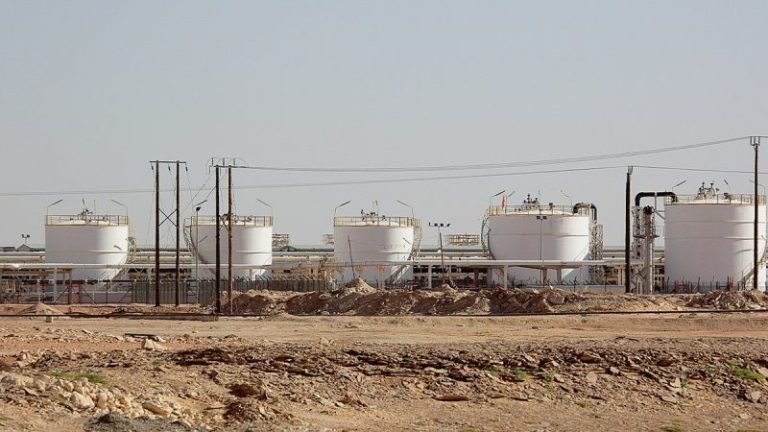
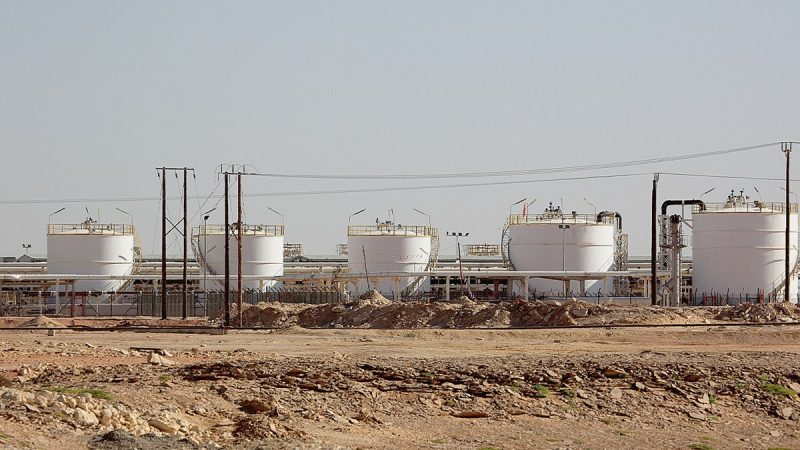
Iranian drone strikes forced Qatar to halt liquefied natural gas (LNG) production Monday, jolting global energy markets and raising fears about supply disruptions as Tehran increased its attacks on regional infrastructure.

QatarEnergy, the state-owned giant and one of the world’s largest LNG producers, suspended operations at two facilities after drones launched from Iran hit the sites, according to reports.

Qatar’s Ministry of Defense also said in a statement, that two drones hit facilities in the country, though no casualties were reported.

The attacks also targeted a water tank at a power plant in Mesaieed and a key energy installation in Ras Laffan.

Qatar’s Ras Laffan complex is the world’s largest LNG export facility, making it one of the most critical energy hubs in the world.

About 20% of global LNG trade transited the Strait of Hormuz in 2024, primarily from Qatar, according to the U.S. Energy Information Administration.

Markets reacted Monday with Europe’s benchmark natural gas futures surging by the largest margin since the 2022 energy crisis triggered by the Ukraine war, Bloomberg reported.

Bloomberg also reported Dutch TTF natural gas prices rose by 50% after news of the shutdown. Asian LNG prices also recorded gains as traders tried to assess the scale and length of the disruption.

‘The threat to security of supply is here and now,’ Simone Tagliapietra, an analyst at Bruegel, told Bloomberg. ‘The extent of it will depend on the duration of the shutdown, but we are now into a new scenario.’

In Saudi Arabia, another drone attack caused a fire at the kingdom’s Ras Tanura oil refinery, forcing a partial shutdown there as well.

Saudi authorities have not reported casualties, but the attack heightened fears of broader instability in the Gulf’s energy corridor, according to reports.

Related Article
America strikes Iran again — has Washington planned for what comes next?

This post appeared first on FOX NEWS

Vice President JD Vance confirmed Monday that negotiations with Iran over its nuclear program collapsed after U.S. officials concluded Tehran’s claims ‘did not pass the smell test,’ prompting President Donald Trump to authorize Operation Epic Fury.

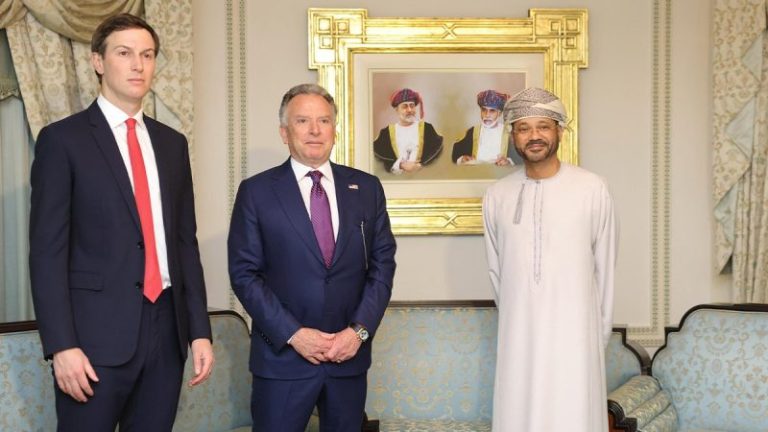
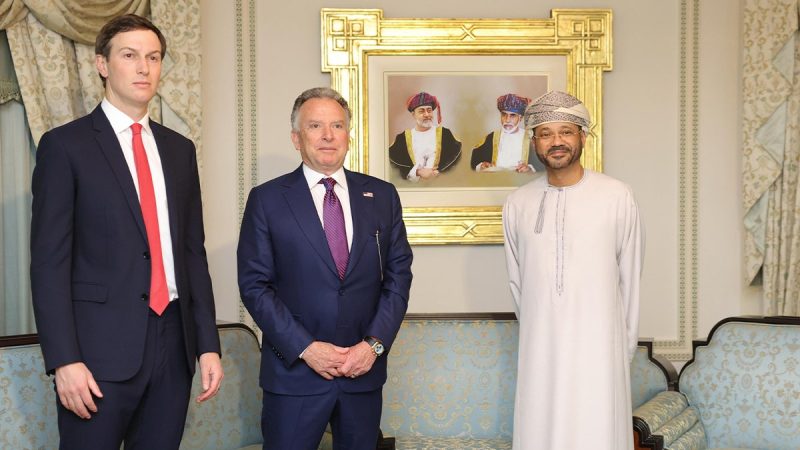
Speaking on ‘Jesse Watters Primetime,’ Vance said U.S. envoys — including Steve Witkoff, Secretary of State Marco Rubio and Jared Kushner — had conducted rounds of ‘deliberate’ talks in Geneva with the Iranian delegation.

The discussions were aimed at curbing Tehran’s nuclear program in exchange for sanctions relief and averting a broader conflict, he said, but ultimately broke down.

‘But the Iranians would come back to us and they’d say, ‘Well, you know, having enrichment for civilian purposes, for energy purposes, is a matter of national pride,’’ Vance said.

‘And so we would say, ‘OK, that’s interesting, but why are you building your enrichment facilities 70 feet underground? And why are you enriching to a level that’s way beyond civilian enrichment and is only useful if your goal is to build a nuclear bomb?’’ he said.

‘Nobody objects to the Iranians being able to build medical isotopes; the objection is these enrichment facilities that are only useful for building a nuclear weapon,’ Vance clarified.

‘It just doesn’t pass the smell test for you to say that you want enrichment for medical isotopes, while at the same time trying to build a facility 70 to 80 feet underground,’ he explained.

Vance spoke as Operation Epic Fury ended its third day. Launched on Feb. 28, U.S. and Israeli forces carried out coordinated precision strikes deep inside Iran aimed at crippling Tehran’s missile arsenal and nuclear infrastructure.

A key issue had been Iran enriching uranium to high levels, including material around 60% purity — a fraction of weapons-grade but far above limits set under the 2015 nuclear deal — keeping international alarm high over proliferation risks.

‘We destroyed Iran’s ability to build a nuclear weapon during President Trump’s term,’ Vance told Watters. ‘We set them back substantially. But I think the President was looking for the long haul,’ he said.

‘Trump was looking for Iran to make a significant long-term commitment that they would never build a nuclear weapon, that they would not pursue the ability to be on the brink of a nuclear weapon.’

‘He wanted to make sure that Iran could never have a nuclear weapon, and that would require fundamentally a change in mindset from the Iranian regime.’

‘The President is not going to rest until he accomplishes that all-important objective of ensuring that Iran can’t have a nuclear weapon, not just for the next few years, not just because we obliterated for dough or some other.’

‘There’s just no way that Donald Trump is going to allow this country to get into a multiyear conflict with no clear end in sight and no clear objective,’ Vance added while describing that the administration would prefer to see ‘a friendly regime in Iran, a stable country, a country that’s willing to work with the United States.’

Related Article

Why Trump invoked regime change in attacking Iran, and the media must learn from past mistakes

This post appeared first on FOX NEWS

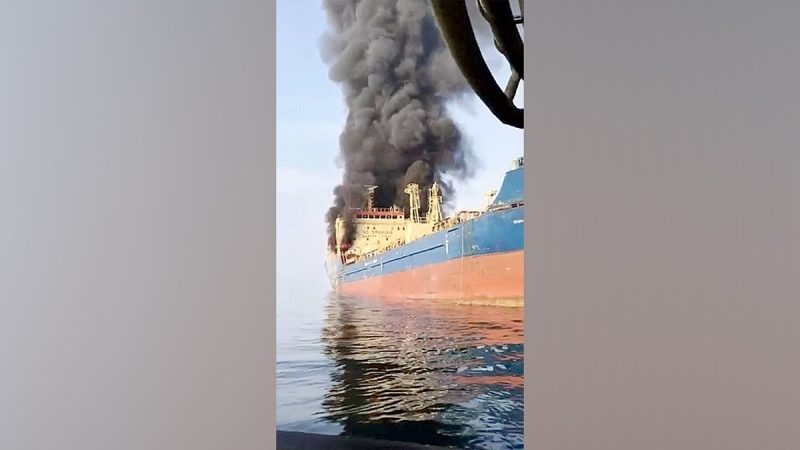
Iran is conducting ‘indiscriminate’ targeting of vessels across the Gulf of Oman and the wider Persian Gulf following the launch of U.S.-Israeli strikes under Operation Epic Fury, according to a maritime intelligence firm.

Windward AI noted the sanctioned Palau-flagged tanker Skylight was hit as the conflict across the Middle East entered its second day, with the tanker also holding Iranian nationals among the crew and ties to the regime.

‘Analysis of vessel affiliations, targeting patterns, and cargo data points to a strategy of indiscriminate area denial — not precision targeting — aimed at demonstrating Iran’s capability to disrupt the Strait and deter commercial shipping,’ the firm said Monday.

Iran has been retaliating with missiles and drones targeting U.S. and allied positions across the region, including in Qatar, Kuwait and the United Arab Emirates.

Maritime traffic through the Strait of Hormuz, which links the Gulf of Oman to the Persian Gulf, is the world’s most critical energy chokepoint.

While three other vessels were reported attacked since the hostilities escalated Feb. 28, Windward described Skylight as ‘the highest-risk vessel in the group and the most anomalous target.’

The UKMTO Operation Centre also later confirmed attacks on Skylight, MKD Vyom and Hercules Star, warning of significant military activity across the Gulf of Oman, the Persian Gulf, the North Arabian Sea and the Strait of Hormuz.

Skylight had been sanctioned by the U.S. Treasury’s Office of Foreign Assets Control in December 2025, and was used to transport Iranian petroleum products, according to reports.

It was operated by United Arab Emirates-based Red Sea Ship Management LLC, which Windward noted has documented ties to front companies linked to Iran’s Ministry of Defense.

The vessel had been at anchor since Feb. 22 and carried 20 crew members — 15 Indians and five Iranians.

‘The Skylight anomaly — striking a vessel with an Iranian crew, Iranian operational ties, and active OFAC sanctions — is the single strongest piece of evidence against deliberate targeting by affiliation,’ Windward said.

Reuters also reported March 1 that the Palau-flagged tanker was hit off Oman’s Musandam Peninsula in the Gulf of Oman, injuring four.

Oman’s Maritime Security Center said in a post on X that Skylight was attacked about 5 nautical miles north of Khasab Port, caught fire and was evacuated.

Related Article

Gulf states intercept hundreds of Iranian missiles and drones, issue joint condemnation with US

This post appeared first on FOX NEWS

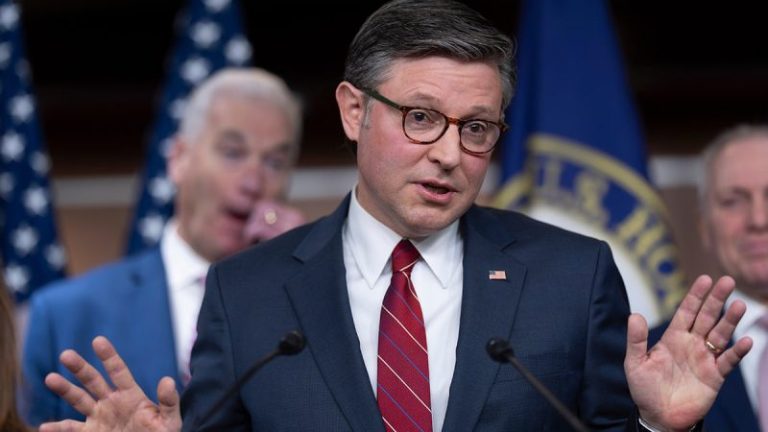
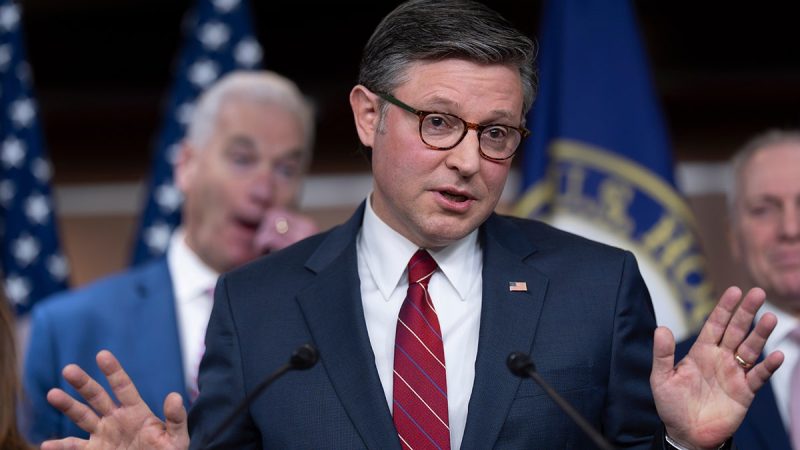
Speaker Mike Johnson, R-La., described the recent U.S.-Israeli strikes on Iran as a defensive measure, saying, ‘Israel was determined to act with or without us’ following a classified briefing on Monday evening.

Johnson told reporters after the briefing that Israel viewed Iran’s capabilities as an existential threat and was prepared to conduct operations regardless of U.S. participation. He said Israel’s assessment shaped American deliberations, and it was ‘determined to act in their own defense here, with or without American support.’

The speaker said administration officials had to weigh risks to U.S. forces, regional assets and interests before supporting the operation. 

‘They had to evaluate the threats to the U.S., to our troops, to our installations, to our assets in the region and beyond. And they determined, because of the intelligence that we had, that a coordinated response was necessary,’ Johnson said.

Johnson said he guarantees that if the U.S. had not acted, the Trump administration would have been hauled in by Congress and asked why they waited if they had ‘existential intelligence, knowing that that would happen.’

‘I am convinced that they did the right thing,’ he said.

Rubio confirmed that Israel was prepared to act against Iran and said the president ‘made a very wise decision.’  

‘We knew that there was going to be an Israeli action. We knew that that would precipitate an attack against American forces,’ he told reporters. ‘And we knew that if we didn’t preemptively go after them before they launched those attacks, we would suffer higher casualties.’

Sen. Mark Warner, D-Va., a top Democrat on the Intelligence Committee, emerged from the briefing and said he did not believe there was an ‘imminent threat’ prior to Saturday’s strikes. 

‘There was no imminent threat to the United States of America by the Iranians. It was a threat to Israel,’ he said. ‘We equate a threat to Israel is the equivalent of an imminent threat to the United States. Then we are in uncharted territory.’ 

‘We have seen the goals for this operation change now, I believe 4 or 5 times,’ he went on.

Rubio insisted the operation was not about Iranian regime change but about taking out its capabilities as a threat to the region – focused on ballistic missiles and naval capacity. 

He did not say whether strikes would extend to nuclear facilities.

‘I do believe there is more than adequate justification for our American and Israeli actions,’ Senate Armed Services Committee Chairman Roger Wicker, R-Miss., told reporters he believes there is ‘more than adequate justification for our American and Israeli actions,’ without saying more.

House Foreign Affairs Committee Chairman Brian Mast, R-Fla., told Fox News Digital in an interview afterward that he felt administration officials did a good job of illustrating the threat level faced by the U.S. in the days leading up to the strikes.

‘I think that’s largely been very open source. The president laid that out, you know, very clearly. It does go beyond that to what I can’t get into, but it goes beyond that. I’m sure it’ll come out in the administration’s good time, but it’s not for me to say,’ Mast said.

‘But the more immediate nature of threats — I’m going through the negotiations with [Special Envoy Steve Witkoff], [Jared Kushner], Rubio, others that were a part of having those conversations and throughout that 10-day window of, you know, let’s call it countdown to make a deal, the threats that were going on in that window is probably the high-side information that you have.’

He also said there was a lot of daylight between what Democrats and Republicans in the briefing considered an ‘imminent threat.’

‘It’s like, for me as a soldier, right, if I see an enemy machine gun nest, that to me, given that it’s an enemy machine gun nest, is an imminent threat,’ Mast said. ‘To Democrats, unless that machine gun is burning up its barrels firing at you, it’s not yet an imminent threat. And those are the two separate ways that we’re looking at it.’.

On February 26th, the U.S. launched Operation Epic Fury against Iran in coordination with Israel. The offensive campaign has resulted in the death of 49 top Iranian leaders, including the Supreme Leader, Ayatollah Ali Khamenei. Six U.S. service members have lost their lives in Iranian counterattacks. 

The opening phase of the conflict struck more than 1,000 targets in the first 24 hours, according to Gen. Dan Caine, chairman of the joint chiefs of staff. American B-2 bombers flew 37-hour round-trip missions from the continental United States to hit underground facilities with penetrating munitions, he added.

Related Article

Ex-CIA chief warns not to underestimate Iran’s response after Operation Epic Fury exposed regime ‘arrogance’

This post appeared first on FOX NEWS