Tag

featured

Browsing

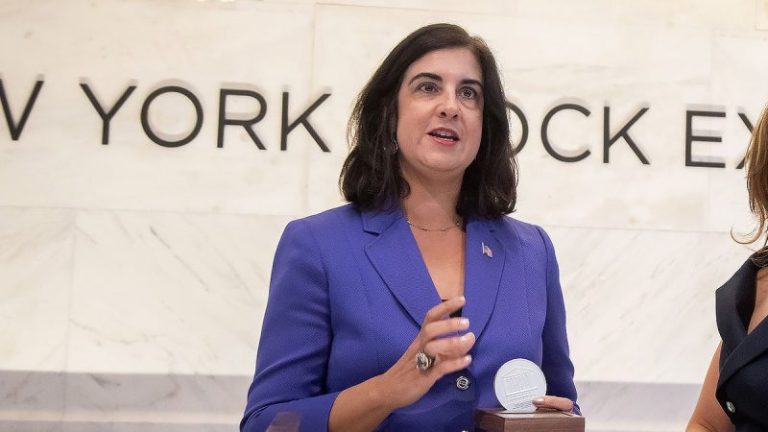
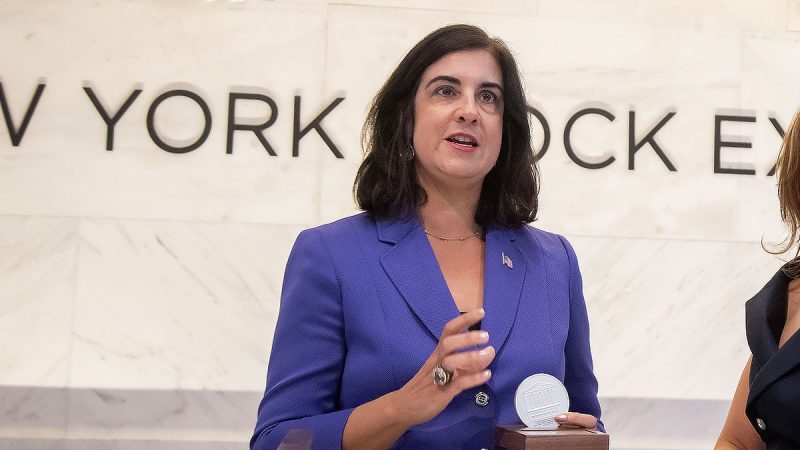
A House GOP lawmaker is working to find more information after learning one of her constituents was possibly detained by Venezuela’s government.

Rep. Nicole Malliotakis, R-N.Y., told Fox News Digital she was ‘advocating for the State Department to assist’ with a U.S. citizen from her district who is possibly being held by the Latin American government.

‘My biggest issue at the moment is that I have a constituent that is suspected of being unlawfully detained by the Venezuelan government,’ Malliotakis told Fox News Digital.

She said she was appealing to the State Department to use its ‘leverage’ to get the man released.

The New York City-area Republican said he had likely been detained for ‘a couple of weeks,’ before Maduro’s ouster.

Malliotakis said his family suspected him of being unlawfully detained, but it’s not clear if he’s classified as such by the U.S. government.

Her office sent Fox News Digital a longer statement, ‘While we have not been contacted by the family of James Luckey-Lange, we learned about the situation from the media on Friday and immediately contacted the U.S. Department of State.’

‘For months, the State Department has advised American citizens not to travel to Venezuela, determining a very high risk of wrongful detention of U.S. nationals in the country. While we have not yet been able to confirm he has been detained, we are engaged, actively monitoring the situation, and have elevated our concern directly to the White House and the Secretary of State, and the State Department has been in contact with the family,’ Malliotakis’ office said.

‘It is our hope that our constituent will soon safely return to the United States.’

Fox News Digital reached out to the State Department for further information. A State Department spokesperson responded to the inquiry, ‘The United States has no higher priority than the safety and security of U.S. citizens. We are aware of reports of U.S. citizens detained in Venezuela. Due to privacy and safety concerns, we have nothing further at this time.’

Her comments came after a House-wide classified briefing on the government’s Venezuela operation on Wednesday, which was led by top Trump administration officials.

Maduro and his wife, Celia Flores, were extracted after precision strikes in the capital city of Caracas and are currently facing trial on terrorism-related charges at the U.S. Attorney’s Office in the Southern District of New York.

A story published in the Staten Island Advance, a local outlet in Malliotakis’ district, cited the New York Post in naming Luckey-Lange as being potentially detained by Venezuela since arriving there in December.

The outlets reported that it’s not clear if he had a visa to enter Venezuela.

President Donald Trump said last weekend that the U.S. would ‘run’ the country until an adequate transition were to occur. 

Meanwhile, Maduro’s vice president, Delcy Rodríguez, was sworn in as acting president on Tuesday.
This post appeared first on FOX NEWS

Congressional Republicans aren’t warming up to using military action to take a long-sought prize of President Donald Trump: Greenland.

The colossal, resource-rich arctic island reentered the Trump administration’s orbit following the successful capture of former Venezuelan President Nicolás Maduro. 

Top officials, like White House deputy chief of staff of policy Stephen Miller, reiterated earlier this week it was the position of the U.S. government that ‘Greenland should be part of the United States.’ 

While the GOP has largely championed the Trump administration’s recent military action in Venezuela, lawmakers aren’t keen on replicating the same tactics to capture the Danish territory. 

President Donald Trump has not made a push for military action there, but White House press secretary Karoline Leavitt did not rule it out during a news briefing Tuesday.

‘All options are always on the table for President Trump as he examines what’s in the best interests of the United States,’ Leavitt said. ‘But I will just say that the president’s first option always has been diplomacy.’ 

Wednesday saw several Trump administration officials provide closed-door, classified briefings on both sides of the Capitol on the strikes, next steps and a possible exit strategy in Venezuela. 

Several Republicans would not say afterward whether the topic of Greenland came up in the meeting, and many reiterated that any military action would be taboo, given that the island is a territory of Denmark, a North Atlantic Treaty Organization (NATO) ally.

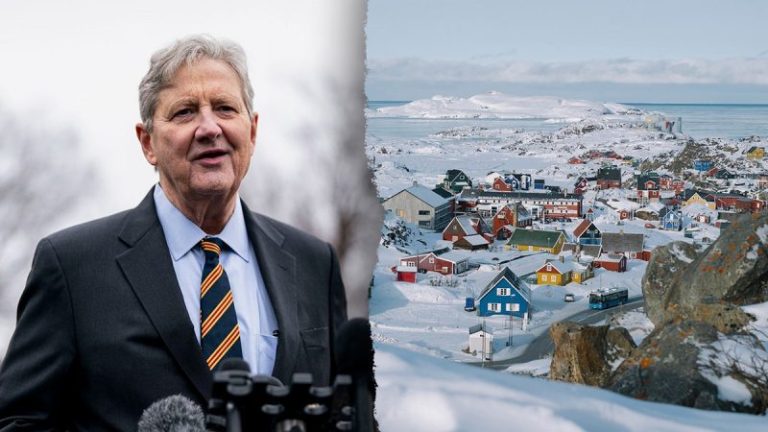
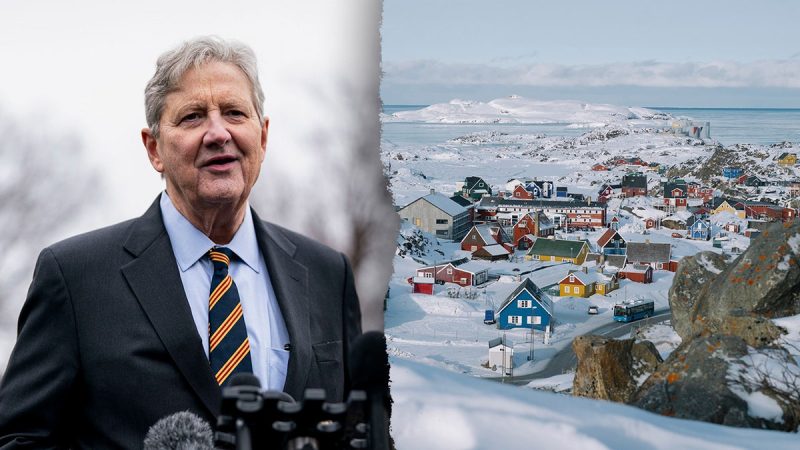
‘To invade Greenland and attack its sovereignty, a fellow NATO country, would be weapons-grade stupid,’ Sen. John Kennedy, R-La., told Fox News Digital. ‘President Trump is not weapons-grade stupid, nor is Marco Rubio.’

Miller’s comments triggered rebuttals from several of America’s European allies, who in a joint statement on Tuesday contended that Greenland ‘belongs to its people.’ 

Sen. Roger Marshall, R-Kan., wouldn’t say whether Greenland, broadly or as a next likely target, was discussed in the classified briefing.

But he told Fox News Digital that the massive island, which could fit California, Montana and Texas combined, had been on his mind. 

‘I think that Greenland would be a huge asset to America,’ Marshall said. 

‘I don’t want any military operation in Greenland,’ he continued. ‘There’s no criminals there that I know of. I think it’s apples and oranges. It could be very critical to our national security. Going forward, I hope that we can work out a deal with Denmark.’

Despite the overseas saber-rattling, Secretary of State Marco Rubio said after the briefing he would be meeting with officials from Denmark next week, and he noted that it has ‘always been the president’s intent from the very beginning’ to buy the ice-encased island. 

‘He said it very early on,’ Rubio said. ‘I mean, this is not new. He talked about it in his first term, and he’s not the first U.S. president that has examined or looked at how could we acquire Greenland. There’s an interest there.’

Sen. Rand Paul, R-Ky., is one of the few Republicans who has pushed back against the administration’s most recent strikes in Venezuela and previous strikes in the Caribbean against alleged drug boats. But he didn’t appear opposed to the notion of purchasing Greenland.

‘To acquire Greenland, the best way would be not to insult them,’ Paul said. ‘If I want to buy your country, I would think I would start out with flattery and not denigration.

‘I think Greenland would have to be encouraged to further their independence movement,’ he continued. ‘Then they would have to be encouraged that being part of the U.S. would have advantages. I think they would have to vote, basically, to become part of the United States.’

In the House of Representatives, a number of Republicans who spoke with Fox News Digital similarly said they recognized the security significance of Greenland but were hesitant when asked about the possibility of military force.

‘I understand the strategic importance,’ Rep. Kevin Kiley, R-Calif., told Fox News Digital. ‘I think (military force) is not an option in this case scenario.

‘The secretary of state has made it clear that the goal is to work with our ally toward a mutually agreeable solution.’

Rep. Derek Schmidt, R-Kan., said, ‘I don’t think we should use military force,’ adding ‘discussion’ about acquiring the territory ‘never hurts.’

‘Greenland is very important strategically,’ Schmidt said. ‘That’s not a uniquely American position, that’s a NATO position. Everybody recognizes that … but I think we need to work with our allies.’

Meanwhile, Rep. Don Bacon, R-Neb., was more critical of the prospect of U.S. ownership.

‘This is really dumb. Greenland and Denmark are our allies. There is no upside to demeaning our friends. But, it is causing wounds that will take time to heal,’ he wrote on X this week.

This post appeared first on FOX NEWS

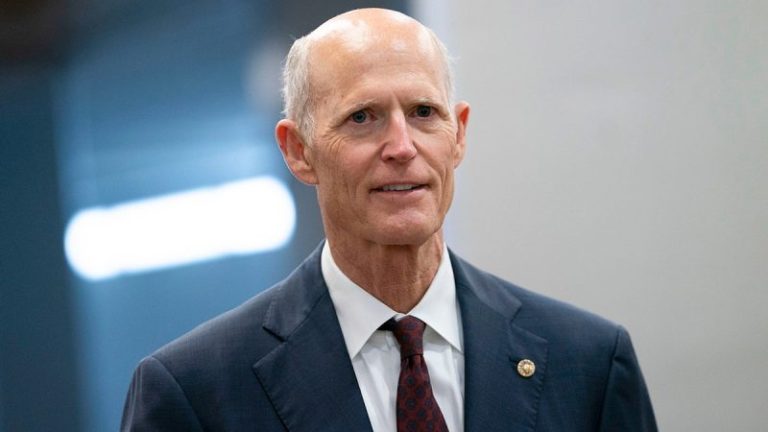
Sen. Rick Scott, R-Fla., is predicting that the Cuban regime will fall, possibly in 2026 or 2027.

Scott had said during an appearance last year on ’60 Minutes’ that Venezuelan leader Nicolás Maduro’s days were ‘numbered,’ predicting that ‘whether it’s internal or external,’ something would ‘happen.’ 

He also predicted that the removal of Maduro would ‘be the end of Cuba.’

So far, the first part of the senator’s prediction has been fulfilled, as the U.S. captured Venezuelan dictator Nicolás Maduro and extradited him to New York last week. 

Scott stood by his prognostication during a Tuesday appearance on NewsNation, forecasting that the end of the ‘Díaz-Canel regime’ will ‘happen.’

‘Everything takes longer than you think,’ Scott said, noting that he thinks the Cuban regime will probably fall ‘maybe this year, maybe next year.’

‘So who knows when it’s gonna happen. But we’re gonna get democracy,’ Scott said.

President Donald Trump said during a Sunday gaggle aboard Air Force One that ‘Cuba is ready to fall.’

This post appeared first on FOX NEWS

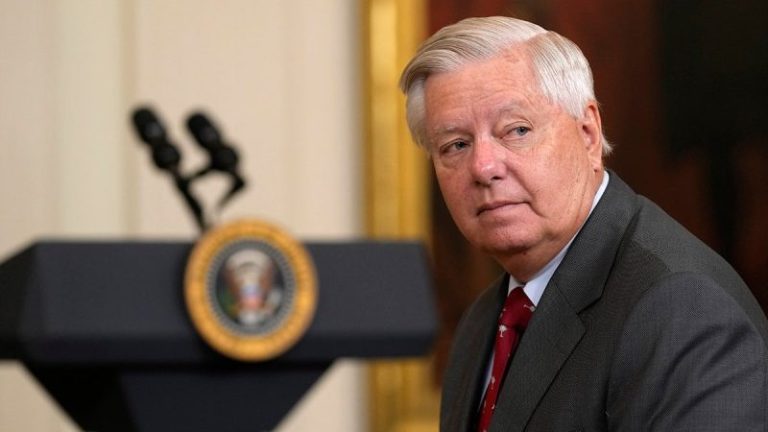
Sen. Lindsey Graham, R-S.C., warned Iran’s leader that President Donald Trump will ‘kill’ him if the Iranian regime continues to kill protesters in the country.

Graham made the stark threat during a Tuesday night appearance on Fox News, referencing the anti-regime protests raging in Iran. As of Wednesday, at least 36 people have been killed and more than 2,000 have been detained in the unrest.

‘To the people of Iran: We stand with you tonight,’ Graham told host Sean Hannity. ‘We stand for you taking back your country from the Ayatollah, a religious Nazi who kills you and terrorizes the world.’

‘And to the Ayatollah: You need to understand, if you keep killing your people who are demanding a better life, Donald J. Trump is gonna kill you,’ he continued.

‘Help is on the way,’ he added in a message for Iranian citizens.

Graham’s comments come amid a heated back-and-forth between Trump and the ayatollah’s regime.

The president wrote on Truth Social, ‘If Iran shoots [sic] and violently kills peaceful protesters, which is their custom, the United States of America will come to their rescue. We are locked and loaded and ready to go.’

Trump’s warning took on a new meaning for Iran following the historic U.S. mission in Venezuela that led to the capture and extradition of Nicolás Maduro and his wife, Cilia Flores.

The head of Iran’s military threatened preemptive action in response to Trump’s ‘rhetoric’ on Tuesday. Maj. Gen. Amir Hatami made the threat while speaking to military academy students, saying, ‘The Islamic Republic considers the intensification of such rhetoric against the Iranian nation as a threat and will not leave its continuation without a response.’

‘I can say with confidence that today the readiness of Iran’s armed forces is far greater than before the war. If the enemy commits an error, it will face a more decisive response, and we will cut off the hand of any aggressor,’ he continued.

This post appeared first on FOX NEWS

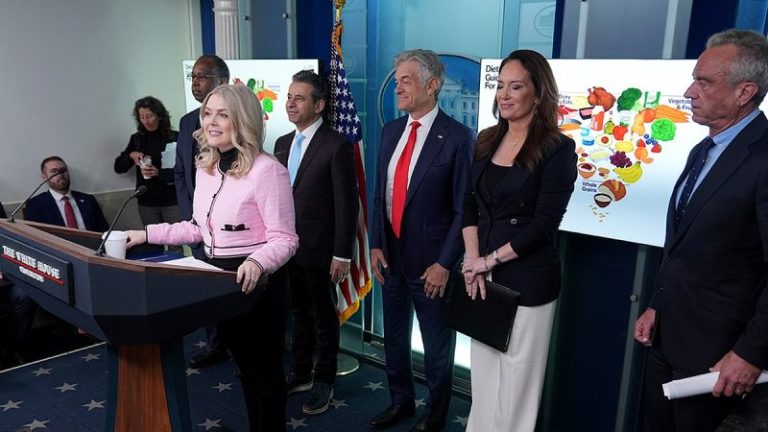
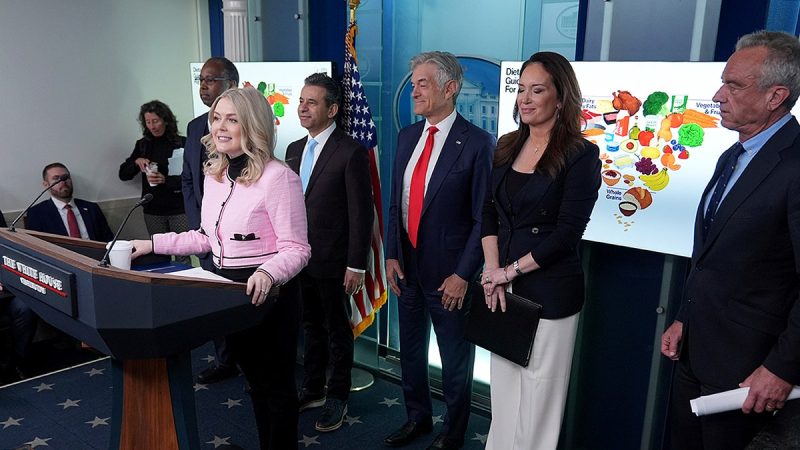
The Trump administration is taking aim at ultra-processed foods while reversing long-held U.S. government stances on red meat and saturated fats.

‘The Trump administration is now updating federal nutrition standards and guidelines to ensure that Americans have the most accurate, data-driven information supported by science and hard facts, not special interests or partisan ideology,’ White House Press Secretary Karoline Leavitt told reporters.

Leavitt said that the guidelines would impact what is served in public schools, what American servicemembers eat and what food is distributed through government programs.

‘Faulty dietary guidelines of the past stack the deck against healthy eating and food options for everyday American families, which has fueled the chronic disease epidemic and jacked up the health care costs of households across the country,’ Leavitt added. ‘When these guidelines are followed, Americans will be saving themselves thousands of dollars. If we want to cut health care costs in our country, we must become a healthier country… A healthier America will lead to a more affordable America.’

The Department of Health and Human Services (HHS) announced the new guidelines with an updated, inverted food pyramid. The top of the pyramid, which is now the wider part of the structure, is built on meat, fats, fruits and vegetables, while whole grains are at the narrow bottom.

HHS Secretary Robert F. Kennedy Jr. has made overhauling the U.S. food supply a crucial focus of his ‘Make America Healthy Again’ (MAHA) agenda, which is aimed at addressing chronic disease and childhood illnesses. The secretary has argued that the nation’s food practices have harmed Americans and led to skyrocketing healthcare costs.

‘The new guidelines recognize that whole, nutrient-dense food is the most effective path to better health and lower health care costs,’ Kennedy said. ‘Protein and healthy fats are essential, and were wrongly discouraged in prior dietary guidelines. We are ending the war on saturated fats.’

The HHS secretary railed against refined carbohydrates, food additives and added sugar, highlighting the health risks associated with sugar-sweetened beverages. Kennedy’s main message to Americans was to ‘eat real food.’

Kennedy framed the issue as not only one about health, but also one of national security.

‘If a foreign adversary sought to destroy the health of our children, cripple our economy, to weaken our national security, there would be no better strategy than to addict us to ultra-processed foods,’ he said.

Agriculture Secretary Brooke Rollins also joined the briefing. She praised Secretary Kennedy’s work and highlighted the role that farmers would play in making America healthy again.

‘We are finally putting real food back at the center of the American diet. Real food that nourishes the body, restores health, fuels energy and builds strength,’ Rollins said. ‘This pivot also leans into the abundant, affordable and healthy food supply already available from America’s incredible farmers and ranchers. By making milk, raising cattle, and growing wholesome fruits, vegetables, and grains, they hold the key to solving our national health crisis.’

FDA Commissioner Dr. Marty Makary emphasized the harm that old guidelines did to the health of everyday Americans. He noted that protein guidelines in particular were far too low for America’s children.

‘We have 40% of our kids now with a chronic disease. It is not their fault. This is something that is the result of bad advice from the government and a medical establishment that for decades peddled research from a flawed 1960s model,’ Makary said. ‘This is not a willpower problem for our nation’s kids. This is something adults have done to kids, and we’re going to fix it.’

Makary agreed with Centers for Medicare & Medicaid Services Administrator Dr. Mehmet Oz that the best way for the U.S. to reduce drug spending is for Americans to focus on diet and health with the goal of not taking medications that they do not need.

The new guidance comes in stark contrast to the Dietary Guidelines Advisory Committee’s report released in the final days of President Joe Biden’s term, which garnered criticism over a lack of directives on ultra-processed foods.

This is a developing story. Please check back for updates.

This post appeared first on FOX NEWS

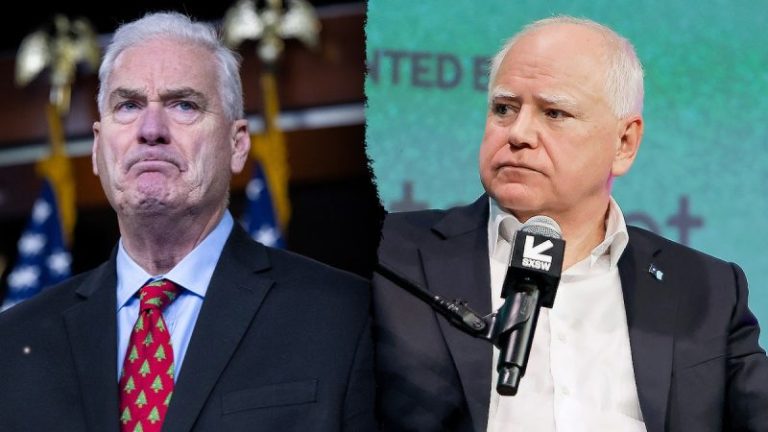
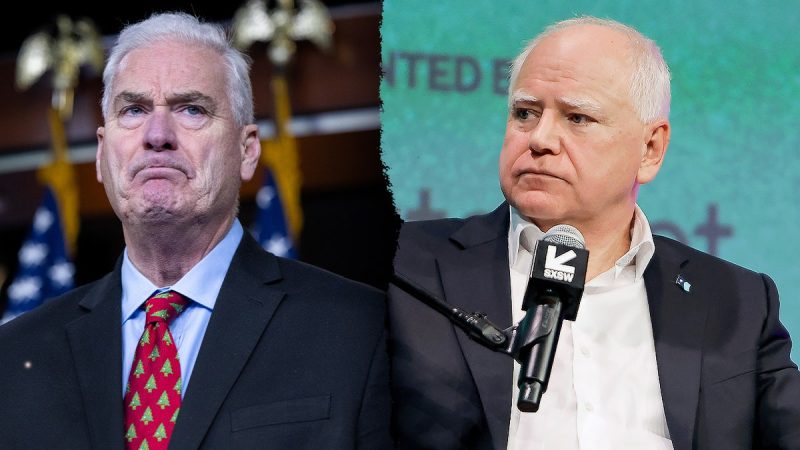
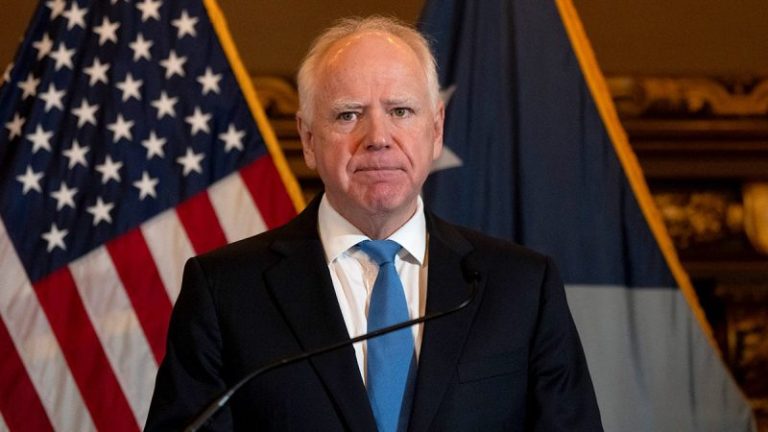
The No. 3 leader in the House of Representatives is arguing that Minnesota Gov. Tim Walz could be leaving office earlier than he intended, even after the progressive refused to resign over alleged widespread fraud in his state.

‘I think perhaps this is a lot deeper, a lot larger than we knew,’ Emmer told Fox News Digital on Wednesday. ‘Tim should do the right thing and resign. And if he doesn’t, I think he might be leaving the offices in cuffs.’

Federal prosecutors are investigating accusations of fraud within Minnesota’s social programs, with a significant amount of scrutiny on the state’s Somali community.

U.S. attorneys have alleged that as much as $9 billion in state and federal funding could have fallen prey to fraud, an estimate that Walz and other state Democratic leaders have said is overblown.

Walz said during a press conference on Tuesday that he would not resign over the scandal, telling reporters when asked, ‘Over my dead body will that happen.’

The enhanced media scrutiny did push Walz to drop his bid for a third term as governor, however.

Asked about his refusal to resign, Emmer said, ‘This guy has got to stop acting like a coward, and he’s got to start taking accountability for the fact that he is completely incompetent, and perhaps even complicit, in one of the most breathtaking fraud examples that we’ve ever seen.’

‘Tim Walz, he said he was running for a third term and that he was going to fight for Minnesota. And then what he did was, he said, ‘Well, I’m not going to run for a third term anymore, but I’m going to fight for Minnesota.’ And he came out the next day, had to have a press conference to say he wasn’t resigning,’ Emmer said. ‘It’s just wild. He’s coming unglued.’

Walz said he was ‘accountable for this’ as the top state official during his press conference on Tuesday, while also criticizing Republicans’ response to the matter.

‘Republicans want to tell you everybody with brown skin is stealing money or that they’re not welcome here. They want to do nothing to improve this state. Their idea of improving this state is being a parrot for Donald Trump, agreeing to everything that he agreed with,’ he said.

‘Right now they are hiding behind a veil of innuendo. They’re protecting the biggest fraudster in the White House.’

The Department of Justice (DOJ) announced last month it had charged six people for ‘participating in schemes to defraud the government in the Autism fraud scheme and the Housing Stabilization Services (HSS) fraud scheme.’

Federal prosecutors also charged multiple people last year with stealing more than $240 million from the Federal Child Nutrition Program through the Minnesota-based nonprofit Feeding Our Future.

Fox News Digital reached out to Walz’s office for a response to Emmer’s comments.

This post appeared first on FOX NEWS

A major state audit in Minnesota conducted by the nonpartisan Office of the Legislative Auditor found widespread failures and internal control problems in the Department of Human Services’ Behavioral Health Administration (BHA) grant program, reaffirming concerns about massive fraud issues.

The report, released on Monday, found that between July 1, 2022, and Dec. 31, 2024, DHS dished out more than $425 million in grants to 830 organizations, the majority being nongovernmental, and did not show proper oversight in watching over those taxpayer funds, which in many cases were meant to help those with addiction and mental health issues.

The audit found missing progress reports and discovered BHA could not show it had completed all required monitoring visits and had no documentation at all for some of them. 

Additionally, auditors discovered what appeared to be backdated or newly created documentation that did not exist before the audit, suggesting an effort to retroactively manufacture paperwork to show compliance.

In one instance, the report found that a grant manager approved over $600,000 in payments and later left the government agency to work for the grantee.

‘The OLA report shows a complete breakdown in how DHS’s Behavioral Health Administration manages hundreds of millions in taxpayer-funded grants,’ Republican State Sen. Mark Koran said in a press release. ‘BHA failed to verify that grantees were providing the services they were paid for, failed to put basic financial controls in place, and then created documentation after the fact to mislead auditors.

‘Minnesotans deserve integrity from state agencies. Fabricating evidence after an audit begins is unacceptable. It obstructs the OLA’s work and prevents DHS from correcting its failures. The finding that a DHS manager approved a large grant and later became a paid consultant for that same grantee is a blatant conflict of interest. This kind of misconduct erodes public trust and undermines the effectiveness of grant programs.’

The audit also found that when employees were surveyed, 73% of them said they did not receive the necessary training to properly administer manage grants, with one employee saying, ‘Executive leadership has repetitively shown staff that they won’t take the staff’s concerns or questions seriously until something serious happens or it makes the news.’

Minnesota’s government agencies are already under heavy scrutiny amid a fraud scandal that prosecutors say could total as much as $9 billion and has already forced Gov. Tim Walz to drop his re-election bid.

‘Today’s shocking report by the Legislative Auditor shows a culture of pervasive fraud, negligence, and deception,’ Republican House Speaker DeMuth said about the report.

‘We need answers immediately about the apparent backdating and potential falsification of documents found during the audit…It’s time to clean house and restore honesty and accountability in state agencies.’

Ultimately, the report concluded that the state government ‘did not comply with most requirements tested for mental health and substance use disorder grants and did not have adequate internal controls over grant funds.’

‘The audit makes clear that DHS leadership has failed at every level. Employees were not properly trained, oversight was ignored, and accountability was missing, from Governor Walz, to Temporary DHS Commissioner Gandhi, to BHA managers. DHS needs a full reset, starting with leadership, training, ethics, and oversight,’ Koran said in the press release.

The report was immediately picked up on social media, including from an account on X run by hundreds of anonymous DHS staff members.

‘Yes, MN DHS will falsify documents and data. Worst of all, they do it to state legislature to demand more state funding,’ Minnesota Staff Fraud Reporting Commentary posted on X. ‘And yes, MN DHS has lied to federal government. So.. fire Shireen Gandhi.’

Minnesota lawmakers open up about what’s next to fix massive fraud scandal

‘Minnesota’s Legislative Auditor just dropped a BOMBSHELL,’ Townhall columnist Dustin Grage posted on X. ‘Tim Walz’s DHS fabricated records, had zero internal controls, and employees ignored oversight on more than $400 MILLION in grants. The fraud and corruption continues.’

Fox News Digital reached out to Walz’s office for comment.

Gandhi, the acting DHS commissioner, said on Monday that the ‘findings provide us with a roadmap for our focus going forward to continue strengthening oversight and integrity of behavioral health grants.’

‘I take the report seriously, I accept responsibility for the findings.’

This post appeared first on FOX NEWS

The arrest of former Venezuelan President Nicolás Maduro has reopened debate over whether the country’s long-isolated economy could soon re-engage with global markets, but analysts caution that sanctions relief and recovery are far from guaranteed.

Venezuela is among the world’s most heavily sanctioned countries, alongside Russia, Iran, Syria, North Korea and Cuba, a status that has severely restricted its access to international finance and trade.

Andres Martinez-Fernandez, a senior policy analyst at the Heritage Foundation’s Allison Center for National Security, warned that lifting those sanctions now would be premature, saying Maduro’s removal has not yet translated into meaningful institutional change.

‘It would be a mistake for any nation to remove sanctions on Venezuela at this moment,’ Martinez-Fernandez said, noting that ‘the remnants of the Maduro regime remain in control of key institutions in Venezuela and have not yet made commitments to a transition that would fully halt the threat posed to the United States and restore stability and democracy to Venezuela.’

‘Maduro’s arrest opens up a path for sanctions to press the regime toward a necessary transition,’ he added, saying that ‘premature removal of this pressure would send the wrong message to Caracas.’

His comments reflect concerns among U.S. policymakers that Venezuela’s military, courts, central bank and state oil company remain dominated by officials appointed under Maduro, many of whom are still sanctioned by Washington. That reality complicates hopes that Maduro’s capture could quickly unlock Venezuela’s oil sector or stabilize an economy that has been in prolonged decline.

At the same time, energy experts say that even if sanctions remain in place, uncertainty over who now controls Venezuela’s economic levers is already weighing on prospects for oil production and exports — the country’s primary source of revenue.

David Goldwyn, chair of the Atlantic Council Global Energy Center’s Energy Advisory Group, said markets are still operating in the dark.

‘For now, we have no details about how these fiscal and legal arrangements will evolve,’ Goldwyn said. ‘Until there is clarity on sanctions and licensing and more information on who is actually managing the central bank and ministry of finance, the prospects for Venezuelan oil production and exports will remain uncertain.’

That uncertainty is compounded by the condition of Venezuela’s energy sector itself.

Julia Buxton, a law professor at Liverpool John Moores University, told Fox News Digital that ‘the national oil infrastructure is devastated and will require billions in investment to fix.’

‘There are ongoing legal claims that need to be settled, including compensation claims for expropriation and non-payment of Venezuelan oil bonds,’ added Buxton, who is also a regional head at Oxford Analytica, a Dow Jones–owned geopolitical analysis and advisory firm, covering Venezuela.

Those liabilities, Buxton said, could further complicate efforts to attract foreign capital or restart large-scale oil production, underscoring that Maduro’s capture alone is unlikely to deliver a quick economic turnaround.

Venezuela once had all the makings of an economic powerhouse, with a lengthy Caribbean Sea coastline and abundant petroleum, natural gas and mineral resources.

What remains is a much smaller, debt-laden one.

While precise figures are difficult to verify since Venezuela has not published comprehensive debt statistics in years, the International Monetary Fund estimates the country’s economy will total about $82.8 billion in 2025. Debt levels, however, stand at nearly 200% of that total, meaning Venezuela owes nearly two dollars for every dollar it produces.

Venezuela holds some of the world’s largest proven oil reserves, but years of underinvestment, corruption, sanctions and infrastructure decay have slashed output. 

Even as some investors and energy companies see Maduro’s capture as an opening for renewed engagement, Goldwyn said uncertainty over who controls state finances and oil policy continues to weigh on prospects.

Martinez-Fernandez said sanctions relief could eventually follow, but only if Venezuela’s leadership demonstrates ‘concrete, irreversible steps’ toward political and institutional reform.

‘Once those commitments and concrete, irreversible steps are taken in Venezuela,’ he said, ‘I imagine a drawing down of U.S. economic and military pressure would follow.’

For now, U.S. officials and energy markets alike remain focused less on Maduro’s fate than on whether Venezuela’s leadership can translate a moment of upheaval into durable political and economic change.

This post appeared first on FOX NEWS

China on Tuesday banned exports of goods that could be used for military purposes to Japan, a move that escalates tensions between Beijing and a key U.S. ally as disputes intensify over Taiwan.

The Chinese Commerce Ministry said in a statement that any items that have a dual use — civilian and military — would no longer be exported to Japan. 

The government did not offer specifics on which items would be included in the ban. But state-affiliated media said Beijing was considering whether to include rare-earth minerals.

Japanese leaders have increasingly linked Taiwan’s fate to Japan’s own security, with Japan’s Prime Minister Sanae Takaichi warning that a Chinese move against the island could amount to a ‘survival-threatening situation’ for Japan — a legal threshold that could permit military action under Japan’s self-defense laws.

In his New Year’s address, Chinese President Xi Jinping called the ‘reunification’ of China and Taiwan ‘unstoppable.’ His remarks came days after China concluded live-fire drills to simulate a blockade of the island. 

The export crackdown echoes a 2010 episode when China halted rare-earth exports to Japan for nearly two months during a territorial dispute.

The rare earths dispute became an early example of China’s willingness to weaponize trade, prompting U.S. and allied defense planners to reassess how deeply military supply chains depended on Beijing. The episode accelerated efforts to diversify sourcing, though China remains a dominant player in several critical sectors.

China controls roughly two-thirds of global rare-earth mining and the vast majority of processing capacity, a dominance that prompted the Trump administration to push to diversify supply chains and revive domestic production as a national security priority.

For years, Washington had largely left rare earths to the market, even as U.S. mines closed and production migrated to China.

The Trump administration broke with decades of hands-off policy by using Pentagon funding and emergency authorities to support MP Materials at California’s Mountain Pass mine, one of the first direct U.S. government interventions to restore rare earth processing capacity seen as critical to modern weapons systems.

This post appeared first on FOX NEWS

The death of Rep. Doug LaMalfa, R-Calif., has shrunk the Republican majority in the House of Representatives to the minimum of 218 seats, presenting fresh challenges for Speaker Mike Johnson as the party heads into an election year.

LaMalfa, 65, died suddenly on Tuesday during an emergency surgery. He was a staunch ally of President Donald Trump and a reliable vote for Johnson’s priorities. His death means Johnson can only lose two Republican votes and still pass legislation along party lines.

Trump rallied behind Johnson during a retreat for House GOP lawmakers at the Trump-Kennedy Center on Tuesday.

‘A lot of times they’ll say, ‘I wish Mike were tougher,’’ Trump told assembled Republicans. ‘He’s tough. He’s tough as anybody in the room, actually. But can’t be tough when you have a majority of three, and now sadly, a little bit less than that.’

LaMalfa’s death landed on the same day that Republican Rep. Marjorie Taylor Greene’s resignation went into effect. The now-former Georgia congresswoman’s seat won’t be filled until a March 10 special election. Meanwhile, California Gov. Gavin Newsom is required by state law to hold an election for LaMalfa’s seat within the next two weeks.

Democrats are also poised to refill their ranks in the coming weeks, however. Rep. Sylvester Turner, D-Texas, died in March and an election to fill his seat is scheduled for the end of January. Likewise, Rep. Mikie Sherrill, D-N.J., was elected governor of her state in November. Her seat is set to be filled in a special election in April.

Trump dedicated his Tuesday address to LaMalfa, saying he had considered canceling the speech to Republican lawmakers.

‘I spoke to Doug, but I didn’t speak to him, you know? I mean, we never had a problem. I was really saddened by his passing and was thinking about not even doing the speech in his honor,’ Trump said. ‘But then I decided that I have to do it in his honor. I’ll do it in his honor because he would’ve wanted it that way.’

‘He would’ve said, ‘Do that speech! Are you kidding me? Do the speech,” he continued. ‘He was a fantastic person. Man, that was a quick one. I don’t know quite yet what happened, but boy is that a tough one. He was just with us. He was our friend. All of us, every one of us.’

LaMalfa was known as a champion of conservative causes as well as a kind man to both reporters and his fellow House lawmakers.

The congressman represented the 1st Congressional District in Northern California and was chair of the Congressional Western Caucus.

This post appeared first on FOX NEWS