
Tag

slider

Browsing

The House Judiciary Committee has opened an investigation into whether a climate law group is improperly influencing federal judges on environment-related cases.

Committee Chairman Jim Jordan, R-Ohio, and Rep. Darrell Issa, R-Calif., chairman of the panel’s subcommittee on Courts, sent four letters to varying judicial groups and lawyers asking for more information on communications with the Environmental Law Institute.

‘The Committee on the Judiciary is investigating allegations of improper attempts by the Environmental Law Institute (ELI) and its Climate Judiciary Project (CJP) to influence federal judges. Public reports have documented concerns around apparent efforts by ELI and CJP to influence judges who potentially may be presiding over lawsuits related to alleged climate change claims,’ the letter to the Judicial Conference of the United States (JCUS) read.

‘These efforts appear to have the underlying goal of predisposing federal judges in favor of plaintiffs alleging injuries from the manufacturing, marketing, use, or sale of fossil-fuel products.’

Jordan and Issa argued that existing JCUS policy acknowledged risks of allowing privately funded education programs to distribute material to courts, but that its policy was also ‘leaving the door open for groups like ELI and CJP to exert influence through program content and contact between judges and those who litigate before them.’

A separate letter to David Bookbinder, director of law and policy at the Environmental Integrity Project, alleged that ‘evidence has emerged that raises questions about whether ELI, CJP, or one or more of its ‘experts’ coordinated with you on judicial training materials while you simultaneously litigated climate-related cases pending before federal courts.’

Jordan and Issa charged that Bookbinder had ‘pre-publication access and provided peer review’ for documents prepared for ELI while he was representing the Boulder County, Colo., Board of County Commissioners in a climate change-related lawsuit. They noted that he’s no longer the board’s lawyer, however.

‘In other words, this document seems to suggest that at the same time you were representing a private party in climate-related litigation, you were also helping to develop climate-related training materials for federal (and state) judges,’ the letter said.

A third letter to the Federal Judicial Center noted that while both climate groups say they provide impartial information for judges, Republicans believe those materials ‘appear to be designed to bias judges in climate-related cases.’

‘The materials that ELI and CJP used at judicial seminars are generally not made public, which itself is a cause for concern,’ the third letter said. ‘The limited portions of CJP’s ‘Climate Science and Law for Judges Curriculum’ that are publicly available seem designed to improperly influence judges in favor of plaintiffs.’

ELI is a nonprofit promoting climate science-based policy across academic, public, and legal spheres.

CJP is a project within ELI specifically aimed at creating curricula for ‘judicial education,’ according to its website.

Fox News Digital reached out to ELI and the four letter recipients for comment.

This post appeared first on FOX NEWS

The Senate is rumbling toward a likely successful vote on a package of three funding bills, but it’s what comes next that some lawmakers are worried about.

The upper chamber is expected to pass a three-bill funding package, known as a minibus, later this week. That would bring the total number of funding bills passed by Congress to six.

But it’s halfway to the magic dozen that are needed to fund the government, and one bill in particular is giving lawmakers heartburn on their quest to avoid another government shutdown.

Among the annual spending bills is the Department of Homeland Security (DHS) appropriations bill, which has become a political lightning rod in the wake of Renee Nicole Good’s death in an Immigration and Customs Enforcement (ICE)-related shooting.

Some Senate Democrats want to use it to leverage more oversight at DHS, specifically for ICE and Customs and Border Protection (CBP).

That sticky wicket could cause the bill to never actually come to the floor — it was nixed from a recently released spending package from the House earlier this week. That means it could land in a short-term funding extension, known as a continuing resolution (CR).

Senate Majority Leader John Thune, R-S.D., acknowledged just how difficult that bill was to advance, even under more typical circumstances, and predicted that it could lead to a CR to keep the government open.

‘Homeland is obviously the hardest one, and it’s possible that, if we can’t get agreement, that there could be some sort of a CR that funds some of these bills into next year,’ Thune said.

While Thune remained hopeful that, over the next three weeks, Congress could pass the remaining spending bills, the reality of the discourse regarding the DHS bill is now front and center in the simmering spending fight.

Senate Minority Leader Chuck Schumer, D-N.Y., has made clear that neither he nor Senate Democrats want to usher in another government shutdown. But when asked if there would be restrictions to DHS and ICE agents baked into the DHS funding bill, Schumer said, ‘The appropriators are working on that right now. The four corners are trying to come up with an agreement.’

‘As I said, that’s one of the major issues that the appropriators are confronting right now before the bill comes up,’ Schumer said.

There is also resistance to a CR among some Democrats, who argue that an extension would only benefit President Donald Trump, given that it would keep funding levels and priorities the same from the previous fiscal year without their thumbprints on updated appropriations.

Sen. Patty Murray, D-Wash., said on the Senate floor that a short-term funding extension was effectively a ‘slush fund’ for Trump and Office of Management and Budget Director Russ Vought to use and abuse, but lauded the efforts from both sides of the aisle to push forward with funding bills.

That’s because the bipartisan legislation in the upper chamber includes Democratic funding priorities, a key negotiating point after the administration slashed congressionally approved funding last year.

‘That is why, right now, it is so important that we end that slush fund authority and reassert our power as lawmakers by passing these full-year spending bills that specify exactly how funds are to be spent just as we had always done until last year,’ Murray said.

But, unlike in September, it appears that neither side is ready to careen the government into a shutdown once more.

Still, time is running out, and the Senate is set to leave Washington, D.C., for a weeklong recess by the end of this week while the House processes another smaller funding package. That two-bill effort still won’t be enough to keep the lights on, however.

‘I don’t think there’s going to be [a shutdown],’ Thune said, ‘And I say this because I think on both sides, I’ve said this before, not new information. I think government shutdowns are stupid. I don’t think anybody wins. And, I hope the Democrats share that view. And if they do, right now, at least the appropriations process is moving forward.’

This post appeared first on FOX NEWS

Hillary and Bill Clinton are both now risking possible criminal charges after defying subpoenas to appear before the House Oversight Committee.

Hillary Clinton was compelled to sit for a sworn deposition behind closed doors on Wednesday morning as part of the House’s bipartisan probe into Jeffrey Epstein.

However, the former secretary of state refused to appear, and the House Oversight Committee will begin contempt of Congress proceedings, a source familiar told Fox News Digital.

She was expected to skip the meeting after her and former President Bill Clinton’s attorneys wrote to House Oversight Committee Chairman James Comer, R-Ky., arguing the subpoenas were not legally enforceable.

A committee aide said earlier that the committee would initiate contempt of Congress proceedings ‘in the coming days’ if she did not appear. Comer is already moving forward with contempt proceedings against Bill Clinton.

The lawyers’ letter argued Comer’s subpoenas were ‘invalid and legally unenforceable, untethered to a valid legislative purpose, unwarranted because they do not seek pertinent information, and an unprecedented infringement on the separation of powers.’

It also compared Comer’s leadership of the probe to Joseph McCarthy’s 1950s-era abuse of congressional power, while pointing out that President Donald Trump has publicly called for the federal government to look into Bill Clinton’s Epstein ties.

‘Mindful of these defects, we trust you will engage in good faith to de-escalate this dispute,’ the letter said.

Comer told reporters Tuesday that he read the letter but suggested his probe would be undeterred.

The former president similarly skipped his own scheduled deposition on Tuesday, prompting Comer to say his panel would move ahead with advancing a contempt of Congress resolution against him next week.

Such resolutions need to advance through the relevant committees before being considered in a House-wide vote.

It’s then up to the Department of Justice (DOJ) on whether to pursue the resulting criminal referral if a majority of House lawmakers vote to make it.

Contempt of Congress charges are a misdemeanor that carry up to a year in jail and a maximum fine of $100,000.

Former Trump advisors Steve Bannon and Peter Navarro were notably charged and convicted of contempt of Congress for defying subpoenas by the now-defunct select committee on the Jan. 6 Capitol attack.

The former first couple were two of 10 people subpoenaed by Comer as part of the panel’s investigation into Jeffrey Epstein. The subpoenas were issued following a bipartisan vote by an Oversight subcommittee panel during an unrelated hearing on illegal immigration.

This post appeared first on FOX NEWS

Sen. Amy Klobuchar, D-Minn., has been criticized over her shifting stance on Venezuela and its fallen president Nicolás Maduro after she supported military action to take out Maduro and ‘delegitimizing’ the Venezuelan government in 2019, but condemned the Trump administration for trying ‘to ‘run’ another country.’

In 2019, when running for president, Klobuchar advocated for using the military to remove Maduro and help establish a democracy in Venezuela, saying, ‘I’m also glad that we’re trying to push Maduro out. But the answer here is to make sure that we are working with our allies, pushing for democracy and some kind of a negotiated agreement. Military should always be on the table.’

Meanwhile, on another occasion in 2019, Klobuchar again endorsed American involvement in bringing democracy to Venezuela, saying she, ‘of course supported bringing in the new president and delegitimizing the Maduro government,’ and ‘You always leave things on the table,’ when asked about U.S. intervention.

‘Democrats like Klobuchar and Schumer spent years demanding the removal of dictator Nicolás Maduro. Now that President Trump has actually done it, they suddenly oppose the outcome. The Democratic Party has entered the terminal phase of Trump Derangement Syndrome,’ said Rep. Andy Ogles, R-Tenn. 

‘Washington politics at its worst, says one thing to her pals in the media but turns her back on our brave military after they put their lives on the line,’ added ‘Ruthless’ podcast host John Ashbrook. 

‘It’s sad but not surprising that a committed ideologue like Amy Klobuchar is unable to give credit where credit is due for President Trump’s removal of Nicolás Maduro. The socialist regime of Venezuela drove one of the most energy-rich countries in the world into ruin, his citizens into poverty and served as a Western Hemisphere stalking horse for China, Iran, Russia and others who wish us harm,’ said longtime Republican strategist Colin Reed. ‘Not only do Venezuelans have a renewed sense of hope, but America is stronger on the world stage. Global politics used to stop at the water’s edge, but for Amy Klobuchar, partisan politics is priority one.’

The White House has called out a lengthy list of other high-profile Senate Democrats besides Klobuchar for allegedly once demanding Maduro’s capture but now ‘mourn[ing] his capture.’

Senate Minority Leader Chuck Schumer was among those slammed by the White House for going from blasting Trump for failing to dislodge a ‘more powerful’ and ‘more entrenched’ Maduro to calling Trump’s Maduro arrest ‘reckless’ and stoking fear about consequences. 

Sen. Dick Durbin, D-Ill., according to Trump, went from pledging sustained support to help Venezuelans rebuild what has been lost under Maduro, to criticizing Trump’s unilateral use of military force and warning about intervention. 

Chris Van Hollen is described by the White House as moving from urging the U.S. to ‘ratchet up the pressure’ for a negotiated transition to labeling any move to replace Maduro an ‘illegal act of war.’

Fox News Digital reached out to Klobuchar for comment but did not receive a response in time for publication. 

This post appeared first on FOX NEWS

Claims that a mysterious ‘sonic weapon’ was used in Venezuela have fueled speculation about exotic U.S. military technology and its potential effects on the human body.

One eyewitness account from a Venezuelan guard, shared on social media by White Hosue press secretary Karoline Leavitt, claimed the weapon brought Venezuelan and Cuban security forces to their knees, ‘bleeding through their nose’ and vomiting blood. 

While the Trump administration has not confirmed what weapon, if any, may have been used, defense experts point to a well-known acoustic device that has been in use for years. 

Known as a long-range acoustic device, it’s been described as the ‘voice of God,’ according to Mark Cancian, a retired Marine lieutenant colonel and senior adviser for the Center for Strategic and International Studies.

The device deploys a directed, short-range ‘cone of sound.’ 

‘It’s not like a microphone, you know, where everybody’s neighborhood, it’s only within this cone,’ said Cancian. 

U.S. operators may have deployed it as they were landing on the ground in Caracas, Venezuela, as a way to disorient security forces and warn them to drop their weapons.  

LRADs can project spoken commands at intense volumes or emit a loud, piercing tone designed to get attention and deter movement. At close range, the sound can be painful and disorienting, and in extreme cases can damage hearing or rupture eardrums, but the devices are not designed to cause lasting physical harm.

It can cause pain and temporary disorientation, and can cause ruptured eardrums, but is not designed to inflict long-term damage. 

U.S. forces used them for crowd control in Iraq when Iraqis got too close to U.S. military installments, according to Cancian. 

The devices can reach up to 140 decibels of sound. The intensity drops quickly with distance and angle. This is why operators can stand nearby but outside the beam.

Other defense analysts say the account raises questions that go beyond conventional acoustic devices.

For decades, the Pentagon’s Defense Advanced Research Projects Agency, or DARPA, has studied nonlethal technologies intended to temporarily incapacitate adversaries without causing permanent injury. Publicly available research has explored acoustic and electromagnetic effects designed to overwhelm the senses, disrupt balance or motor control, and render targets briefly unable to fight or maneuver.

Can Kasapoglu, a defense analyst at the Hudson Institute, said such research has fueled speculation about more advanced incapacitation systems, but stressed there is no public evidence any experimental DARPA technology was used in Venezuela. 

‘There are some non-lethal technologies that DARPA has been working on, including acoustic weapon systems, sound waves, and also some neurological weapon systems that do not kill, but cause an unbearable sensation that you feel that you simply become inoperable in the battlefield,’ he said. 

While the symptoms described in the post shared by Leavitt are unverified, ‘they align closely with examples of DARPA research.’

The White House and Pentagon did not respond to a request for comment.

In addition to the reported sound offense, the U.S. launched a cyberattack that knocked out communications systems as operators were landing in Caracas, Venezuela. 

‘It was dark, the lights of Caracas were largely turned off due to a certain expertise that we have, it was dark, and it was deadly,’ Trump previously said. 

‘We were on guard, but suddenly all our radar systems shut down without any explanation,’ the local guard said in the account shared by Leavitt. ‘The next thing we saw were drones, a lot of drones, flying over our positions. We didn’t know how to react.’

Once operators were on the ground, ‘At one point, they launched something; I don’t know how to describe it,’ he said. ‘It was like a very intense sound wave. Suddenly I felt like my head was exploding from the inside.’

The effects were extreme, according to the guard. 

‘We all started bleeding from the nose,’ he said. ‘Some were vomiting blood. We fell to the ground, unable to move. We couldn’t even stand up after that sonic weapon — or whatever it was.’

The physical effects described by the guard go well beyond what experts say LRADs are known to cause. 

Vomiting blood, in particular, is not a typical reaction to acoustic exposure, raising questions about whether the account exaggerates the effects, misattributes their cause, or reflects a different factor entirely.

Experts caution that while directional acoustic devices are real and widely used, there is no publicly known ‘sonic weapon’ capable of producing the extreme injuries described — and no official confirmation that any such system was used in Venezuela.

Venezuela’s interior minister Diosdado Cabello said 100 people were killed in the Maduro operation. Cuba has said 32 members of its security forces, which were guarding Maduro, were killed in the operation. 

Seven U.S. service members were injured in the operation but none were killed.

This post appeared first on FOX NEWS

A new pro-Trump initiative aimed at fighting for the nation’s seniors is being launched by former White House Press Secretary Sean Spicer, who believes delivering for seniors will be key for Republicans heading into the 2026 midterms.

In a video accompanying the launch of the new Seniors Matter For America (SMFA) initiative this week, it points out that while the youth vote received a lot of attention during the 2024 election, the upcoming midterms will be decided by older Americans, and it is essential conservatives don’t leave them behind.

‘Last November, President Trump made a promise to protect Social Security, safeguard Medicare and drive down drug costs, and he’s moving at record speed to fulfill these promises he made to seniors, who are key to MAGA victories in swing districts in 2026,’ Spicer told Fox News Digital. ‘Our coalition exists to support President Trump as he delivers on his seniors first, affordability agenda and keep his leadership on these issues top of mind as his administration continues to secure a Golden Age for generations to come.’

Leading up to November, SMFA will focus on policies that protect promised benefits for seniors, help make life more affordable for them, and ensure long-term healthcare, including efforts to create a permanent tax deduction for every senior, cut the cost of prescription drugs, and end all taxes on income from Social Security.

According to the American Association of Retired Persons (AARP), which cited results from the Associated Press several days after the 2024 election, voters 50 years of age supported Donald Trump over Kamala Harris, but only by about five percentage points.


Voters 50 and older were also the majority of the electorate, though numbers may vary depending upon the source, AARP also noted. According to Pew Research, this age group accounted for 56% of the electorate.

President Donald Trump has vowed to protect Social Security and Medicare, but his critics have argued Trump’s actions have put these programs in jeopardy amid staffing cuts and the consolidation of regional offices. Meanwhile, Trump critics have also balked at his spending and ‘one, big beautiful bill,’ arguing it could trigger massive cuts to Medicare if Congress does not act.

But, Trump’s One Big Beautiful Bill Act did usher in a provision ensuring roughly 90% of Social Security beneficiaries will no longer pay federal income taxes on their benefits. Something SMFA would like to ensure happens for everyone on the program, according to details reviewed by Fox News Digital about the new initiative. The Republican spending package also included an additional $6,000 tax deduction for seniors, among its other provisions.

This post appeared first on FOX NEWS

Former Secretary of State Hillary Clinton was subpoenaed to appear before the House Oversight Committee on Wednesday, but she’s expected to ignore the order, potentially risking criminal charges.

Hillary Clinton is scheduled to be deposed behind closed doors at 10 a.m. on Wednesday, and it appears the GOP-led committee will move forward with holding the interview in some form regardless of whether she attends.

Hillary and Bill Clinton’s lawyers sent a letter to House Oversight Committee Chairman James Comer, R-Ky., earlier this week, calling their subpoenas ‘invalid and legally unenforceable.’

But Comer previously threatened to initiate contempt of Congress proceedings against both Clintons if they skipped their January deposition dates, which were rescheduled twice prior, amid conversations with their attorneys.

Bill Clinton defied his own subpoena on Tuesday, failing to appear for a 10 a.m. closed-door deposition. 

Comer told reporters afterward that the House Oversight Committee would meet next week to advance a contempt resolution against the former president in response.

When Fox News Digital asked if the same would happen to Hillary Clinton if she failed to appear the next day, Comer said, ‘We’ll see. We’ll talk about it.’

The former first couple were two of 10 people subpoenaed by Comer as part of the panel’s investigation into Jeffrey Epstein. The subpoenas were issued following a bipartisan vote by an Oversight subcommittee panel during an unrelated hearing on illegal immigration.

Despite that, however, no Democrats appeared for Bill Clinton’s expected grilling.

‘Not a single Democrat showed up today, not a single Democrat,’ Comer told reporters. ‘It just seems like they only care about pushing Republicans. And we’ve had a former Trump Cabinet secretary, Alex Acosta, in for a grilling. We had Bill Barr, former attorney general, in for a grilling. But for whatever reason, President Clinton didn’t show up. And the Democrats on the committee don’t seem to have a problem.’

The Clintons’ attorneys criticized Comer’s leadership of the investigation in their letter, discounting the subpoenas.

‘President and Secretary Clinton have already provided the limited information they possess about Jeffrey Epstein and Ghislaine Maxwell to the Committee,’ the lawyers said.

‘Your continued insistence that the former President and Secretary of State can be compelled to appear before the Committee under these circumstances, however, brings us toward a protracted and unnecessary legal confrontation that distracts from the principal work of the Congress with respect to this matter, which, if conducted sincerely, could help ensure the victims of Mr. Epstein and Ms. Maxwell are afforded some measure of justice for the crimes perpetrated against them, however late. But perhaps distraction is the point.’

Comer said after Bill Clinton skipped his deposition, ‘No one’s accusing Bill Clinton of any wrongdoing. We just have questions. And that’s why the Democrats voted, along with Republicans, to subpoena Bill Clinton.’

The House Oversight Committee would need to advance a contempt resolution before it’s considered by the entire chamber. If a simple majority votes to hold someone in contempt of Congress, a criminal referral is then traditionally made to the Department of Justice.

A criminal contempt of Congress charge is a misdemeanor that carries a punishment of up to one year in jail and a maximum $100,000 fine, if convicted.

This post appeared first on FOX NEWS

Sen. Rand Paul, R-Ky., accused his ‘pro-life’ Republican colleagues of not caring about the people killed in boat strikes near Venezuela who the Trump administration, without providing evidence, claims were trafficking fentanyl.

During an appearance on ‘The Joe Rogan Experience’ released on Tuesday, Paul said GOP lawmakers ‘don’t give a s‑‑-‘ about the people who died on the vessels, blasting his colleagues for not granting the presumption of innocence.

‘I look at my colleagues who say they’re pro-life, and they value God’s inspiration in life, but they don’t give a s‑‑- about these people in the boats,’ Paul said. ‘Are they terrible people in the boats? I don’t know. They’re probably poor people in Venezuela and Colombia.’

‘I guess what I don’t feel connected to my Republican colleagues is that those lives don’t matter at all, and we just blow them up. And against all justice, and against all laws of war, all laws of just war, we have never blown up people who were shipwrecked,’ he added, referring to the administration’s reported targeting and killing of survivors of initial strikes who were clinging to wreckage.

The liberty-minded Republican said it is ‘against the military code of justice to do that.’

‘We’re doing it and everybody just says, ‘Oh, well, they’re drug dealers,” he said.

Paul criticized his fellow GOP lawmakers who have repeated the administration’s claims about the boats carrying fentanyl. He also took issue with colleagues who hold the position of, ‘Well, we’re at war with them. They’re committing war by bringing drugs into America.’

‘They’re not even coming here,’ Paul explained. ‘They’re going to these islands in the south part of the Caribbean. The cocaine — and it’s not fentanyl at all — the cocaine’s going to Europe.’

He emphasized that ‘those little boats can’t get here.’

‘No one’s even asked this common question: Those boats have these four engines on them. They’re outboard boats. You can probably go about 100 miles before you have to refuel. Two thousand miles from us, they’d have to refuel 20 times to get here,’ Paul said.

The senator accused the administration of conducting the boat strikes to create ‘a pretense and a false argument’ ahead of the operation to attack Venezuela and arrest its president, Nicolás Maduro.

‘It’s all been a pretense for arresting Maduro,’ he said. ‘So, we have to set up the predicate. We got to show you we care about drugs.’

Paul helped the Senate advance a resolution last week that would limit Trump’s ability to conduct further attacks against Venezuela after the U.S. military’s recent move to strike the country and capture Maduro, which the Kentucky Republican said amounts to war. The Upper Chamber could pass the measure later this week, although it faces an uphill battle in the House despite some support from Republicans.

‘I think bombing a capital and removing the head of state is, by all definitions, war,’ Paul told reporters before the procedural vote last week. ‘Does this mean we have carte blanche that the president can make the decision any time, anywhere, to invade a foreign country and remove people that we’ve accused of a crime?’

The lawmaker has repeatedly criticized the administration’s boat strikes on alleged narco-terrorists in recent months, often raising concerns about killing people without due process and the possibility of killing innocent people. The senator previously cited Coast Guard statistics that show a significant percentage of boats boarded on suspicion of drug trafficking are innocent.

Paul said on ‘The Joe Rogan Experience’ that he believes the administration might attack Mexico next, which Trump has signaled could be a future target.

‘They want to do that next. They want to bomb Mexico,’ Paul said.

Trump has said cartels are ‘running Mexico’ and that ‘something’s going to have to be done’ because Mexican President Claudia Sheinbaum is ‘very frightened’ of the cartels.

This post appeared first on FOX NEWS

President Donald Trump is setting the stage for the U.S. to be involved in overseeing Venezuela for a significant period of time, after conducting strikes and capturing dictator Nicolás Maduro and labeling himself ‘acting’ president of Venezuela. 

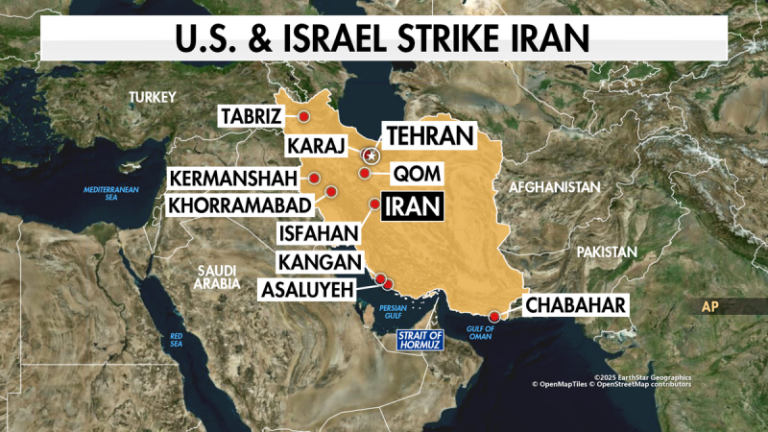
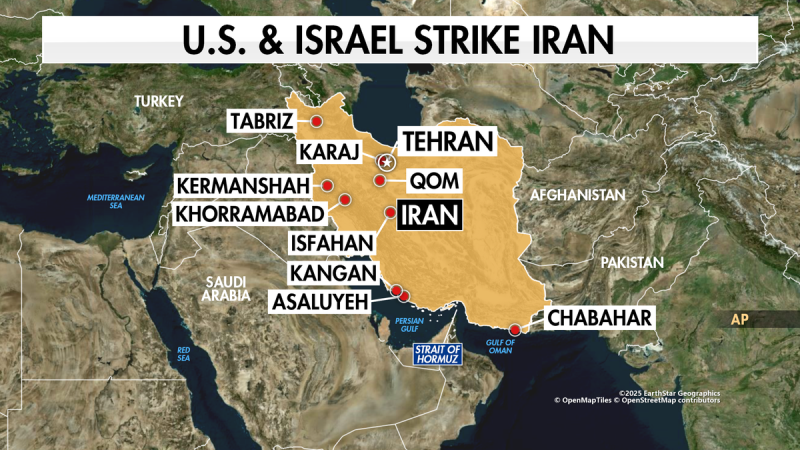
The move marks his boldest interventionist move yet — a foreign policy approach by which one country intervenes in another state’s affairs — and follows other major military operations from the Trump administration, including strikes in Syria in December 2025 against Islamic State operatives after an ambush against U.S. troops there, and strikes in June 2025 against the Iranian nuclear sites of Fordow, Natanz and Isfahan.

Trump told The New York Times in an interview that was published Wednesday that ‘only time will tell’ how long the U.S. will be running Venezuela, but said it would be ‘much longer’ than a year. 

Additionally, Trump announced recently that Venezuela’s interim government would hand over up to 50 million barrels of oil to the U.S. and that the oil would be sold ‘immediately.’

‘We will rebuild it in a very profitable way,’ Trump told the Times. ‘We’re going to be using oil, and we’re going to be taking oil. We’re getting oil prices down, and we’re going to be giving money to Venezuela, which they desperately need.’

Likewise, Trump shared a doctored image that looked like a Wikipedia page that identified him as ‘Acting President of Venezuela’ since January 2026. 

Previous interventionist actions the U.S. has taken include launching an invasion of Afghanistan in response to the 9/11 attacks Afghanistan-based al-Qaeda conducted against the U.S., and an invasion of Iraq in 2003 that led to the toppling of Iraqi dictator Saddam Hussein’s regime. In both cases, the U.S. remained in prolonged occupations there. 

The language the Trump administration is using now focusing on illegal migration is different than what was used during the Afghanistan and Iraq conflicts, which focused on democracy-building and promoting freedom, Katherine Thompson, a senior fellow in defense and foreign policy studies at the libertarian think tank the Cato Institute, told Fox News Digital. 

‘But the pathway to achieve those things, I don’t see, like, a broad differentiation from the things that we did before,’ Thompson told Fox News Digital. 

Thompson said that she doesn’t see how the Trump administration’s goals could be completed without small rotational deployments from U.S. forces to provide security, particularly in the event that the U.S. reopens its Embassy in Caracas, Venezuela. 

‘I don’t see how we’re going to have a team there without at least some small deployment of rotational forces to achieve security of our own personnel,’ Thompson said.

So far, no U.S. troops are on the ground in Venezuela, and the Senate advanced a War Powers resolution Thursday that, if passed, would bar using U.S. forces within or against Venezuela without Congress’ approval. 

When asked by Fox News Digital about whether Trump’s ‘Acting President of Venezuela’ post was shared jokingly and what it indicates about how long the U.S. will be involved in running Venezuela, White House spokeswoman Anna Kelly told Fox News Digital: ‘President Trump will be the greatest President for the American and Venezuelan people in history. Congratulations, world!’

Although Trump has blasted previous administrations for actions in the Middle East and vowed he would bring an end to ‘endless wars’ while ushering in an ‘America First’ agenda prioritizing U.S. interests, Democrats warned that the U.S. may be involving itself in another complicated conflict. 

Senate Minority Leader Chuck Schumer, D-N.Y., claimed that the U.S. is on the path to another ‘endless war.’

‘The very thing that Donald Trump campaigned against over and over and over again was no more endless wars,’ Schumer said in an interview with ABC News Jan. 4. ‘And, right now, we’re headed right into one with no barriers, with no discussion.’ 

Trump announced on Jan. 3 that U.S. special forces conducted a ‘large-scale strike’ against Caracas, and seized Maduro and his wife, Cilia Flores. Both were taken to New York and appeared in a Manhattan federal court Jan. 5 on drug charges, where they each pleaded not guilty.

The raid came after months of pressure on Venezuela and more than two dozen strikes in Latin American waters against alleged drug traffickers as part of Trump’s effort to crack down on the influx of drugs into the U.S.

The Trump administration routinely stated that it did not recognize Maduro as a legitimate head of state and said he was the leader of a drug cartel. Likewise, Trump said in December 2025 he believed it would be ‘smart’ for Maduro to step down. 

The Trump administration has justified seizing Maduro as a ‘law enforcement’ operation, and Secretary of State Marco Rubio said congressional approval wasn’t necessary since the operation didn’t amount to an ‘invasion.’

However, lawmakers primarily on the left have questioned the legality of the operation in Venezuela, which was conducted without Congress’ approval.

‘This has been a profound constitutional failure,’ the top Democrat on the Senate Armed Services Committee, Sen. Jack Reed, D-R.I., said in a statement Jan. 3. ‘Congress — not the President — has the sole power to authorize war. Pursuing regime change without the consent of the American people is a reckless overreach and an abuse of power.’

This post appeared first on FOX NEWS

A South Korean court heard arguments Tuesday seeking the death penalty for former President Yoon Suk Yeol, as prosecutors accused the ousted leader of orchestrating a rebellion through his controversial martial law declaration in December 2024.

Independent counsel Cho Eun-suk asked the Seoul Central District Court to impose the sentence, arguing that Yoon’s actions amounted to ‘anti-state activities’ and describing the decree as a ‘self-coup.’

Yoon, a conservative who was removed from office last spring, remains in custody while facing multiple criminal proceedings tied to the martial law episode and other controversies from his presidency. Prosecutors say the rebellion charge carries the most severe potential punishment.

Cho’s team argued in court that Yoon sought to prolong his hold on power by undermining South Korea’s constitutional system of governance.

Yoon has rejected the accusations, telling the court that the investigations into his conduct have been ‘frenzied’ and marked by ‘manipulation’ and ‘distortion.’

He has maintained that the declaration of martial law was intended to alert the public to what he viewed as the growing threat posed by the opposition Democratic Party, which used its legislative majority to block his political agenda. 

Yoon argued that the exercise of presidential emergency powers cannot be treated as rebellion under the law.

The court is expected to deliver a verdict next month. Legal experts have said a life sentence is more likely than execution, noting that South Korea has not carried out a death penalty since 1997.

Yoon is the first South Korean president who has faced a potential death penalty after leaving office since Chun Doo-hwan was sentenced to death in 1996 for various crimes. Chun’s death sentence was later commuted to life in prison, and he was subsequently pardoned and freed.

The Associated Press contributed to this report.

This post appeared first on FOX NEWS